
Standing in your front yard after an "April Deluge," watching water pool on top of the grass like it's a parking lot, you realize something is wrong. Your grass isn't "drinking." In Houston, we deal with some of the most aggressive, heavy clay soil in the country—locally known as Black Gumbo. This soil compacts into a brick during the "August Burn" and turns into a waterproof sponge in the spring. To fix it, you’ve likely heard two terms thrown around: topdressing and aeration.
The core difference is simple: Aeration is the process of opening the soil to let it breathe, while topdressing is the process of adding high-quality organic material to the surface to improve soil structure over time. For a Houston lawn to actually thrive, these two services are usually done together, as aeration creates the "holes" that allow the topdressing material to reach the root zone.
Look, the reality is that your lawn is suffocating. Over time, foot traffic, heavy riding mowers, and even the weight of our frequent Houston rain events squeeze the air out of the soil. This is compaction. Core aeration involves a commercial-grade machine that literally pulls "plugs" or "cores" of soil out of the ground, usually 2.5 to 3 inches deep.
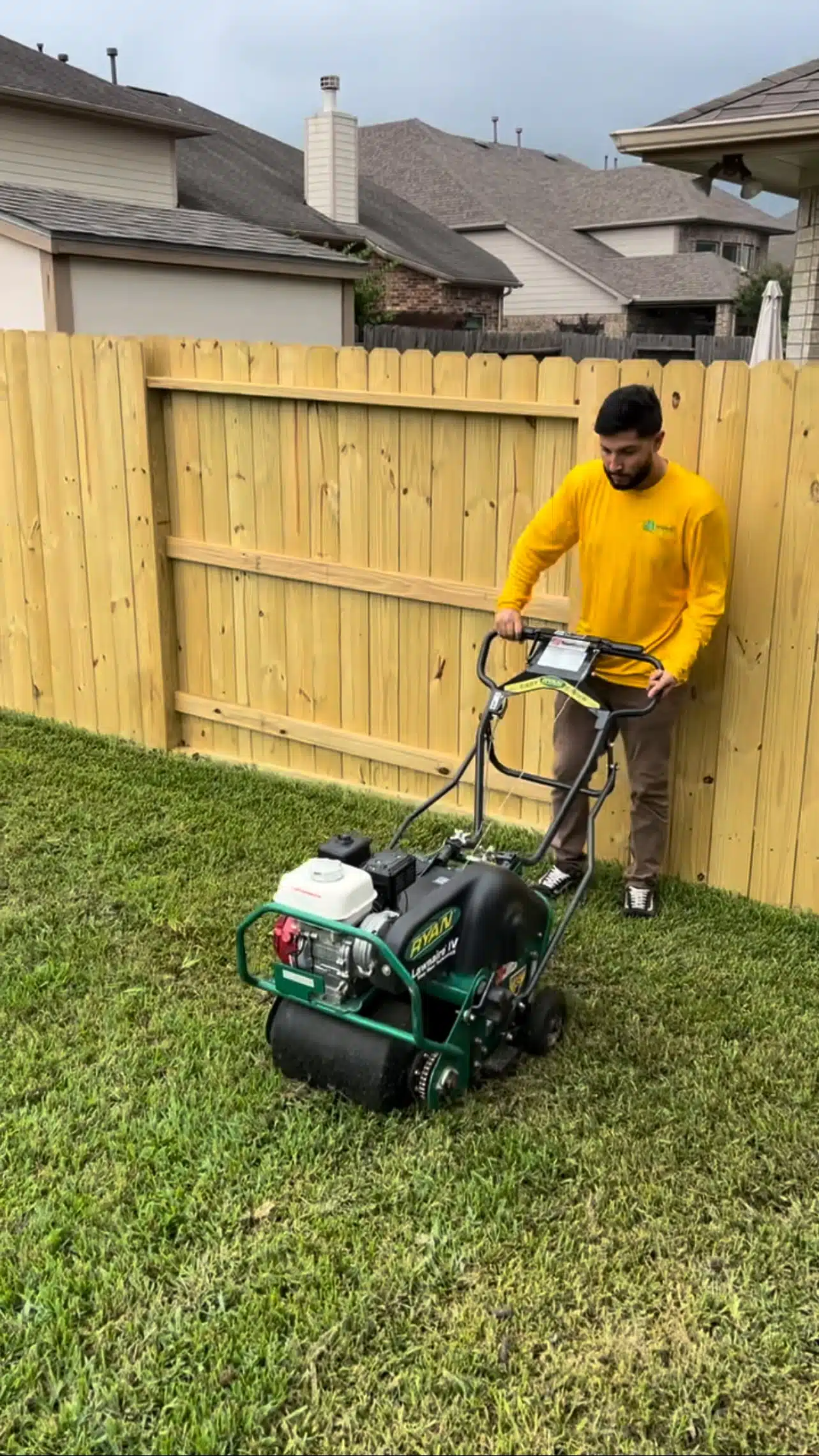 Professional core aeration requires high-torque machines to penetrate the dense Houston clay layer.
I see this all the time in newer developments in Katy and Cypress. The builders often leave a thin layer of topsoil over a massive slab of builder's dirt. Without Houston lawn aeration, the roots of your St. Augustine or Bermuda grass stay near the surface because they simply can't penetrate the "brick" below. This makes your lawn incredibly vulnerable when the 100-degree heat waves hit, as those shallow roots cook in the sun.
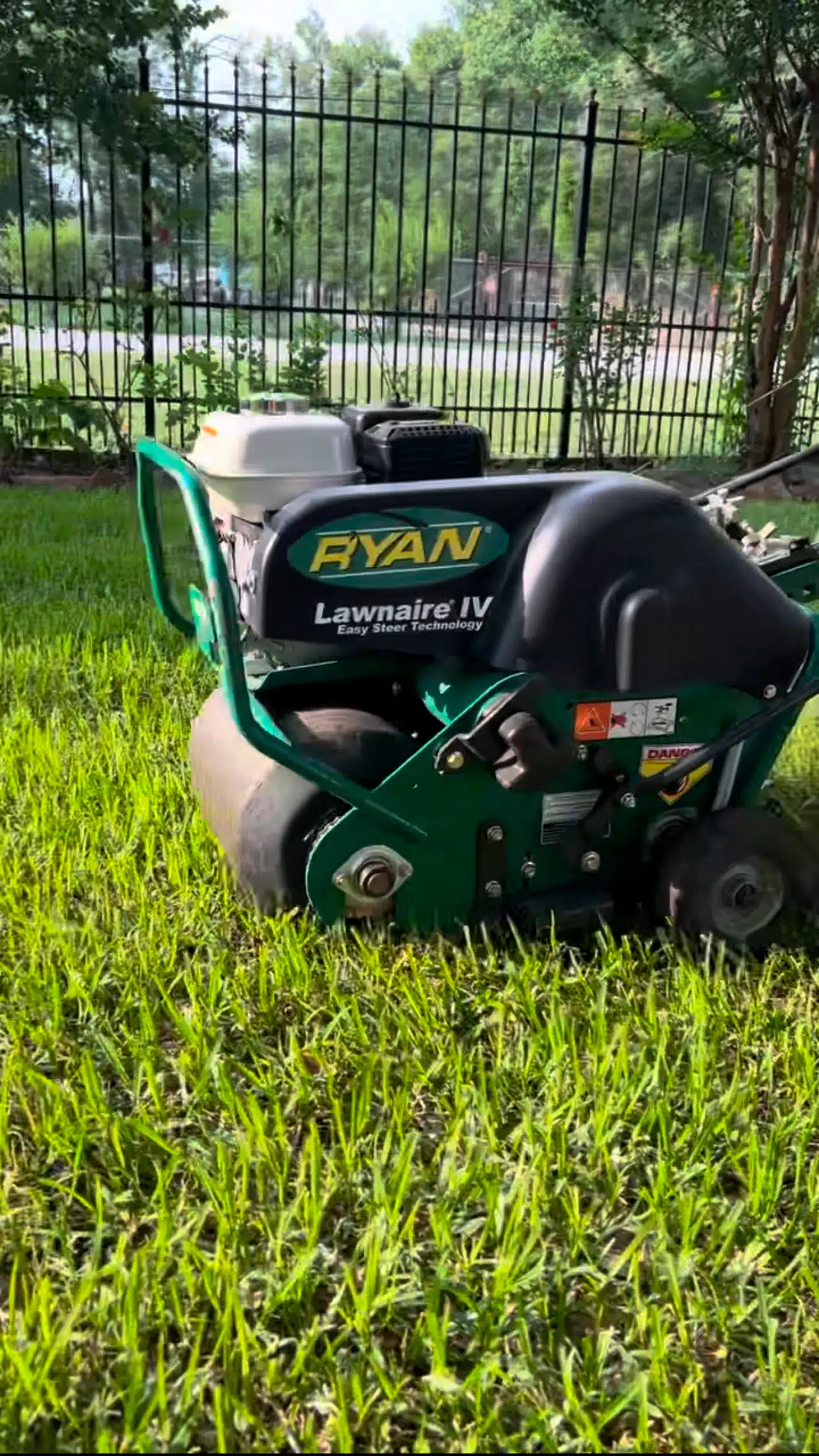 These "plugs" are the evidence of oxygen and water channels being opened in your soil.
Understanding what topdressing looks like helps set expectations. It isn't just dumping soil; it's a systematic leveling and enrichment process. Below is a real-world project showing the progression from the initial "Black Gumbo" struggle to the final professional finish.
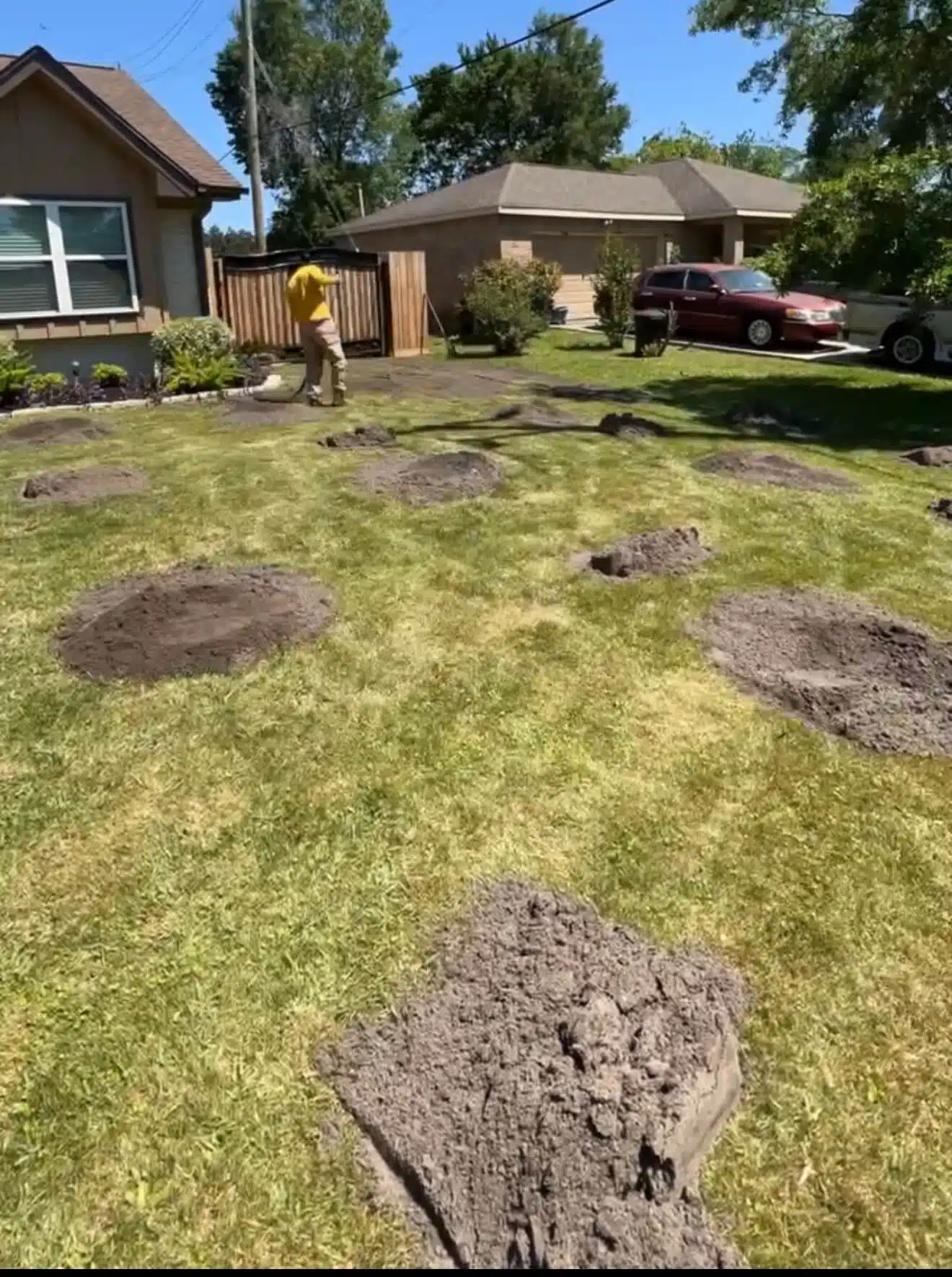 Step 1: The Beginning. This yard shows typical Houston compaction—thinning turf and uneven surfaces where water likes to pool.
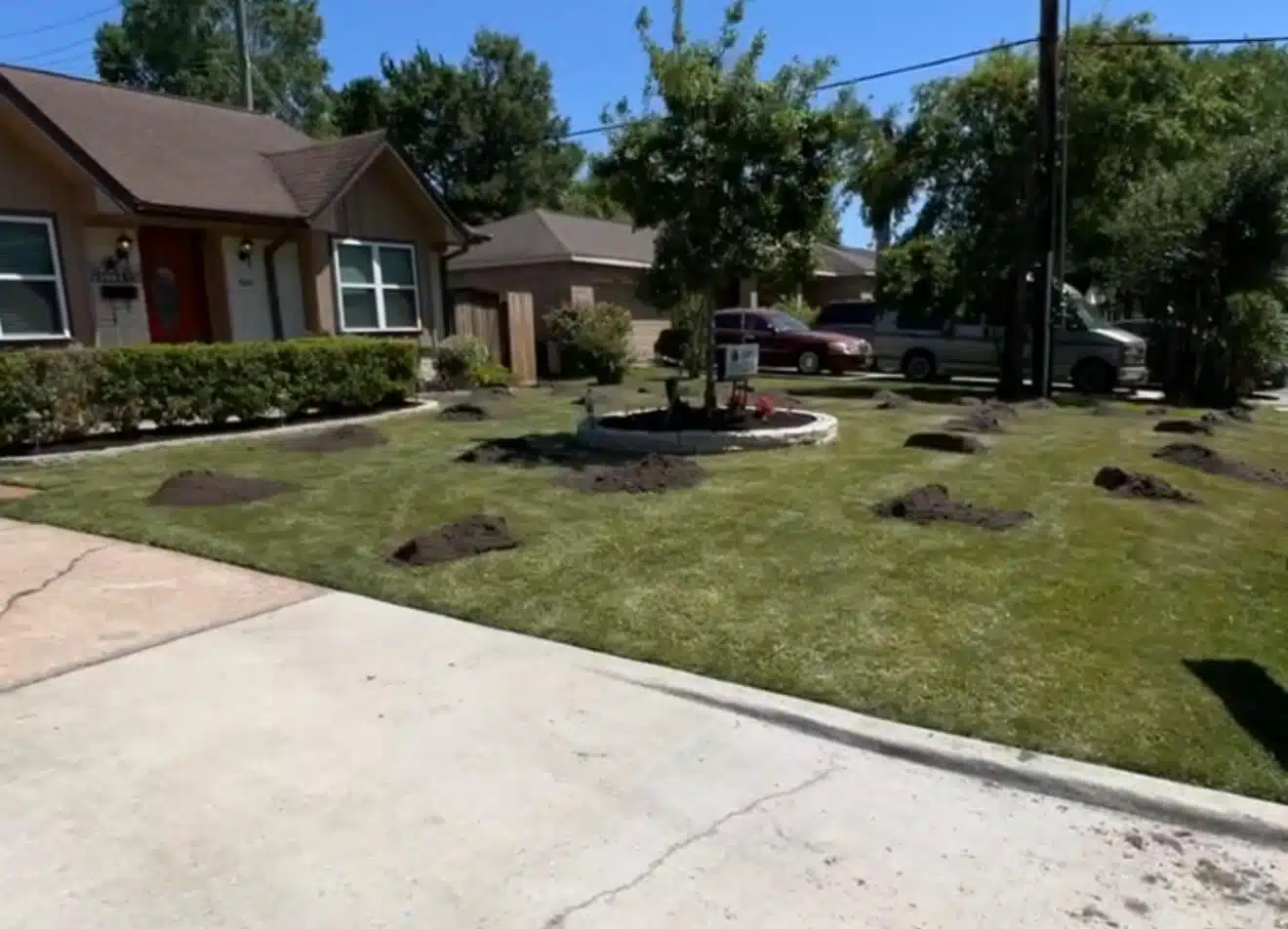 Step 2: During. We apply the 50/50 sand-compost blend. At this stage, the material is being raked into the aeration holes to bridge the soil layers.
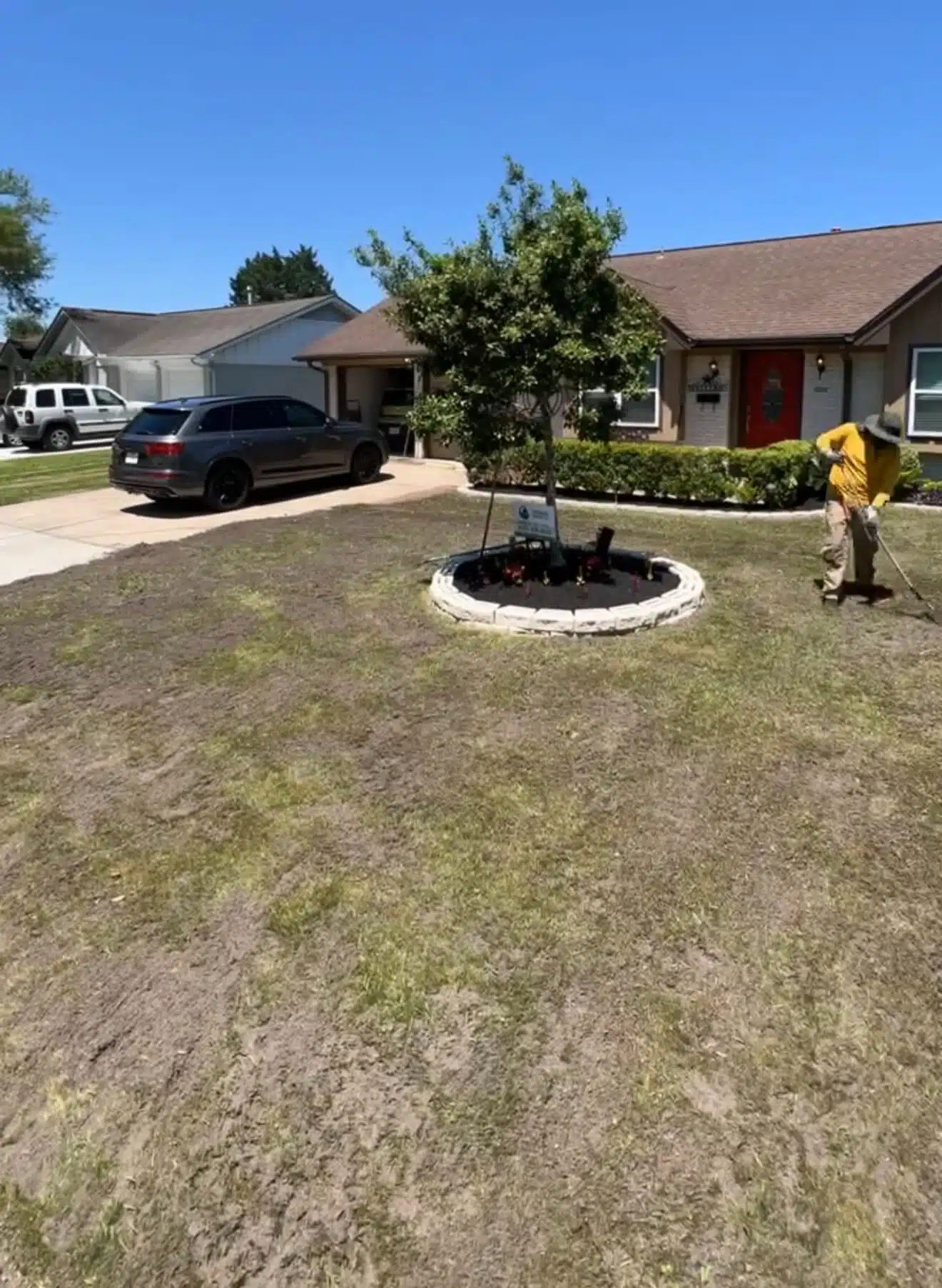 Step 3: The Result. The yard is now leveled and enriched. Within 14 days of active growth, the grass will push through this layer, resulting in a dense, emerald finish.
Professional topdressing for a healthier lawn involves spreading a thin layer (usually 1/4 to 1/2 inch) of high-quality material over the grass. But the secret nobody tells you is that topdressing is biological, not just physical. It’s about introducing microorganisms that eat thatch and turn your soil into a living ecosystem.
When you topdress with a nutrient-rich blend, you are essentially "feeding" the ground from the top down. It levels out those annoying bumps that make your mower scalp the grass and provides a steady stream of nutrients that organic fertilization alone can't achieve. You can see how these results integrate into modern landscape designs in our landscape portfolio.
In neighborhoods like Sugar Land, Pearland, or Summerwood, the "Black Gumbo" clay is legendary. During a dry stretch in July, this soil develops deep cracks that you could lose a set of house keys in. Then, when the "April Deluge" hits, those cracks seal shut instantly, trapping water and causing root rot.
We use a specific 50/50 blend of Masonry Sand and screened compost. The sand provides the **structural leveling**—it doesn't compress or wash away like regular dirt. The compost provides the **nutritional engine**. If you use "bank sand" (which contains more clay), you are just adding more glue to the problem. Masonry sand is sharp and creates permanent drainage micro-channels in the soil.
The biggest mistake I see in The Heights and Montrose is people topdressing without aerating first. If you just dump sand or compost on top of compacted clay, you create what we call a "Layer Cake." The water will soak into the new top layer, but it will stop the moment it hits the old clay. This traps the moisture in the top 1/2 inch, which leads to fungal diseases like Large Patch. You *must* bridge the layers with aeration holes. Without this foundation, your weekly Houston mowing service will struggle to keep the grass healthy because the soil simply won't support it.
Look, the reality is that timing is everything. If you do this in December, you are wasting money. Here is the schedule we follow for our premium Houston clients:
Don't jump the gun. Wait for the grass to fully wake up. If you topdress too early and a surprise freeze hits, you're trapping moisture against the crown of the plant which can cause rot. This is, however, the best time to start your weed control schedule.
This is the "April Deluge" season. It's the perfect time to aerate. The soil is moist enough for the tines to go deep, and the grass is growing aggressively enough to fill the holes in days. This is the gold standard window for soil restoration.
Too hot. Aerating now can actually dry out the root zone too fast. If your yard is already a brick, you missed the window. Focus on watering depth and wait for the cooler fall stretch.
I see this every day in different parts of town. In **The Heights**, the lots are tight and the drainage is often an afterthought. Alleyways trap water, and "zero lot lines" mean your neighbor's drainage is your drainage. Here, aeration is a mandatory safety measure for your foundation to prevent water from pushing into the crawlspace.
Meanwhile, in **Memorial and River Oaks**, we deal with the "Old Houston" canopy. Massive Oaks have been dropping leaves and shedding bark for 50 years. This creates a thick thatch layer that "floats" on top of the soil. Topdressing with active compost is the only way to eat through that thatch and get your grass back into the dirt where it belongs. This is particularly vital for Zoysia grass lawns that require extremely high drainage to stay green.
| Comparison Factor | Core Aeration Only | Topdressing Only | The Apex Combo |
|---|---|---|---|
| Primary Goal | Relieve Soil Compaction | Improve Soil Quality/Leveling | Complete Soil Transformation |
| Visual Impact | Low (Soil plugs on yard) | Medium (Material layer on grass) | High (Smooth, emerald result) |
| Recovery Time | 10-14 Days | 7-10 Days | 14-21 Days |
| Houston Necessity | Critical for Clay Drainage | Critical for Nutrition/Leveling | Standard for Premium Yards |
| Recommended Frequency | Annual (Spring) | Every 1-3 Years | The "Pro" Gold Standard |
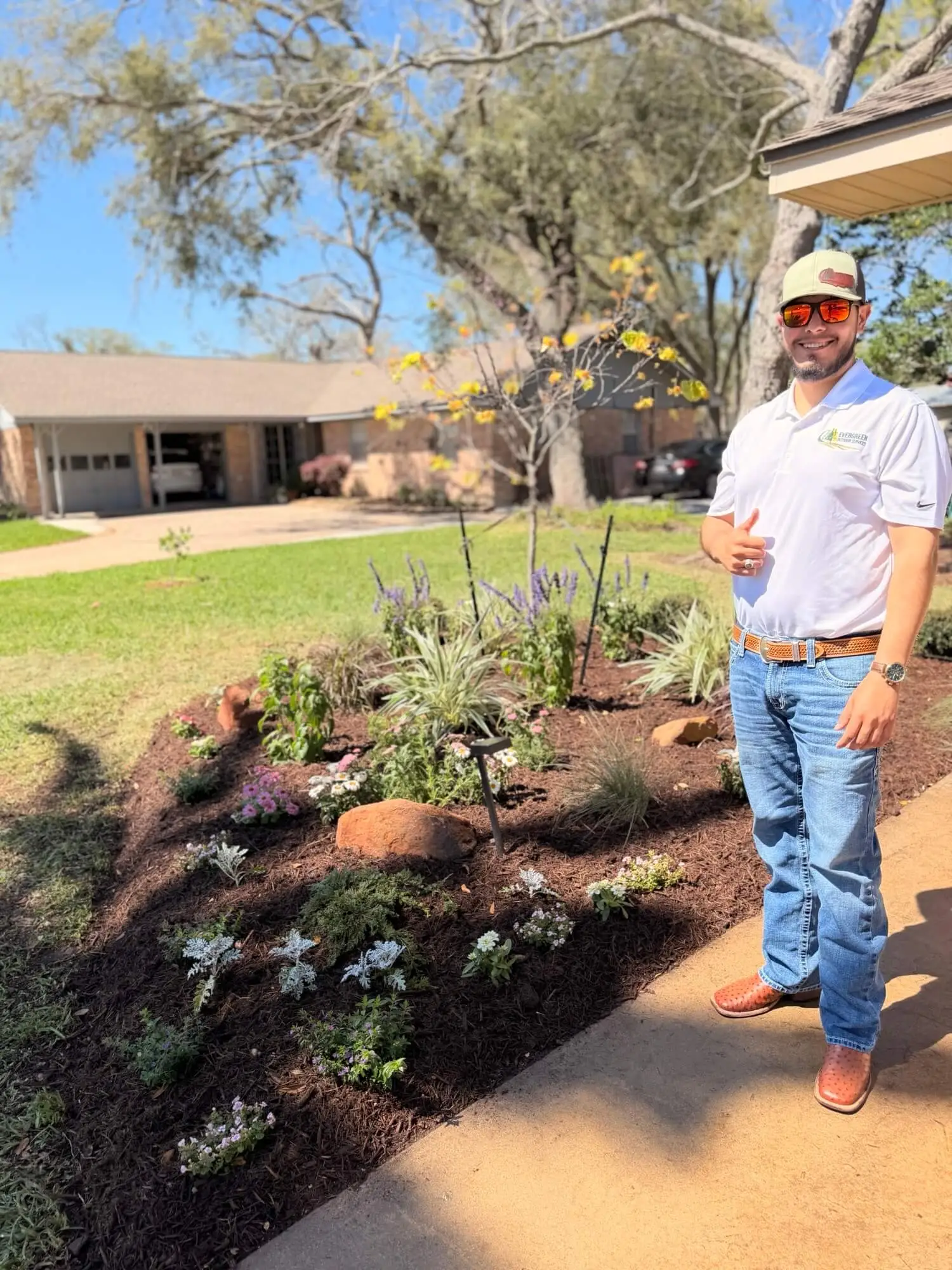 Professional care ensures your Houston lawn stays resilient through every August Burn.
Always aerate first. This opens the physical channels in your soil. If you topdress afterward, the organic material falls directly into those holes, reaching the root zone where it actually does the most good. If you do it backward, the material just sits on the surface like a blanket.
You can, but the risk is high. Most "bagged" dirt at big-box stores is not sterilized, meaning you are dumping thousands of weed seeds onto your lawn. Professional-grade mixes are screened and heat-treated. Check our general FAQ for more safety tips on DIY soil work.
Yes. Aeration is one of the best first steps for yard drainage fixes. By breaking the surface tension of the gumbo clay, it allows water to move vertically into the ground rather than horizontally toward your foundation.
We use a 50/50 blend of high-quality masonry sand and compost. The sand helps with leveling and drainage, while the compost provides the biological "fuel" to improve the clay's structure.
During the peak growing season, the aeration plugs will break down and disappear in about 10-14 days. If you topdress at the same time, the plugs are covered and essentially vanish within 48 hours as the material is raked in.
If you've read this guide and realized that restoring your soil is a science (and a lot of heavy lifting), we're here to help. Skip the "weekend warrior" frustrations and let the pros handle the physics.
Let us transform your Houston soil while you enjoy your weekend.