Topdressing is the process of adding a thin layer of screened soil, compost, sand, or a blended material over the lawn to improve soil structure, support stronger roots, smooth minor uneven areas, and help Houston turf handle clay-heavy soil, heat, and rain swings.
For Houston lawns, topdressing works best when the material matches the problem. Compost supports soil life and organic matter. Sand can help with minor leveling and surface drainage when used correctly. A screened sand and compost blend is often the practical middle ground for St. Augustine and Bermuda lawns growing in clay-heavy yards.

Topdressing is not magic dirt.
It is a controlled way to add a thin layer of material over turf so the lawn can slowly improve from the soil surface down. Done correctly, topdressing can help improve soil texture, support microbial activity, encourage stronger root growth, and smooth small surface imperfections without burying the grass.
In our last lawn health guide, we covered Houston lawn aeration, which helps relieve compaction and improve air, water, and nutrient movement. Aeration and topdressing work well together, but topdressing can also stand on its own when the goal is soil improvement, mild leveling, or turf recovery support.
The mistake is thinking topdressing is just about making the lawn look smooth for a week. The real value is below the canopy, where roots, moisture, oxygen, and soil biology decide whether your grass recovers or keeps struggling.
After a 20-minute Houston thunderstorm, you can feel the hot damp steam coming off the lawn. If the soil is sealed, compacted, or low in organic matter, that water does not move cleanly. It sits, runs, or creates soft spots.
Houston soil loves to fight you.
Many yards in Kingwood, Atascocita, Summerwood, Humble, Crosby, and the wider Houston area deal with clay-heavy soil. Around here, that clay can behave like a brick when it dries and like sticky paste after rain. You can feel it on a shovel. It clings, smears, and compacts under foot traffic, mowers, pets, and repeated storms.
That is where topdressing can help. It does not replace drainage work, grading, irrigation management, or proper mowing. But it can support the soil surface over time.
A topdressing plan should match the real cause. If the issue is compacted soil, compare topdressing vs. aeration before spending money. If the yard is holding water like a bathtub, topdressing alone may not solve it, and you may need to review Houston yard drainage solutions instead.
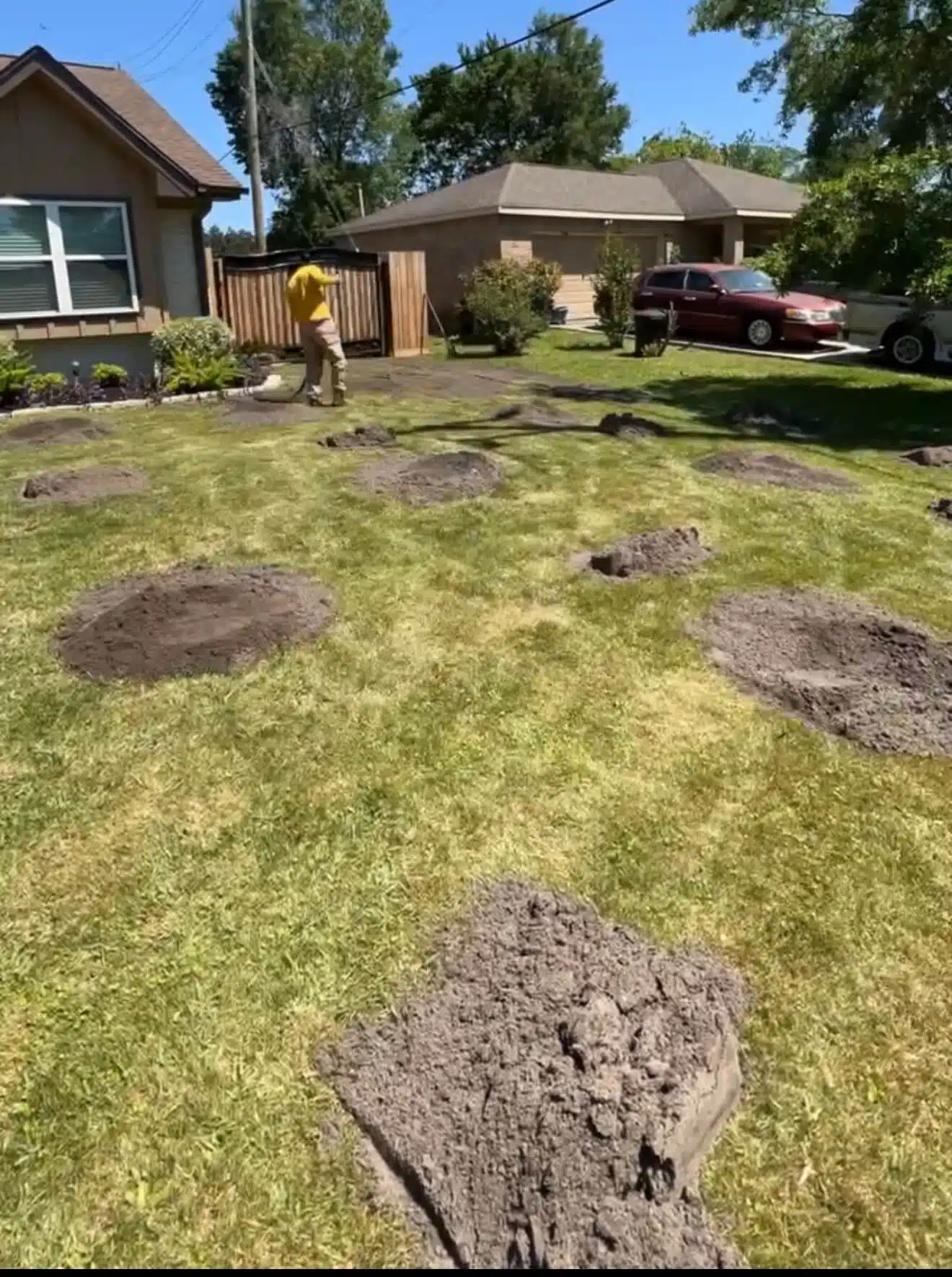
Material choice matters.
The material in the photo above is a good example of what clean topdressing material should look like: screened, dark, fine enough to work into the turf canopy, and useful for both lawns and garden bed amendments when applied correctly.
The wrong material creates a layer cake disaster. That happens when one soil texture is placed over another in a way that blocks water movement or creates uneven moisture behavior. In Houston clay, that can make drainage worse instead of better.
| Material | Best Use | Houston Watch-Out | Good Fit For |
|---|---|---|---|
| Screened Compost | Adds organic matter and supports soil biology. | Too much can hold moisture at the surface if overapplied. | Soil improvement, tired lawns, garden beds, thin turf support. |
| Sand | Helps with minor leveling and surface firmness when used correctly. | Fine or poor-quality sand can create sealing, crusting, or layering issues. | Bermuda lawns, mild leveling, select drainage-sensitive spots. |
| Soil Blend | Balances structure, organic matter, and workability. | Cheap unscreened mixes can contain clumps, trash, weeds, or inconsistent texture. | St. Augustine, Bermuda, general Houston lawn improvement. |
| Topsoil | Can fill low spots and support grade corrections in small areas. | Random fill dirt is not the same as quality topdressing material. | Minor lawn repair, small settled areas, garden bed support. |
For many Houston lawns, a screened sand and compost blend is the practical choice. It can help with workability while still giving the soil a better foundation than plain fill dirt. That said, the best blend depends on grass type, current soil, drainage, slope, shade, and what the lawn is actually doing.
For broader Texas turfgrass education, Texas A&M AgriLife Extension provides lawn and turfgrass resources for homeowners and turf managers at its Lawns & Turfgrass resource page.
Timing can make or break the result.
Topdressing should usually happen while warm-season grass is actively growing. In Houston, that often means late spring through early summer for St. Augustine, Bermuda, and Zoysia, with some early fall opportunities depending on weather, turf health, and how much recovery time remains before cooler nights slow growth.
| Timing | Why It Works | Risk If Done Wrong | Operator Take |
|---|---|---|---|
| Late Spring | Grass is waking up and beginning stronger growth. | The False Spring can trick homeowners into starting too early. | Good timing if soil temps and growth are truly active. |
| Early Summer | Warm-season turf has strong recovery potential. | Heavy heat and poor watering can stress the lawn after application. | Often the best window when watering and mowing are managed well. |
| Early Fall | Can help lawns recover from the August Burn. | Late timing gives turf less recovery time before dormancy. | Useful for mild improvement, not major correction. |
| After Aeration | Material can work into open cores and improve soil contact. | Poor cleanup or uneven spreading can leave piles in the turf. | A strong pairing when compaction is part of the problem. |
The Houston truth nobody likes: a lawn can look ready in March and still not be ready for aggressive work. The canopy may be green, but the soil and roots may not be moving at full speed yet.
If you are unsure whether the lawn is ready for topdressing, use the Houston lawn health assessment tool before you start guessing at material, timing, and labor.
Topdressing can smooth a lawn.
But it should not be treated like a dump-and-rake shortcut. Light topdressing can help correct small uneven areas, soften bumpy surfaces, and improve the look of turf over time. Big low spots, drainage failures, and grade problems need a different plan.
Here is where most people mess up: they bury the grass. A thin, even layer lets blades continue receiving sunlight while material settles into the canopy. A heavy layer can smother turf, invite disease pressure, and create uneven recovery.
In shaded areas of Kingwood or properties with heavy pine needle buildup, turf may also struggle because of light, moisture, and acidity pressure. Topdressing can help the soil, but it will not make deep shade behave like full sun. For location-specific service fit, you can review our Kingwood lawn care service area page.
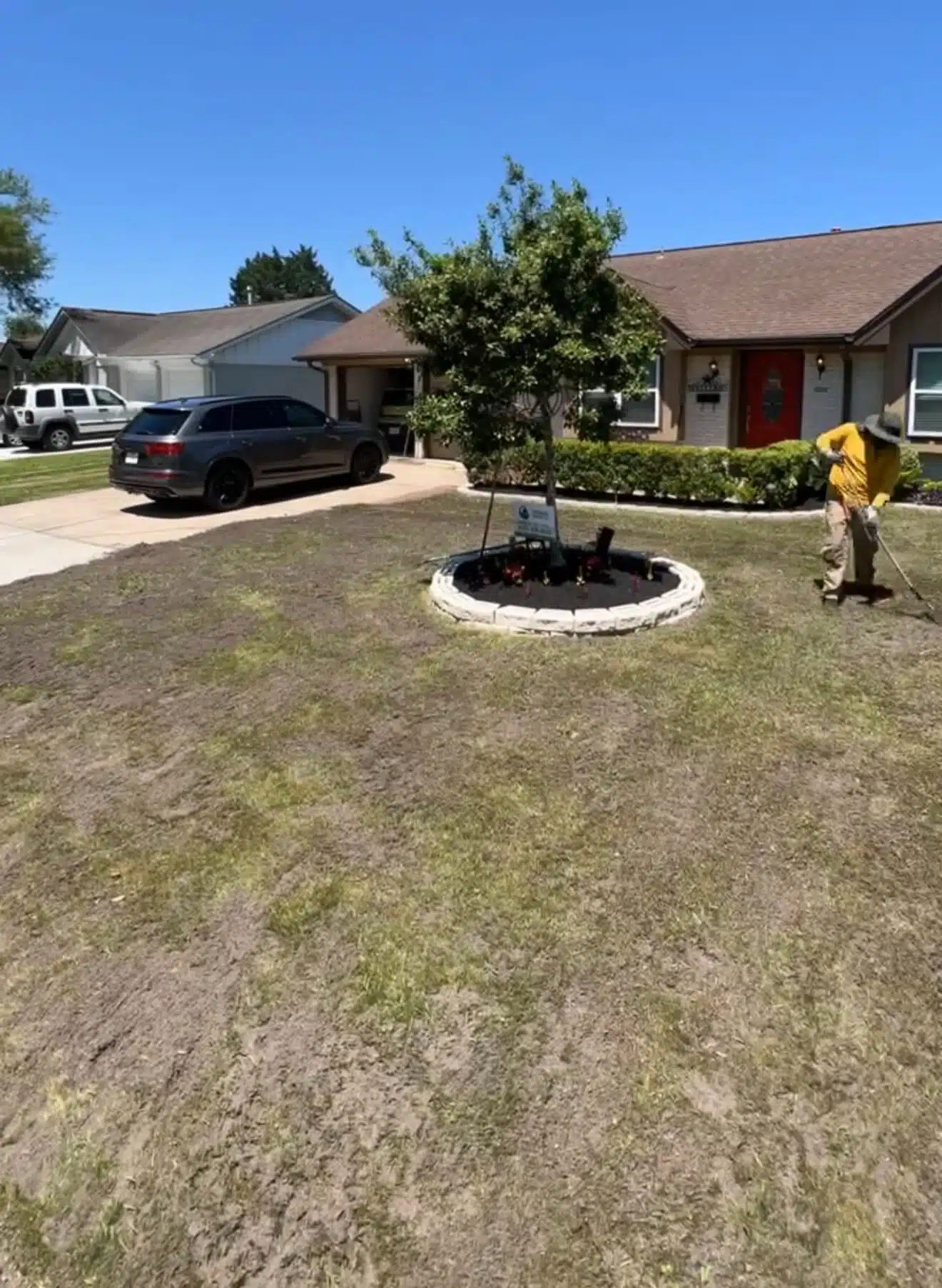
Topdressing is a soil support tool. It is not a cure for every lawn problem.
If the lawn has large dead patches, severe compaction, standing water, poor irrigation coverage, thick shade, active disease, or years of neglect, topdressing may only be one part of the repair plan. Sometimes the smarter move is aeration first. Sometimes it is drainage work. Sometimes the lawn is far enough gone that sod repair makes more sense.
We see this all the time after heavy summer stress. A homeowner wants to spread material over the whole lawn, but the real issue is uneven watering, compacted clay, and grass that has already thinned past the point of easy recovery.
If a topdressing quote looks higher than a basic material dump, it is usually because the work is not just material. Labor, spreading accuracy, access, cleanup, lawn condition, timing, and the right material choice all affect the scope. Cheap topdressing done wrong can cost more later.
It can help with surface soil structure and minor moisture movement, but it will not fix a true drainage failure. If water collects like a bathtub after rain, grading or drainage work may be needed.
Aeration is not always required, but it is often helpful when the soil is compacted. The open cores allow material to work deeper into the root zone instead of only sitting on the surface.
Yes, when applied lightly and correctly. St. Augustine should not be buried. A thin screened layer can support soil improvement while allowing the grass canopy to keep receiving sunlight.
It depends on the lawn. Compost helps soil biology and organic matter. Sand can help with mild leveling and surface firmness. Many Houston lawns benefit from a screened blend instead of one material used blindly.
Most lawns need a thin layer that can be worked into the canopy without smothering the grass. Deep low spots should be corrected gradually or repaired separately rather than buried in one pass.
It can support recovery in thin areas, but bare patches may need seed, plugs, sod repair, watering correction, or pest and disease review. The cause of the bare area matters.
Topdressing availability depends on location, access, schedule, and project size. Evergreen primarily serves Northeast Houston areas like Summerwood, Kingwood, Atascocita, Humble, and Crosby, with select project work available in other Houston areas when the scope fits. You can review our Houston service areas to check general coverage.
Topdressing usually works best as part of a bigger lawn health plan. Depending on the property, it may pair with aeration, fertilization, mowing adjustments, sod repair, drainage review, or landscape maintenance. If you are not sure where to start, the Evergreen Services in Houston page can help you compare the right next step.
Use Evergreen’s free tool hub before buying material. It can help you estimate square footage, think through material needs, and avoid walking into the supply yard blind.
Use the Free Tool Hub Calculate your yard’s square footage and material needs instantly, no more guessing at the supply store.A good topdressing job is controlled from start to finish. The lawn should be evaluated, the material should fit the goal, and the application should be spread evenly enough that the grass can recover without being suffocated.
For Evergreen, topdressing fits into a bigger lawn health system. It may connect to mowing height, watering habits, aeration, fertilization, drainage, and recovery timing. That is why we built a dedicated service page for topdressing and compost services in Houston for homeowners who want help with the work instead of taking on material hauling, spreading, raking, and cleanup alone.
If you want proof of the kind of outdoor work we handle, our project portfolio shows real examples across lawn care, sod, mulch, rock, landscape maintenance, and outdoor improvement work.
Topdressing can improve the feel, health, and appearance of a Houston lawn, but only when the material, timing, and application match the property. If your lawn has compacted soil, uneven spots, thin turf, or poor recovery after rain and heat, Evergreen can help you choose the right next step.