
Common Yard Drainage Problems in Houston—and Why Fixes Fail
Yard drainage problems in Houston are not always caused by the absence of a drain. Sometimes the real problem is poor slope, the wrong intake location, roof runoff, compacted clay soil, an inadequate discharge point, or a previous drainage fix that only moved the water somewhere else.
That is why a yard can still hold water even after pipe, gravel, catch basins, or other drainage components have already been installed. The system has to work with the way water enters, moves across, and exits the property.
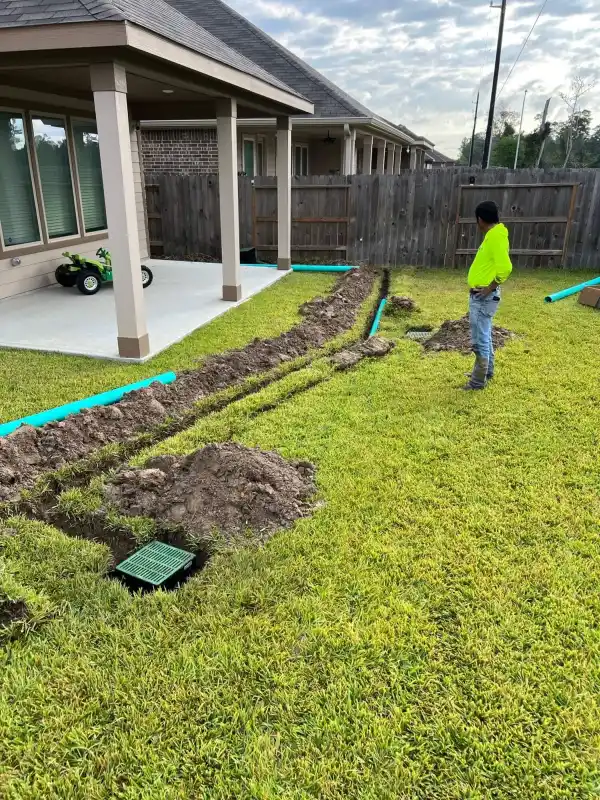 A drainage system is only as useful as the water path behind it. Collection, slope, routing, and discharge all have to work together.
Quick Answer
- No usable discharge point: Water gets collected but has nowhere appropriate to go.
- Inadequate slope: Water moves too slowly, remains in the system, or never reaches the intended outlet.
- Wrong intake location: A drain may be installed near the wet area without actually intercepting the water path.
- Roof runoff overlooked: Downspouts can overwhelm lawns, beds, and low areas during Houston storms.
- Only one symptom was addressed: Fixing the visible puddle does not necessarily fix the reason water is collecting there.
In This Guide
Why Yard Drainage Fixes Fail in Houston
One of the easiest mistakes to make is starting with a product instead of starting with the water.
A French drain, surface drain, catch basin, buried downspout line, or grading correction can all be useful tools. But none of them automatically solves a drainage problem simply because they were installed.
Before choosing a system, the important questions are:
- Where is the water entering the property?
- Where does it begin to slow down or collect?
- How does the surrounding grade affect the water path?
- Are downspouts adding significant runoff?
- Where can collected water actually discharge?
- Will moving the water create a new problem somewhere else?
A drain can collect water correctly and still perform poorly if the system does not have an effective route to an appropriate outlet. Intake and discharge have to be considered together.
If you are still trying to determine why one area of the property keeps holding water, start with our guide to water pooling and low spots in Houston yards . That article focuses specifically on why standing water develops.
7 Common Yard Drainage Problems in Houston
The visible symptom may be a puddle, soggy lawn, washed-out bed, or wet side yard. The underlying drainage problem can be very different.
1. No Practical Discharge Point
Water may be captured successfully but still have nowhere suitable to exit. Without a workable discharge plan, the system can hold water or simply relocate the problem.
2. Inadequate Slope
Drainage pipe depends on an appropriate elevation change to move water. Poor slope can leave sections of the system holding water instead of carrying it toward the outlet.
3. Drain Installed in the Wrong Place
A catch basin or surface drain only helps when water actually reaches it. Installing an intake beside the wet area instead of along the real water path can leave the original problem largely unchanged.
4. Downspouts Overloading the Yard
Roof runoff can introduce a large amount of water into a relatively small lawn or garden-bed area. The yard may remain wet even when the surface drainage itself appears reasonable.
5. Saturated or Compacted Clay Soil
Houston clay can drain slowly and remain soft after rainfall. Compaction, repeated saturation, and limited natural infiltration can make a drainage problem more persistent.
6. Settlement and Low Spots
Sometimes the problem is the shape of the surface rather than a missing drain. Settlement and shallow depressions can repeatedly collect water even when the surrounding yard drains normally.
7. A Partial Fix Moved the Problem
Water may disappear from one location only to begin collecting somewhere else. That usually means the original fix addressed one symptom without accounting for the full runoff path.
If you are trying to determine whether a French drain or surface drainage system better matches a particular water problem, see our French drain vs. surface drain comparison .
Why the Whole Water Path Matters
The wettest part of the yard is not always where the drainage problem begins.
Water may enter from roof runoff, an adjacent higher area, a patio edge, a side-yard slope, a landscape bed, or another portion of the property before finally collecting in the location the homeowner notices.
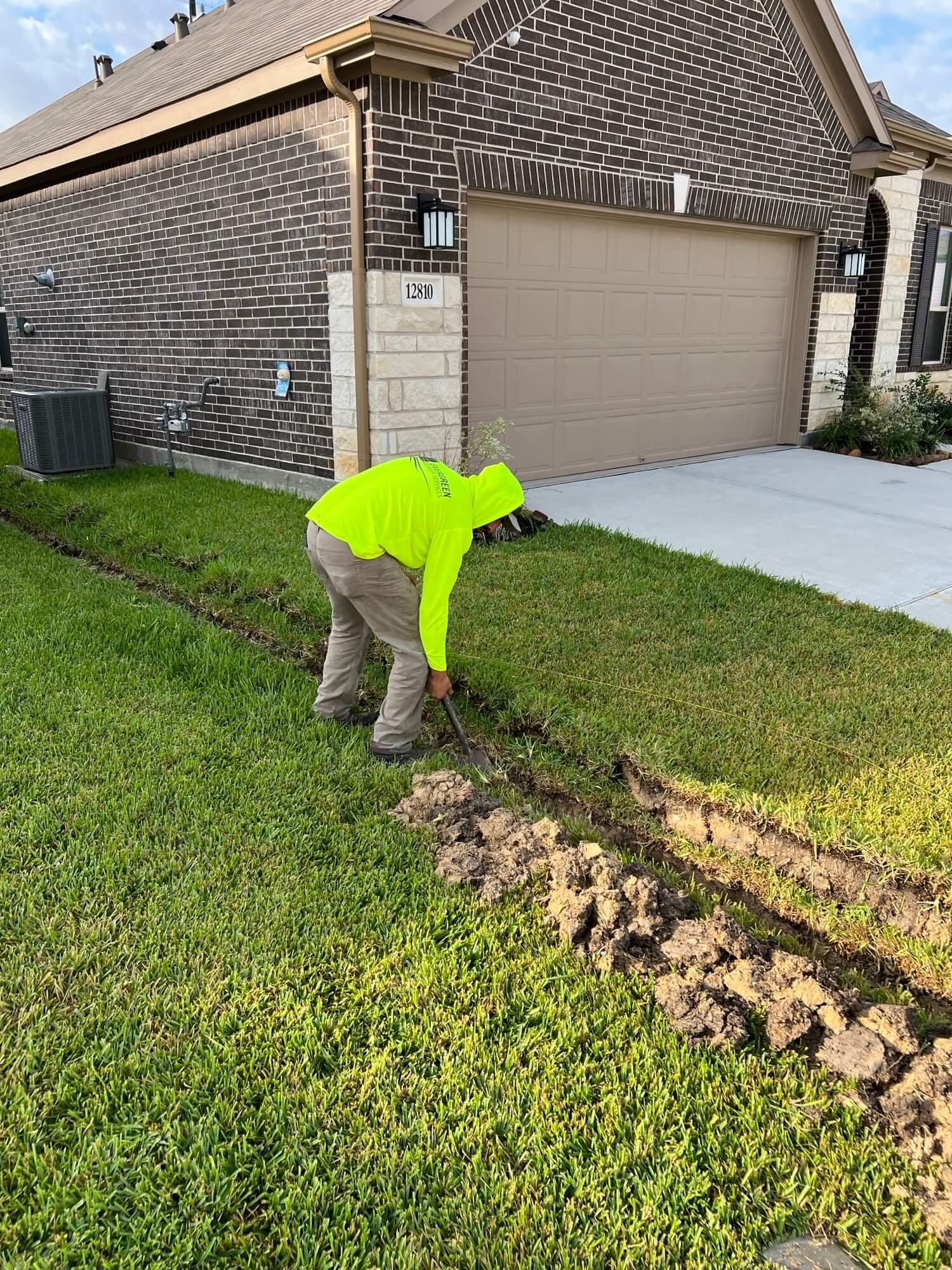 Looking beyond the puddle helps reveal where the water begins, how it travels, and where a drainage system can realistically send it.
This becomes especially important on Houston-area properties with narrow side yards, fences, patios, landscape beds, downspouts, and relatively limited elevation change.
A drainage plan should therefore consider the entire route from water source → collection point → conveyance → discharge. If one part of that path does not work, the homeowner may still see the same drainage symptoms after the project is complete.
How Yard Layout Changes the Drainage Problem
Two homeowners can describe the same symptom—“my yard holds water”—while having completely different underlying problems.
| What You Notice | What May Be Happening | Common Incomplete Fix | What Is Worth Checking |
|---|---|---|---|
| Narrow side yard stays wet | Limited slope, roof runoff, or saturated soil | Adding one drain without checking the outlet | Downspouts, elevation, intake location, and discharge path |
| Patio or walkway floods | Hardscape blocks or redirects surface runoff | Adding soil beside the patio | Surface flow, nearby low points, and appropriate collection |
| Lawn remains soft after rain | Slow-draining or compacted soil | Treating it only as a surface puddle | Soil condition, duration of saturation, grade, and subsurface movement |
| Garden bed repeatedly washes out | Concentrated runoff entering the bed | Repeatedly replacing mulch | Roof runoff, upstream flow, bed elevation, and water routing |
| One low spot fills after every storm | Settlement or poor surface grading | Installing pipe without confirming whether pipe is needed | Existing elevations and whether surface correction can improve flow |
The point is not that every drainage problem requires a complicated system. Sometimes correcting the surface or redirecting a specific source of runoff is more appropriate than adding more pipe.
Why Some Drainage Repairs Become More Complicated
Correcting an existing drainage problem is not always as simple as replacing one section of pipe.
Site conditions can limit what is practical. Narrow gates, existing landscaping, utility locations, patios, fences, trees, clay soil, downspouts, and the distance to an appropriate discharge area can all influence the repair.
Existing systems can also be difficult to evaluate when the original installation route, slope, pipe type, or outlet is not obvious.
- Access: Tight side yards and finished landscapes can limit equipment access and make excavation more involved.
- Existing drainage: Previous pipe or catch basins may need to be located and evaluated before additional components are added.
- Discharge distance: Collecting water is only half the job. The system still needs somewhere appropriate to send it.
- Houston clay: Wet clay can make excavation, grading, and restoration more difficult than the same work in lighter soil.
- Restoration: Trenching can affect turf, soil, mulch, and bed edges that may need to be restored afterward.
If you are researching project pricing rather than troubleshooting the drainage problem itself, see our separate guide to yard drainage cost in Houston .
What to Check Before Repairing or Replacing a Drainage System
Before adding another drain or replacing an existing system, it helps to understand what the current setup is actually doing.
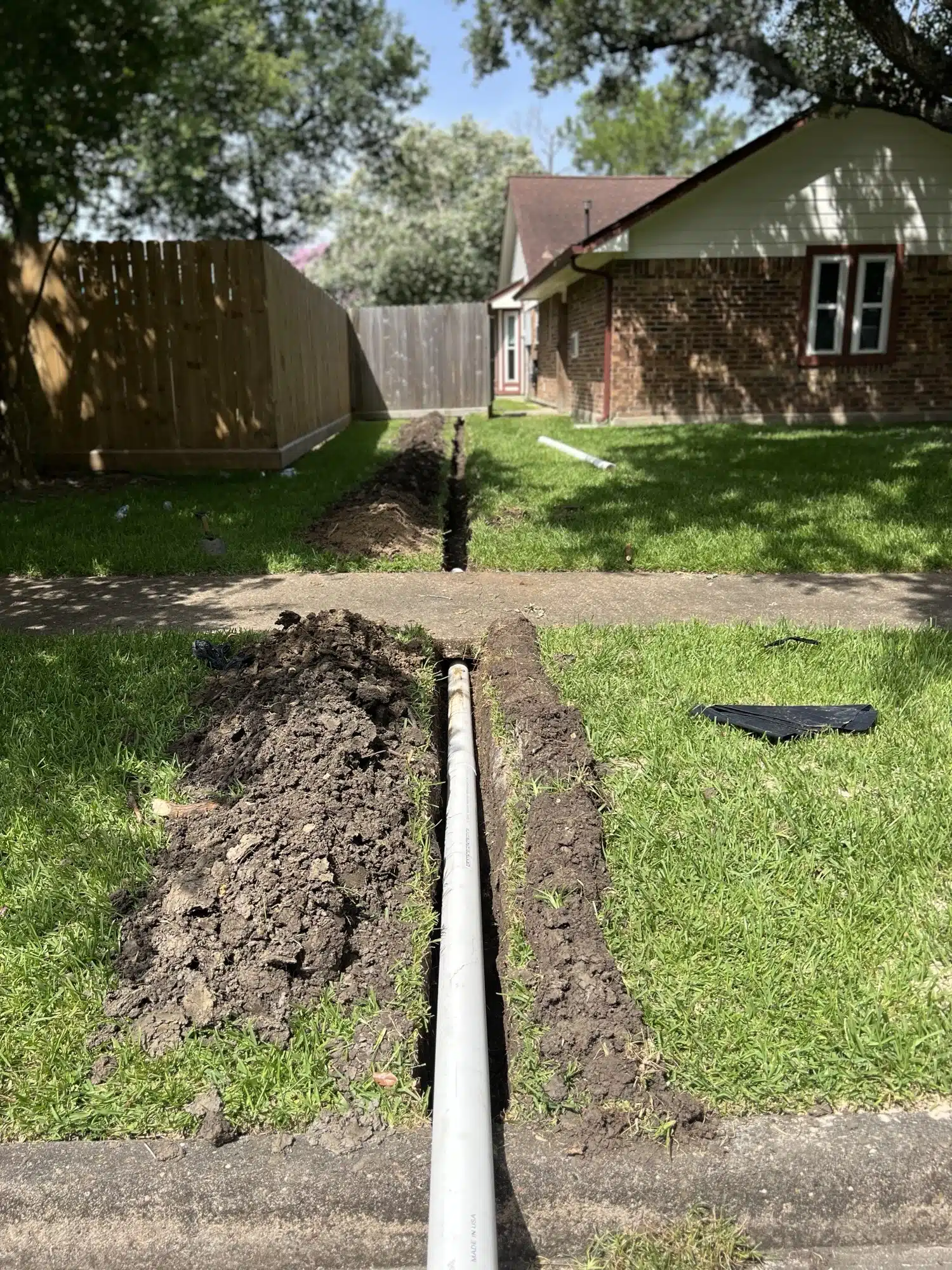 Existing drainage problems often become easier to understand once the water path, elevations, intake locations, and outlet can be evaluated together.
Useful questions include:
- Where does the water enter the problem area?
- Does the existing drain sit at the actual collection point?
- Where does the pipe discharge?
- Does the system have enough elevation change to move water?
- Are downspouts connected or dumping beside the problem area?
- Does the problem occur only during heavy rain or remain for days afterward?
- Did the drainage issue begin before or after landscaping, concrete, fencing, or grading changes?
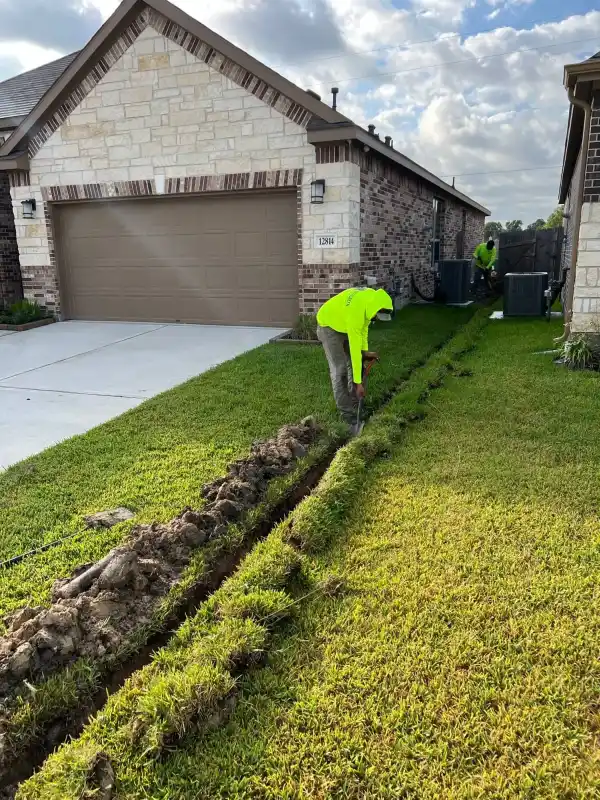 Trenching is only one part of drainage work. Elevation, routing, collection, and discharge determine whether the finished system can move water effectively.
Once those pieces are understood, it becomes easier to determine whether the problem is a failed component, a poor layout, an inadequate outlet, or simply a different drainage issue than the original system was designed to address.
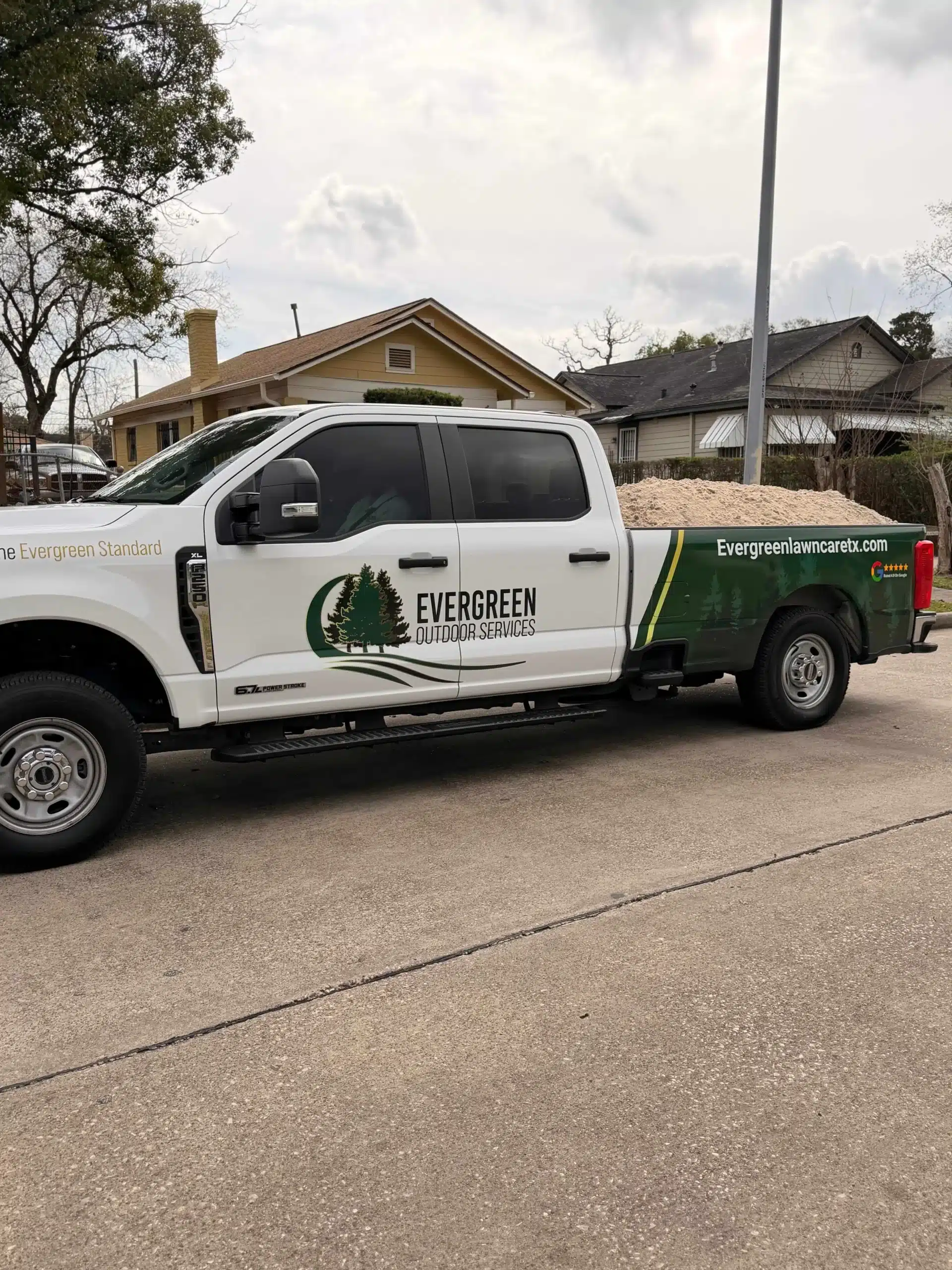 Drainage repairs can also involve restoring soil, grade, turf, or garden areas disturbed while correcting the water path.
Ask what is believed to be causing the problem, where the water will enter the proposed system, where it will exit, and what happens to the surrounding lawn or landscape afterward. Those answers are usually more useful than comparing drain names alone.
Frequently Asked Questions About Yard Drainage Problems
Why does my yard still flood after a drainage system was installed?
Several things can cause a drainage problem to continue after a system is installed. The intake may not be located along the true water path, the pipe may lack sufficient slope, the outlet may be inadequate, roof runoff may be overwhelming the area, or the system may have addressed only one part of the problem. If the issue is primarily standing water in a low area, our Houston water-pooling guide explains common causes.
How can I tell whether a drain is clogged or poorly designed?
A clogged system and an ineffective layout can create similar symptoms. It helps to check whether water is entering the drain, whether the outlet is flowing, whether the problem occurs along the entire route or only in one location, and whether the system ever worked correctly. A system that has never controlled the water may have a design or routing problem rather than a simple blockage.
Can low spots cause drainage problems even if I already have drains?
Yes. A shallow depression can collect water that never reaches an existing drain. Depending on the property, the issue may involve grading, leveling, intake placement, or a combination of surface correction and drainage.
Does Houston clay make yard drainage more difficult?
Houston-area clay soils can drain slowly and remain saturated after rainfall. They can also make excavation and grade correction more difficult when wet. Soil condition is therefore one part of the larger drainage picture rather than something that should be considered separately from slope and runoff.
Should a failed drainage system be repaired or completely replaced?
It depends on what failed. A damaged component, blocked outlet, or isolated problem may be repairable. If the system has inadequate slope, poor intake placement, no practical discharge point, or does not address the actual water path, a larger correction may be necessary. The existing system should be evaluated before assuming replacement is required.
When should I have a recurring drainage problem professionally evaluated?
Consider a property-specific evaluation when water repeatedly returns to the same area, remains for an extended period after rainfall, affects usable portions of the yard, washes out landscaping, or continues despite previous drainage work. For information about professional installation and drainage projects, visit our Houston yard drainage services page.
When the Same Drainage Problem Keeps Coming Back
If water continues returning after previous grading, drainage work, or temporary fixes, the next step is understanding the complete water path before adding another component.
- Identify where the water enters the problem area.
- Confirm where collected water can realistically discharge.
- Evaluate grade, downspouts, soil conditions, and existing drains.
- Determine whether the existing system can be corrected or a different approach is needed.
- Plan for the lawn or landscape areas affected by the work.