Topdressing vs. Aeration: What Does Your Houston Lawn Need?
Aeration and topdressing are often discussed together, but they are not the same service and they do not solve the same lawn problems.
For Houston homeowners dealing with compacted soil, uneven turf, thin grass, or poor lawn performance, understanding the difference can help prevent spending money on a treatment that does not address the underlying issue.
Core aeration primarily addresses soil compaction. It removes small plugs of soil to create additional space and improve access into the root zone.
Topdressing adds material at the lawn surface. Depending on the material and the goal, it can support soil improvement, add organic matter, or help correct minor surface unevenness.
Should you aerate, topdress, or do both?
If compaction is the primary problem, core aeration may be the right starting point. If the lawn needs surface material, minor leveling, or soil improvement, topdressing may be more appropriate. Some lawns benefit from both services, but neither should be added automatically.
What Does Core Aeration Actually Do?
Soil becomes compacted when the spaces between soil particles are reduced. Normal foot traffic, lawn equipment, construction activity, and repeated use of the property can all contribute over time.
Core aeration uses mechanical equipment to physically remove small plugs of soil and turf from the lawn. Those openings temporarily reduce soil density and provide more direct pathways for air and water into the root zone.
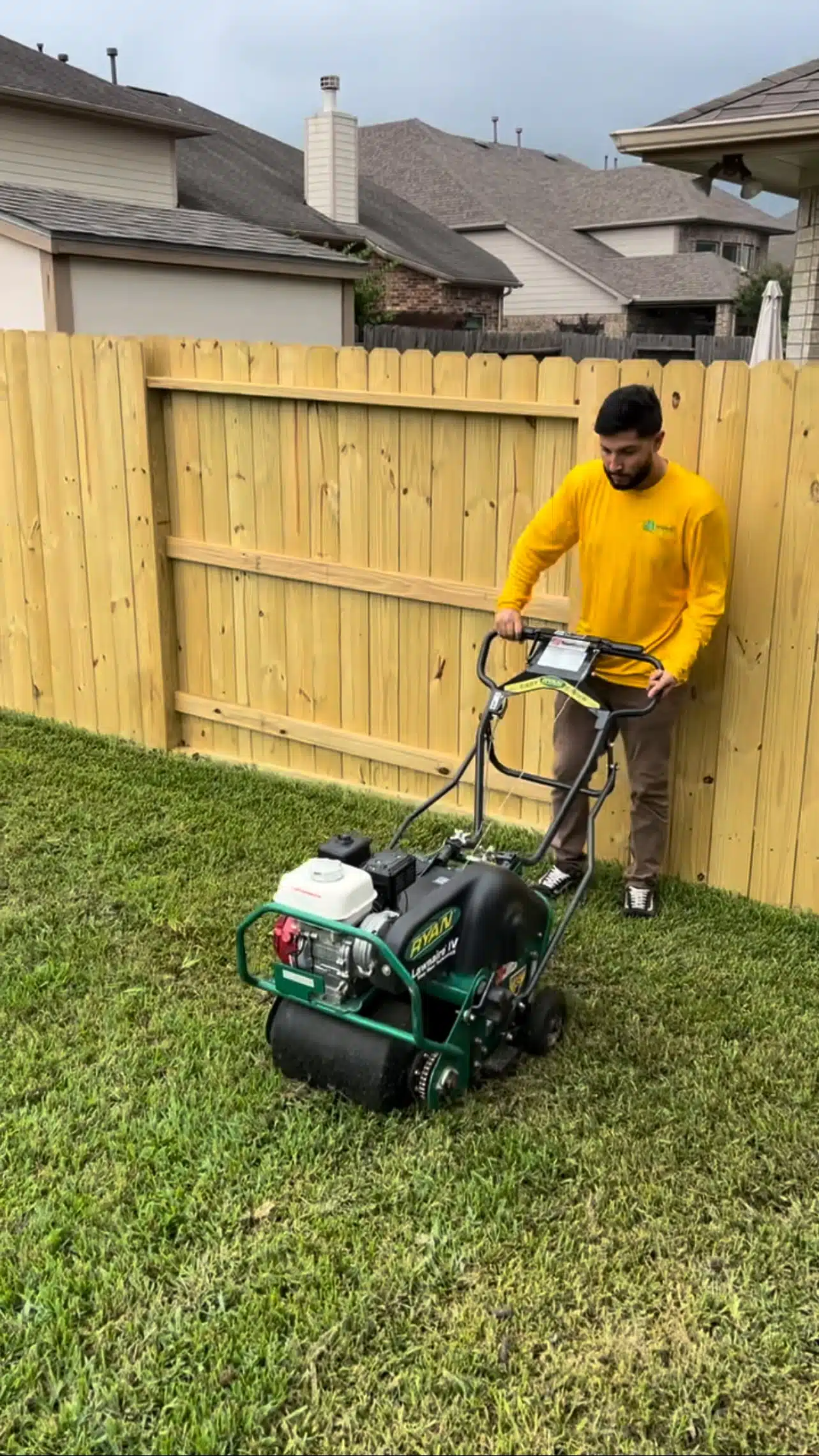
Aeration does not change the underlying soil type, replace missing turf, correct improper grading, or repair a failed drainage system. It is most useful when physical soil compaction is part of the problem.
For a deeper explanation of the process, see our Houston lawn aeration guide .
If you are already looking for professional service, visit our Houston core aeration service page .
What Does Lawn Topdressing Actually Do?
Topdressing is the application of a relatively thin layer of material over an existing lawn. Depending on the property's needs, the material may include compost, sand, soil, or a carefully selected blend.
The correct material depends on what you are trying to accomplish. A lawn being topdressed primarily for organic-matter improvement may need a different material than a lawn where minor surface leveling is the main goal.
Soil Improvement
Compost or an appropriate soil blend can add organic material at the surface and support longer-term improvement in the lawn's upper soil profile.
Minor Lawn Leveling
Appropriate topdressing material can also help smooth minor low spots and surface irregularities. Significant grade problems require a different approach.
Learn more about Evergreen's lawn topdressing and compost services .
What Topdressing Looks Like on a Real Lawn
One advantage of showing the actual process is that homeowners know what to expect. A freshly topdressed lawn does not look finished immediately. The material is intentionally spread through the existing turf and then works into the lawn over time.
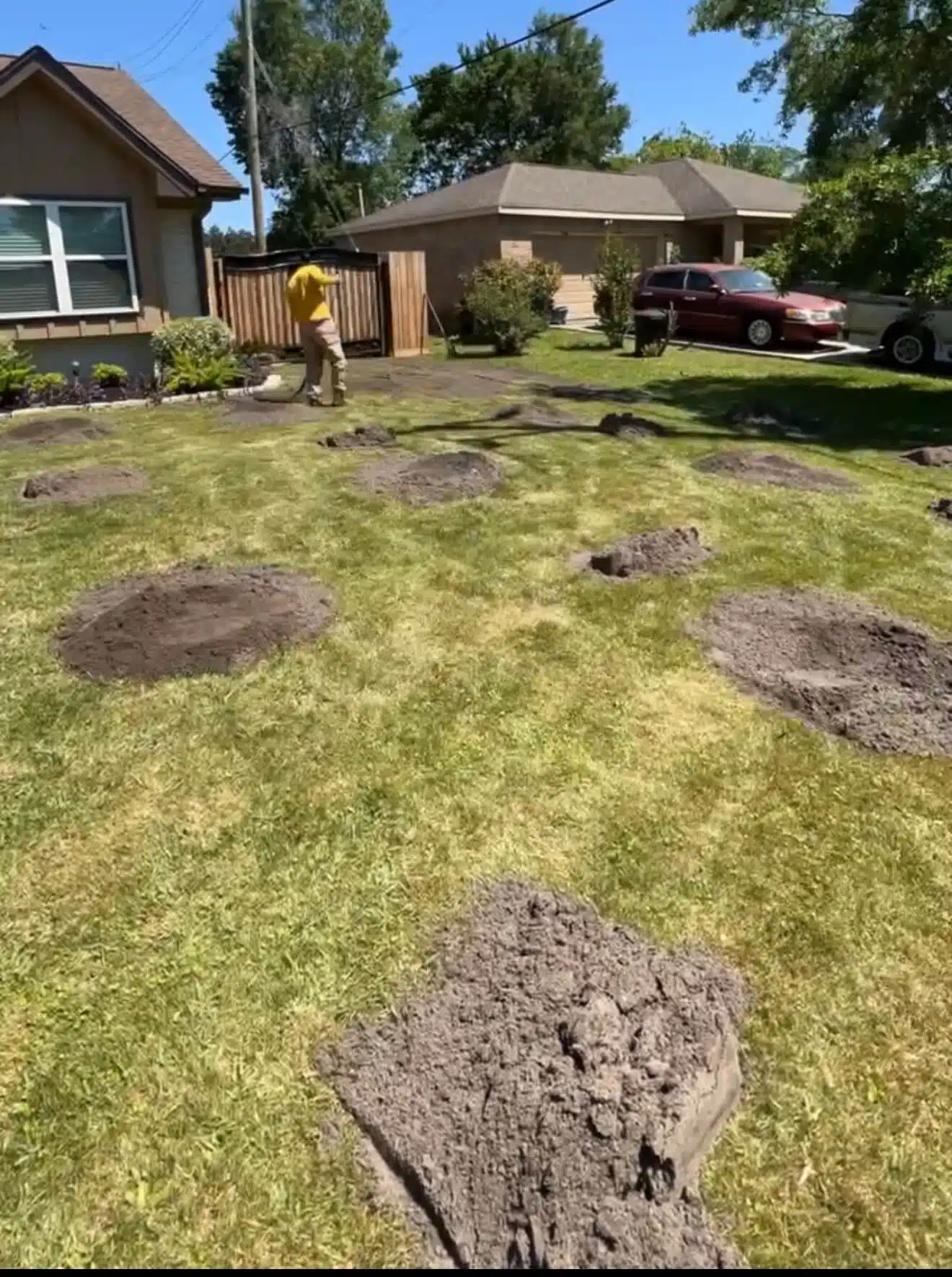
Existing turf and surface conditions before material is applied.
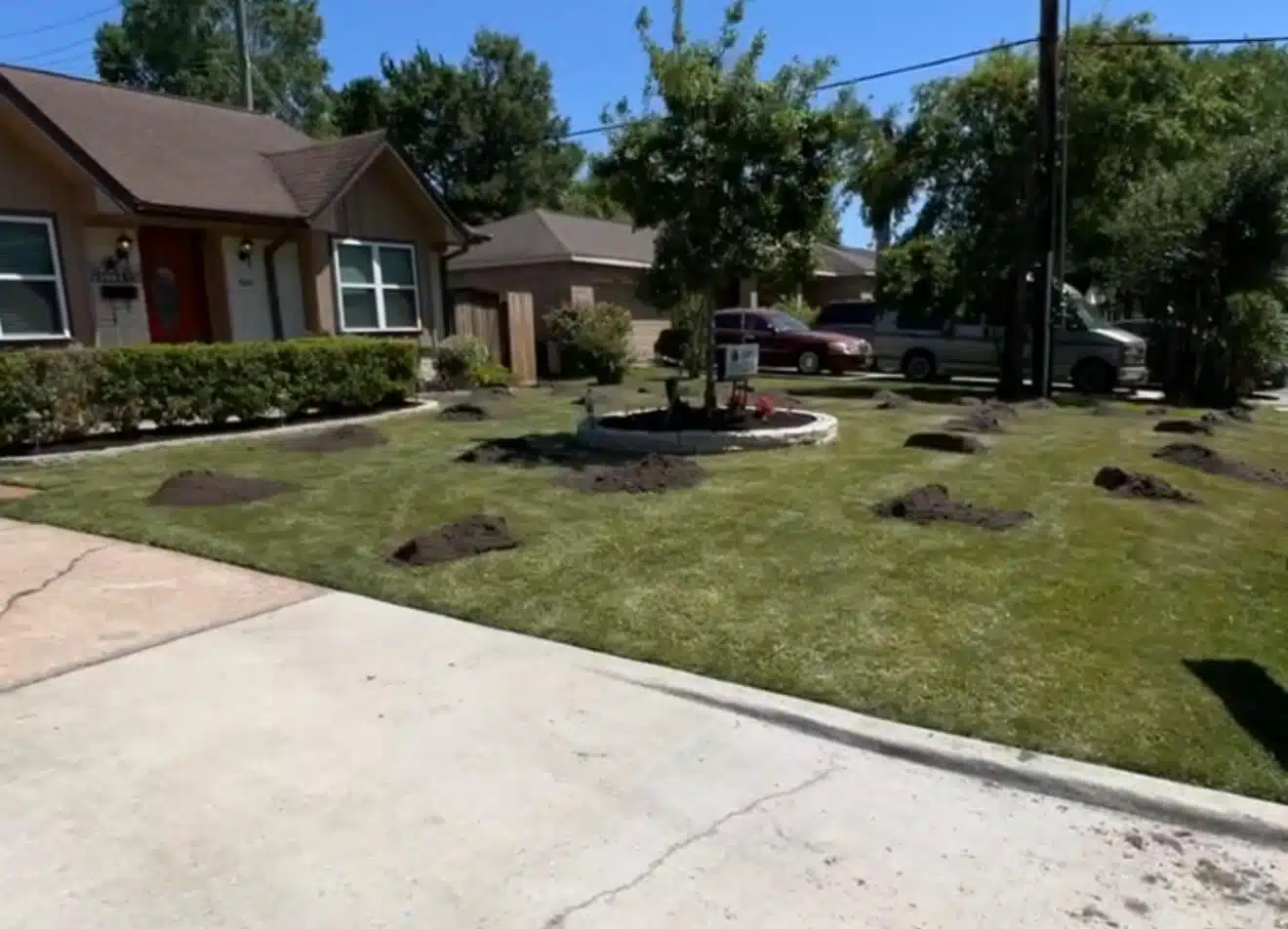
Topdressing material being distributed across the existing lawn.
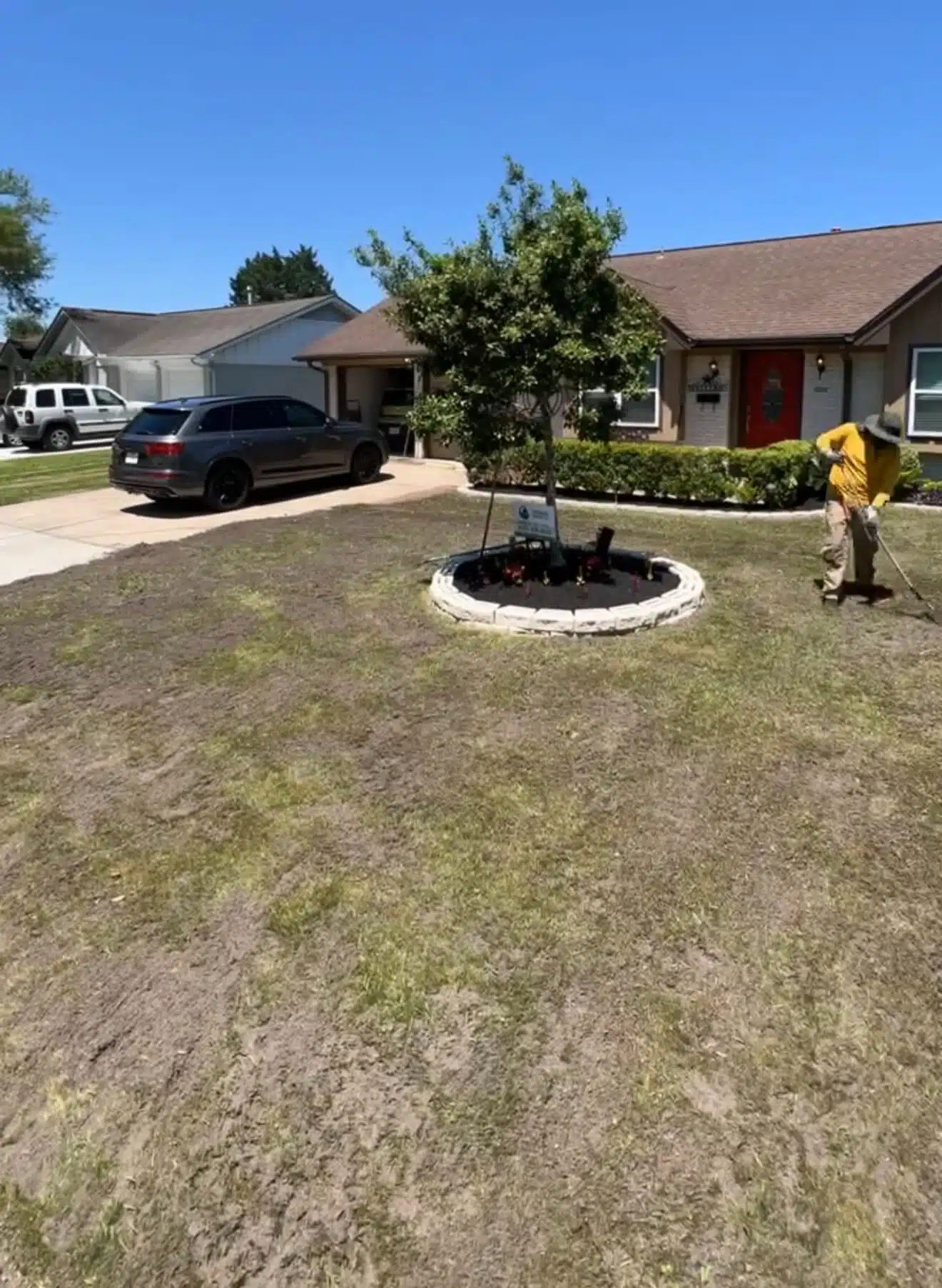
The lawn immediately after the material has been spread and worked across the turf.
How quickly the grass grows through topdressing depends on turf type, season, material depth, irrigation, weather, and the condition of the lawn. There is no universal recovery timeline.
When Would You Aerate, Topdress, or Use Both?
Aeration May Be the Better Fit When:
- The soil feels hard or physically compacted.
- The property receives significant foot or equipment traffic.
- Water has difficulty entering compacted areas of the lawn.
Topdressing May Be the Better Fit When:
- The goal is to add appropriate organic material to the surface.
- Minor surface irregularities need to be smoothed.
- The existing lawn is healthy enough to grow through the selected material.
Both May Make Sense When:
A lawn has meaningful soil compaction and would also benefit from the material being added through topdressing. When both services are appropriate, aeration is commonly performed first so some of the topdressing material can settle into the openings.
A lawn can need aeration without topdressing. It can also need topdressing without aeration. The right combination depends on the lawn and the reason the work is being performed.
When Neither Aeration nor Topdressing Is the Real Fix
This distinction matters because several lawn problems can look like soil problems from the surface.
- Persistent standing water caused by grading or drainage infrastructure: the property may need a true drainage solution .
- Large areas where turf is already dead or missing: sod repair or replacement may be more appropriate.
- Poor irrigation coverage: improving soil will not compensate for a lawn that is consistently receiving too much or too little water.
- Heavy shade or unsuitable growing conditions: the underlying site limitation may need to be addressed first.
- Disease, insect damage, or another turf problem: aeration and topdressing do not replace diagnosis of the actual cause.
When Is a Good Time for Aeration or Topdressing in Houston?
St. Augustine, Bermuda, and Zoysia are warm-season grasses. In general, disruptive lawn-improvement work is easier for actively growing turf to recover from than dormant or severely stressed grass.
That makes spring into early summer a practical window for many Houston lawns, but the calendar is only part of the decision.
Soil moisture, recent rainfall, drought stress, turf health, material depth, grass type, and the purpose of the work should all be considered.
A service that makes sense in May one year may need to wait during unusually wet, dry, or stressful conditions. We prefer to work from the property's actual conditions rather than a rigid date.
Topdressing vs. Aeration: Side-by-Side
| Question | Core Aeration | Topdressing |
|---|---|---|
| Primary purpose | Relieve physical soil compaction. | Add appropriate material at the lawn surface. |
| What happens | Small soil cores are mechanically removed. | A thin layer of selected material is distributed across the turf. |
| Useful for | Compacted lawns and restricted root-zone access. | Soil improvement, organic material addition, or minor surface leveling. |
| What it will not fix | Structural drainage, improper grading, shade, dead turf, or irrigation problems. | Major grade problems, failed drainage, missing turf, or unrelated lawn problems. |
| Must they be combined? | No. Some lawns benefit from both, but either service can be appropriate on its own. | |
How Evergreen Decides Which Approach Fits
Start With the Problem
Is the main concern compaction, soil improvement, minor leveling, standing water, thin turf, or something else?
Look at the Lawn Conditions
Grass type, turf condition, soil moisture, property access, irrigation, and season can all affect what makes sense.
Choose the Service — Not the Package
We do not assume every lawn should receive aeration and topdressing together. The work should match the problem being addressed.
Set Realistic Expectations
Soil work can improve conditions, but turf response still depends on watering, weather, season, existing grass health, and ongoing maintenance.
Common Questions About Aeration and Topdressing
If I am doing both, should aeration come before topdressing?
When both services are appropriate, aeration is commonly performed first. That allows some of the topdressing material to work into the newly created openings. However, topdressing does not require aeration in every situation.
Will aeration fix standing water in my yard?
It can help when compaction is limiting water infiltration, but standing water can also be caused by grading, low areas, drainage infrastructure, or irrigation. Aeration should not be treated as a universal drainage fix.
What is the best topdressing material for a Houston lawn?
There is no single material or ratio that is automatically best for every Houston property. Material selection should reflect the existing turf, soil conditions, whether leveling is needed, and the purpose of the application.
How long will soil plugs remain after aeration?
Soil cores usually break down gradually through irrigation, rainfall, mowing, foot traffic, and normal weathering. The timing varies with weather and site conditions, so there is no exact number of days that applies to every lawn.
Can I topdress my own lawn?
Yes. The main challenges are accurately measuring the lawn, selecting appropriate material, applying the correct depth, spreading it evenly, and avoiding burying the existing turf under too much material.
Explore Core Aeration
See how Evergreen approaches professional core aeration for compacted Houston lawns.
Explore Lawn Topdressing
Learn more about Evergreen's lawn topdressing and compost options for Houston properties.
What If You Are Not Sure Which Problem You Have?
If you already know you need aeration or topdressing, an estimate can be relatively straightforward.
When the lawn has several overlapping issues — such as drainage, shade, thinning turf, irrigation concerns, soil problems, or uncertainty about why the lawn is declining — deeper individualized guidance may be more appropriate before selecting a service.
We explain that difference in: Lawn Estimates vs. Lawn Evaluations: What's the Difference?
Choose the Treatment That Matches the Problem
Aeration and topdressing can both be valuable tools for Houston lawns, but more lawn treatment is not automatically better lawn care.
Core aeration makes sense when physical compaction needs to be relieved. Topdressing makes sense when adding carefully selected surface material supports the property's soil or leveling goals. Some lawns benefit from both. Others need a completely different solution.
Understanding that difference is what helps turn lawn work into a practical property decision instead of another treatment added to the calendar.
Professional Care. Clear Communication. Consistent Results.