
Updated for the 2026 season · Evergreen Outdoor Services · Houston, TX
Houston homeowners know this story all too well. One minute your lawn looks pristine, and the next, it's hijacked by weeds growing faster than humidity hits in July. After last summer's brutal heatwaves, weeds in Houston feel more aggressive than ever. Whether it's a clover invasion in spring or crabgrass creeping in mid-summer, understanding Houston seasonal weed control can mean the difference between a lush lawn and a botanical battlefield.
Houston weather doesn't play by the rules. One week it's nonstop rain, the next it's blazing heat. But weeds? They never take breaks. So, what's a homeowner to do?
Chemical weed killers often look like the quicker, immediate fix, and sometimes they are. But over time, hidden costs surface: depleted soil health, runoff concerns, and risks to pets or kids who love to play outside. For many homeowners, natural and organic weed control methods are safer, gentler on the earth, and better for long-term yard health.
That said, the choice is yours. We're here to offer real-world insights and help you get ahead of weeds, Houston style.
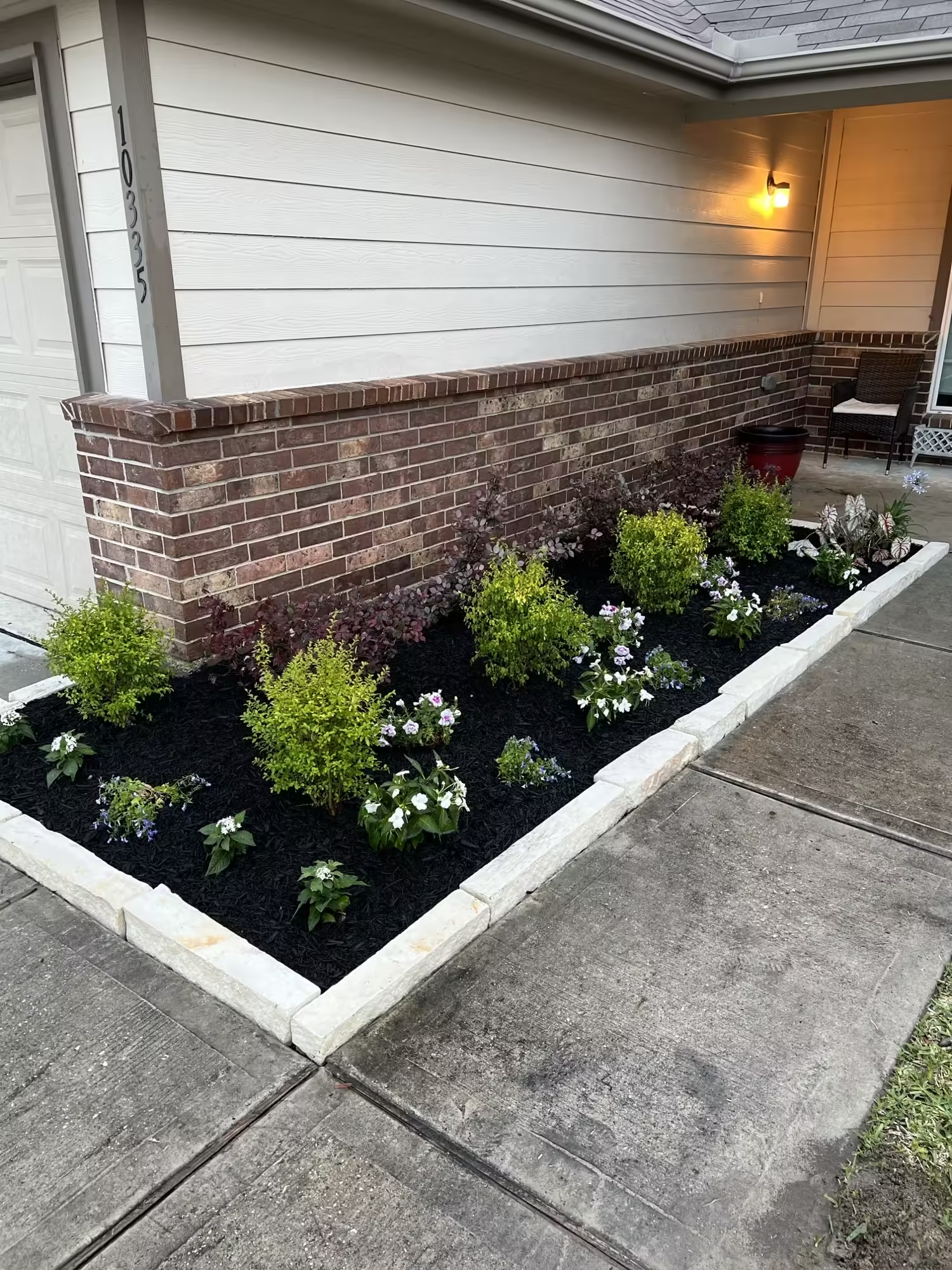
 Freshly weeded and mulched garden bed featuring neatly trimmed evergreen shrubs, highlighting a clean and well-maintained landscape.
Weeds in Houston aren't all the same. Different species germinate at different times based on soil temperature, moisture, and your lawn's health. A strong seasonal strategy focuses on prevention through timing and lawn health first, rather than reactive spraying.
Thick, healthy turf naturally competes with weeds, reducing the number of weeds that ever sprout. Consistent mowing, proper watering, and nutrient support help crowd weeds out over time. See our full Houston lawn care guide for context on mowing, watering, and fertilization that supports weed resistance.
By early spring, cool-season weeds like chickweed, henbit, and clover have already RSVP'd to your lawn's party. They take advantage of cooler temperatures and moist soils, quickly crowding out your lawn before grass fully wakes from winter dormancy.
These weeds germinate early when soils are still cool (below 55°F) and moisture is abundant. Since your grass is slower to emerge from winter rest, cool-season weeds seize their opportunity to grow unchecked.
This is one of the most important windows of the year because it's when many weeds are easiest to prevent.
If your lawn gets thin in winter, weeds exploit the open space fast. The goal here is to prevent germination while your turf wakes back up.
Spring weeds often include broadleaf types like clover and similar invaders. This is when homeowners usually notice weed patches appearing quickly.
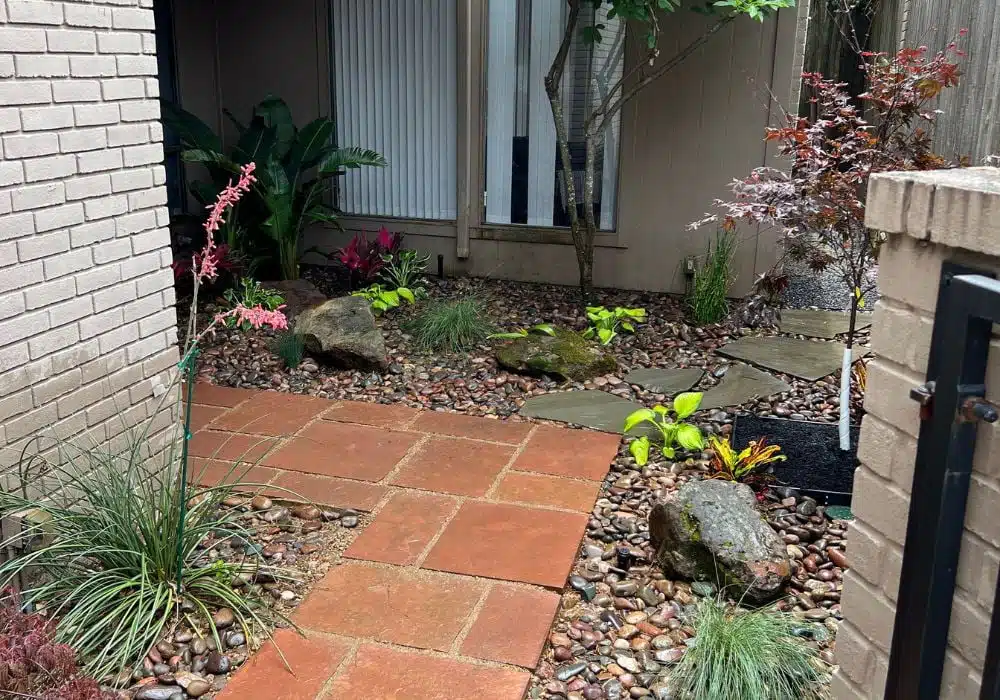
 Houston backyard lawn care featured on our blog showcasing natural edging and clean garden borders.
By May and June, heat-loving weeds like crabgrass, spurge, and nutsedge start thriving across Houston lawns, quickly turning lush grass into a patchy eyesore.
As Houston's intense summer heat kicks in, soil temperatures spike, activating dormant weed seeds. These warm-season weeds not only love the heat, they flourish when your lawn is weakened by drought, inconsistent mowing, or poor watering habits.
Summer weeds thrive in the same conditions that stress turf: heat, humidity, and inconsistent rain.
Common summer weed pressure includes crabgrass, spurge, and nutsedge-type weeds. The biggest mistake in summer is going too aggressive and accidentally damaging the grass more than the weeds.
As fall approaches, sneaky weeds like annual bluegrass (also known as poa annua) quietly take hold in your lawn, setting the stage for frustrating weed invasions next spring.
Cooler September and October temperatures signal these weeds to germinate. Often overlooked, these cool-weather invaders settle in unnoticed, preparing to become visible and problematic as soon as spring temperatures rise.
Fall is a major opportunity that many homeowners skip. Certain weeds germinate as temperatures cool down, and if you prevent them now, you reduce next spring's headaches.
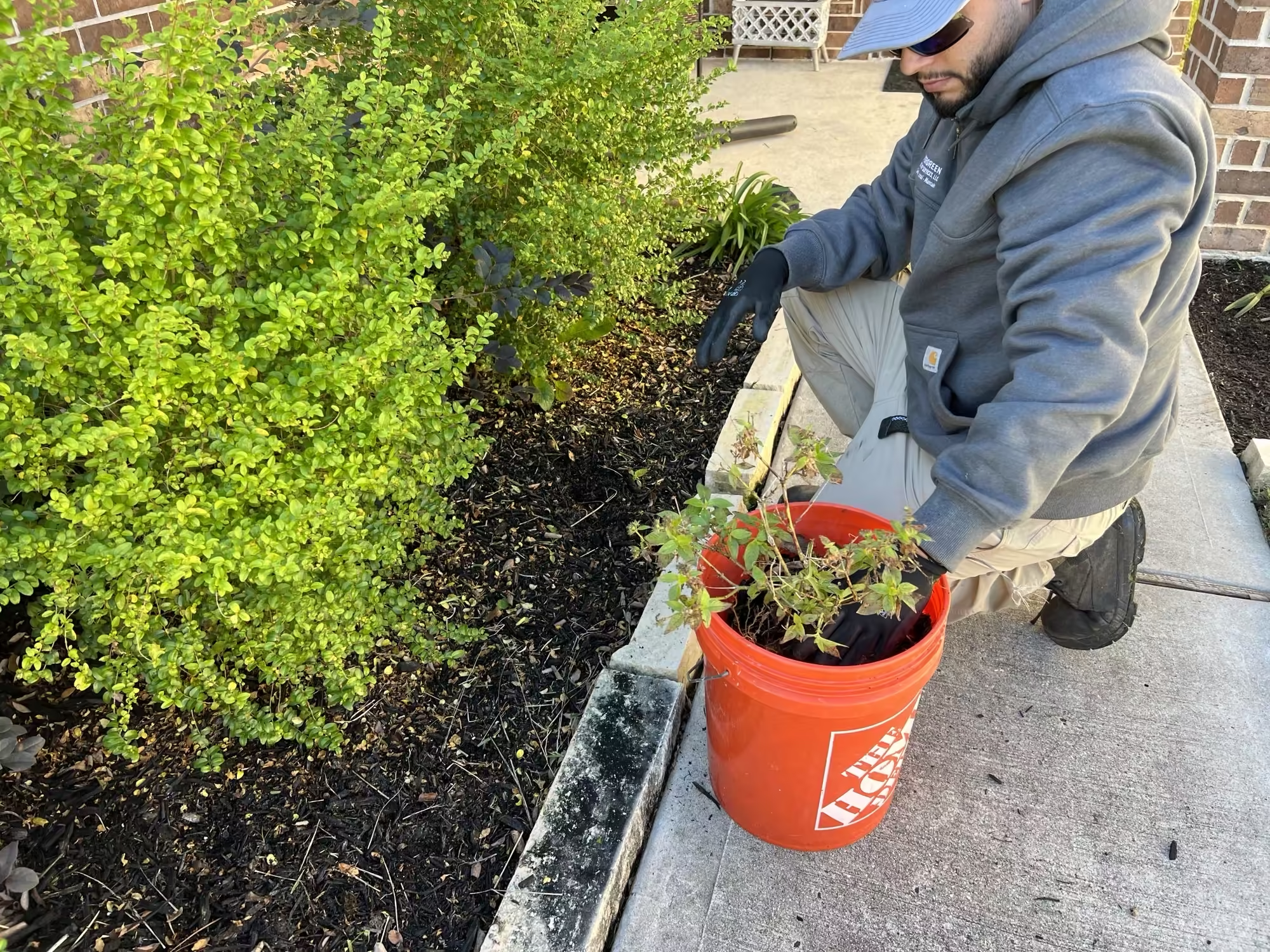
 A professional landscaper kneeling beside a mulched garden bed, pulling weeds and placing them into a bucket during hands-on garden maintenance.
Winter is where a lot of people waste money trying to fix what's mostly cosmetic or temporary. Grass growth slows. Some weeds hang around. That doesn't always mean you need heavy treatment.
Where weeds cluster often indicates thin turf, poor drainage, or compacted soil. Early spring, those areas can be a great opportunity to correct any issues on the yard and get you on the right track.
There's no single right answer. It depends on your lawn's condition, how intense the weed pressure is, and what matters most to you (kids and pets, environmental impact, long-term soil health, or fast visual results).
We generally favor a more natural, soil-first approach because it consistently delivers better long-term outcomes, similar to choosing whole foods over fast food. Compost top dressing and natural soil-building practices have been used successfully for generations because they improve soil structure, support beneficial biology, and help lawns become stronger and more resilient over time.
By comparison, many mass-produced, bagged soil and fertilizer products are heavily processed, stored in plastic for long periods, and blended for nationwide distribution, not Houston's unique clay soils, heat, and rainfall patterns. While they can provide short-term results, they often lack the living biology that helps soil function properly. Over time, repeated dependence on these inputs can contribute to compacted soil, weaker root systems, and a cycle of constant correction that ends up costing more through soil testing, amendments, or even sod repairs.
Whenever possible, we prefer locally sourced soil blends and organic inputs that are tailored for our region. These materials support active soil life, improve drainage and root development, and reduce long-term dependency on corrective treatments. For more on this approach, see our organic fertilization guide.
That said, transparency matters. If your priority is fast, immediate visual improvement, targeted chemical control can absolutely be effective when used responsibly. The key is aligning the approach with your goals, whether that's quick cosmetic results, long-term lawn health, or a balance of both.
For most Houston lawns, the best results come from a hybrid strategy. Dial in the timing, build healthy soil and turf, and use targeted control only when it truly makes sense. That approach delivers visible improvement now and reduces weed pressure year after year.
Avoid these and you'll save time, money, and frustration:
Want us to take the lawn care to-dos off your checklist? Feel free to check out our lawn care services and let our pros get it done reliably with high-quality service.
Best timing is usually late February to March for spring and summer weeds, and September to early October for fall and winter weeds. The goal is to apply before weeds germinate (timing depends on weather patterns, not just the calendar).
Pre-emergent prevents weed seeds from sprouting (it's a barrier in the soil). Post-emergent kills weeds that are already growing. Most Houston lawns need both at different times of year for best results.
With post-emergent, you'll often see weeds start to decline in 3 to 14 days depending on the weed type and conditions. With pre-emergent, there's no visible kill. Success looks like fewer weeds showing up over the next several weeks.
Pulling works best for small patches (get the root, and don't let them go to seed). For larger infestations, spot-spraying is usually more efficient. A smart approach is often: pull what you can, spot-treat what you can't.
Sometimes, but it's usually better to space them out by 1 to 3 weeks so you don't stress the lawn or reduce effectiveness. Also avoid applications during extreme heat, and always follow label directions for timing, watering, and mowing.
Source: Texas A&M AgriLife Extension, Managing Weeds in Warm-Season Lawns. We align our seasonal weed control programs with their guidance for Houston conditions.
We're happy to swing by for a friendly check-in. Schedule your complimentary landscape maintenance estimate and we'll help you figure out what's really going on under the weeds. No pressure, just neighborly support.
Call us at 832-506-8239 or request your estimate online.