
When Should You Aerate Your Lawn in Houston?
A Houston lawn can look stressed even when it is being watered and maintained regularly. Sometimes the problem is not what is happening above the grass. It is what is happening underneath it.
Dense soil can become compacted from foot traffic, mowing equipment, construction activity, and normal property use. When that happens, it becomes harder for air and water to move through the soil around the root zone.
Core aeration can help when compaction is part of the problem. It physically removes small plugs of soil, opening the ground and improving access into the root zone.
Aeration is not a cure for every struggling lawn, though. Drainage, irrigation, shade, pests, disease, and severely damaged turf can require a different solution.
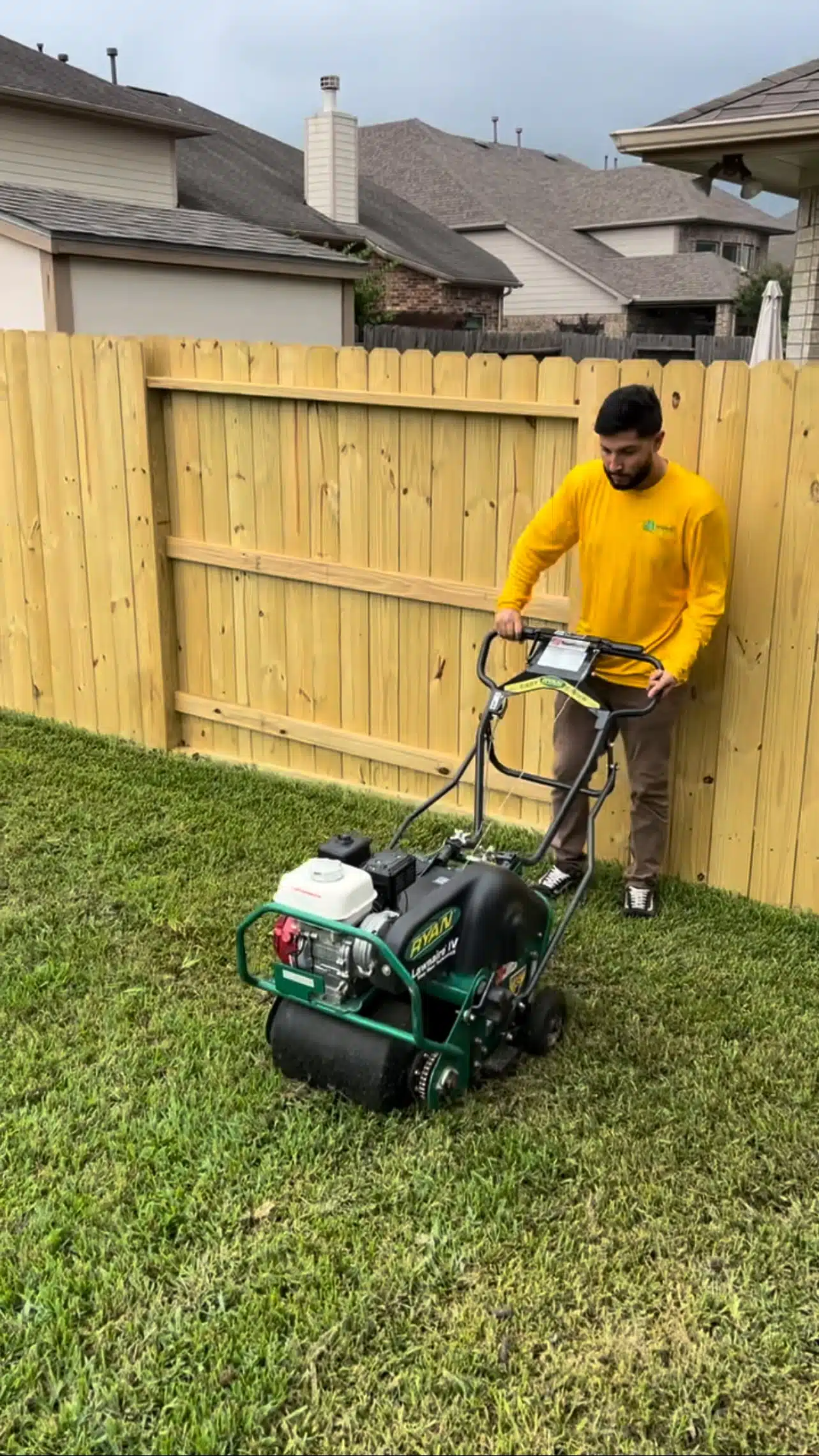
When should you aerate a lawn in Houston?
For most warm-season Houston lawns, core aeration is most useful while the turf is actively growing and able to recover. Late spring into early summer is often a practical window, but soil moisture, grass type, weather, and lawn condition matter more than simply choosing a month on the calendar.
What Is Core Lawn Aeration?
Core aeration uses a mechanical aerator to remove small plugs of turf and soil from the lawn. Those openings temporarily reduce soil density and provide more direct pathways for air and water to move into the root zone.
There are several approaches homeowners may encounter when researching aeration.
Core Aeration
A mechanical aerator removes small soil plugs from the lawn. Because material is physically removed, this method is useful when relieving actual soil compaction is the goal.
Spike Aeration
Solid tines create openings without removing soil. It is a different process and may provide less relief where dense, compacted soil is the main concern.
Liquid Aeration
Products marketed as liquid aeration are generally soil-conditioning treatments. They may have a place in a lawn-care program, but they are not the same as mechanically removing soil cores.
If you already know you are looking for professional service, you can review our Houston lawn aeration service and what we consider before recommending the work.
Why Soil Compaction Matters in Houston
Many Houston-area properties contain clay-heavy soils. Clay itself is not automatically bad for a lawn, but dense soil can become more restrictive when repeated traffic or other conditions reduce the open spaces available for air and water movement.
Soil structure, pore space, drainage, and preparation all play a role in how well turf roots can function. When soil becomes physically compacted, those conditions can become less favorable for healthy lawn growth.
Some common contributors to compaction around residential properties include:
- Regular foot traffic from children, pets, and outdoor use
- Repeated mower and lawn-equipment traffic
- Construction or renovation activity
- Driving or working across soil while it is wet
- Dense soil that has not been mechanically opened for an extended period
What it can do is relieve physical compaction and create temporary openings into the root zone.
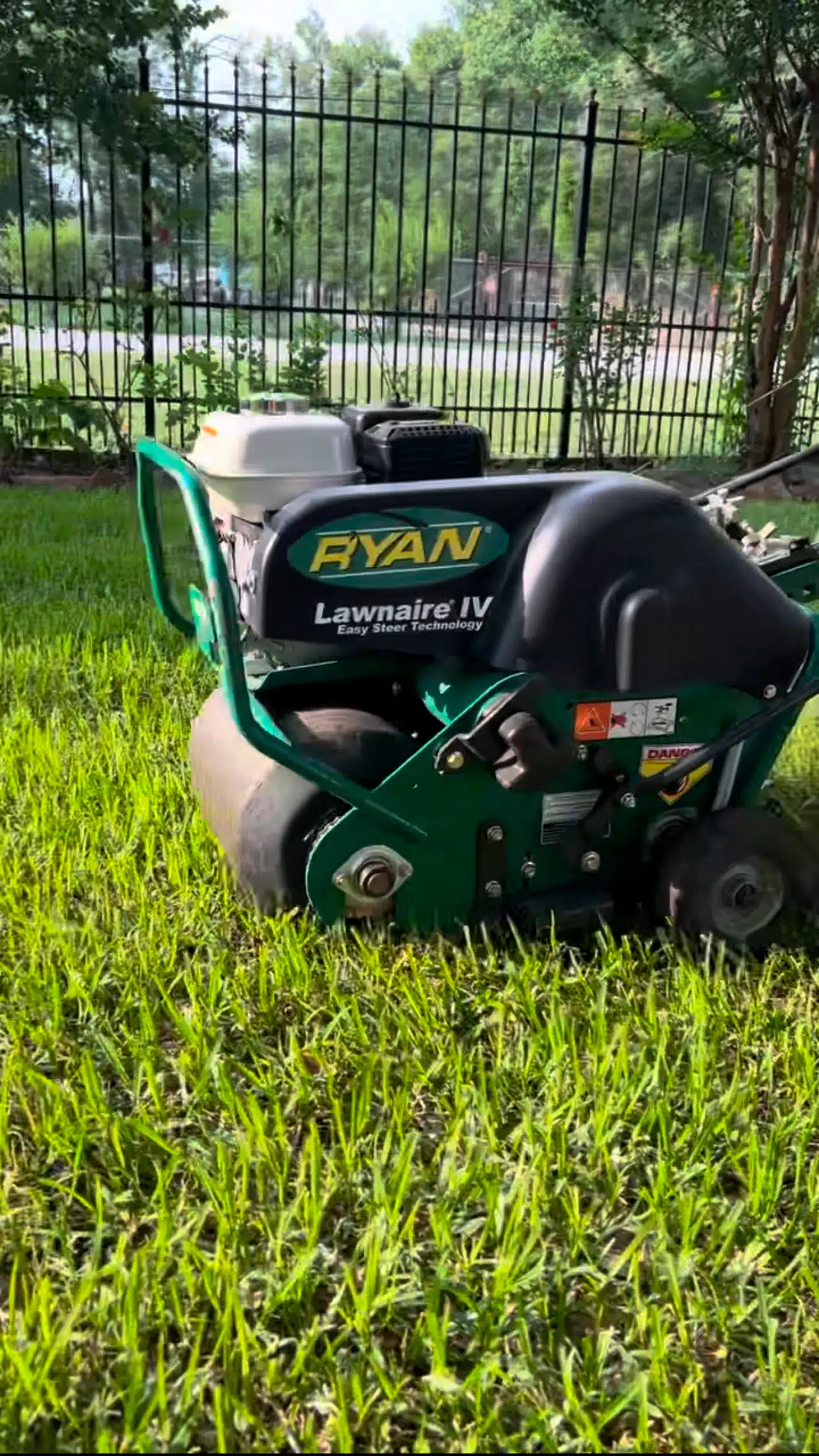
Signs Your Lawn May Benefit From Aeration
The need for aeration should be based on the lawn itself rather than an automatic annual schedule.
- The soil feels unusually firm or compacted when walking across the lawn or pushing into the ground.
- Water has difficulty entering compacted areas and tends to sit or run across the surface.
- The property receives regular foot or equipment traffic.
- Turf appears weak despite reasonable maintenance and soil compaction may be contributing to the problem.
- Construction or landscaping work has compacted portions of the property.
If pooling is caused by grading, drainage infrastructure, irrigation, or another property-level issue, aeration alone will not correct the underlying problem.
When Is the Best Time to Aerate a Lawn in Houston?
St. Augustine, Bermuda, and Zoysia are warm-season grasses commonly found throughout Houston. For these lawns, core aeration is generally most useful while the turf is actively growing and has time to recover.
That often makes late spring into early summer a practical aeration window once the lawn is actively growing.
Soil conditions matter just as much as the season. The soil should normally be moist enough for the aerator to pull useful cores, but not muddy or saturated.
Extremely dry soil, saturated ground, drought-stressed turf, dormancy, or other lawn problems may make another timing or another service more appropriate.
What Does Core Aeration Actually Help With?
Relieving Physical Compaction
Removing soil cores creates temporary space within dense ground and reduces some of the physical restriction around the turf's root zone.
Improving Access for Air and Water
The openings created by aeration provide more direct pathways into compacted soil. This can help where compaction is limiting normal infiltration.
Supporting Root-Zone Conditions
Aeration does not guarantee deeper roots or instant new grass. Instead, it improves the soil environment around the existing root system so the turf has better conditions in which to respond.
Complementing Other Lawn Improvements
Depending on the property, aeration may be paired with fertilization, topdressing, or overseeding. Those services should be recommended because they make sense for the lawn, not simply because aeration was performed.
Should You Overseed After Aeration?
Not automatically.
Whether overseeding makes sense depends heavily on the existing grass, season, irrigation, sunlight, soil conditions, and what the homeowner is trying to accomplish.
St. Augustine
St. Augustine is generally established vegetatively rather than from seed. Thin or damaged St. Augustine areas are usually addressed by improving the existing turf or using plugs or sod where replacement is necessary.
Bermuda and Zoysia
Seeding may be possible for some varieties, but timing, variety selection, watering, existing turf, and desired appearance all matter.
In some situations, sod installation or repair may be the more predictable option.
Winter Ryegrass
Ryegrass can provide temporary cool-season color while warm-season turf is dormant. It is a seasonal option, not a permanent replacement for the underlying lawn, and it requires appropriate watering, mowing, and spring transition management.
The grass type and lawn conditions should determine whether overseeding belongs in the recovery plan.
How Evergreen Approaches Core Aeration
Confirm the Lawn Is a Reasonable Fit
We consider the lawn area, turf condition, property access, visible irrigation components, and whether soil compaction appears consistent with the property's concern.
Prepare the Service Area
The lawn should be accessible and reasonably short. Toys, hoses, furniture, and loose obstacles should be removed, and known sprinkler heads or shallow private components should be identified.
Perform Core Aeration
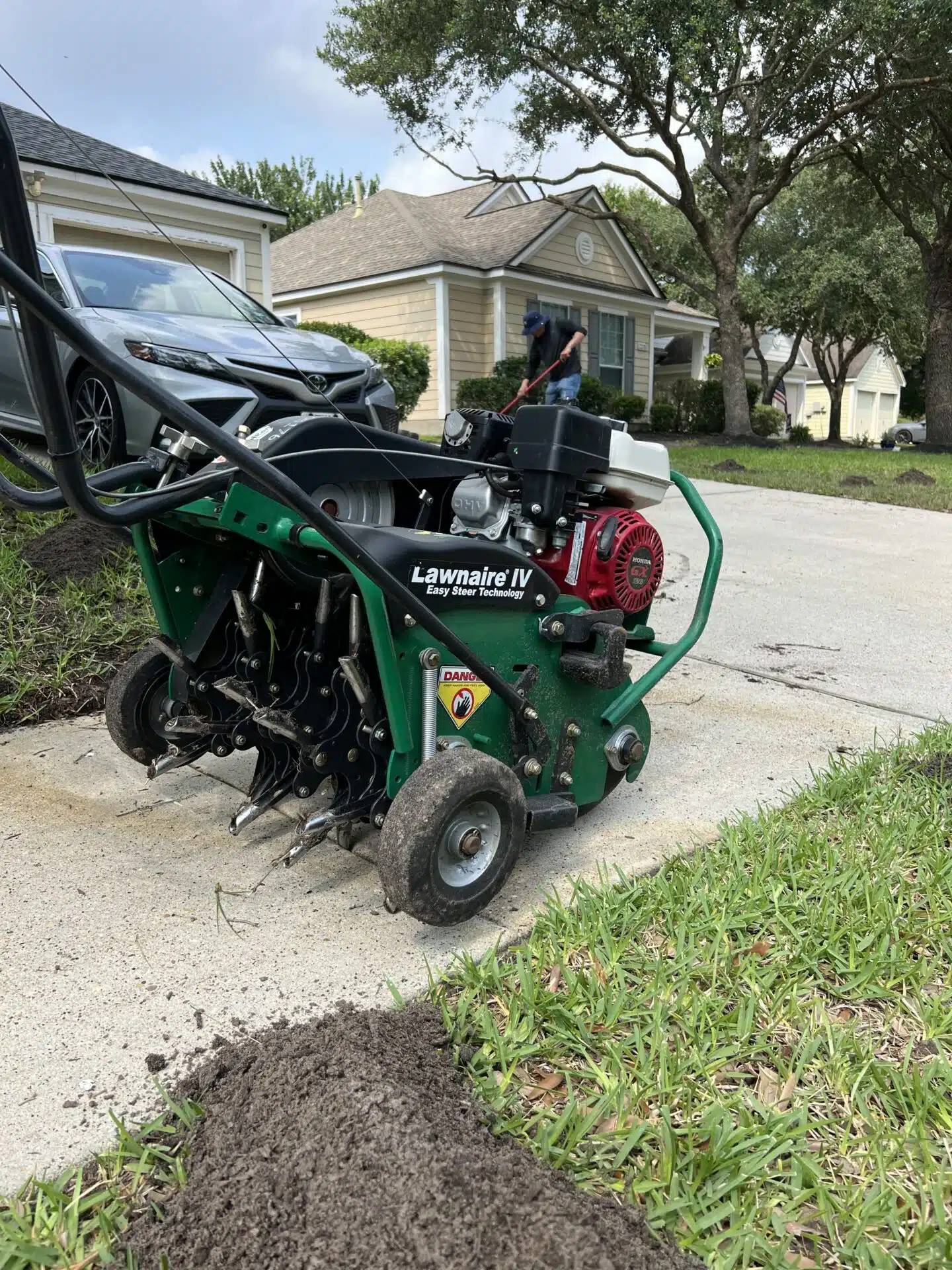
Commercial-grade equipment is used to mechanically remove soil cores throughout accessible areas where ground conditions allow.
Leave the Cores to Break Down
The soil plugs are generally left in place so weather, irrigation, and normal lawn activity can gradually break them down.
Recommend Follow-Up Only When Appropriate
Some lawns may benefit from fertilization, topdressing, overseeding, improved watering, or sod repair. Others may simply need proper ongoing care.
What Should You Expect After Aeration?
Small soil plugs will be visible throughout the service area immediately afterward. That is normal and shows that soil was actually removed rather than simply punctured.
We generally recommend leaving those cores in place. Rain, irrigation, mowing, and normal weathering gradually break them down.
Aeration itself does not create instant new grass. Turf response afterward depends on the season, grass type, watering, fertility, weather, and condition of the lawn before service.
How Often Should a Houston Lawn Be Aerated?
There is no universal schedule.
A lawn with substantial compaction or repeated traffic may benefit from aeration more regularly than a lawn with healthy soil structure and relatively little traffic.
We prefer to base the decision on actual lawn conditions rather than treating aeration as an automatic annual service for every property.
Can Aeration Help With Water Pooling or Drainage?
Sometimes, but the cause matters.
If compacted soil is limiting how readily water enters the ground, core aeration may improve infiltration in those areas.
Aeration cannot correct improper grading, a failed drainage system, persistent low areas, or other structural drainage problems.
The correct solution may involve the property's drainage rather than the turf itself.
Aeration vs. Topdressing: Do You Need Both?
They solve different problems.
Core aeration primarily addresses physical soil compaction. Topdressing adds a thin layer of material to the surface and may support longer-term soil improvement depending on the material and lawn conditions.
Some lawns benefit from both, while others may need only one.
For a more detailed comparison, read: Aeration vs. Topdressing: What's the Difference?
Already Know Your Lawn Needs Aeration?
If you are looking for professional core aeration rather than general lawn advice, review Evergreen's service details, preparation guidance, and next steps.
Explore Lawn Aeration ServiceEstimate or Deeper Lawn Evaluation?
If you already know the property needs core aeration, requesting an estimate is usually straightforward.
If the lawn has several overlapping problems, such as shade, drainage concerns, thinning turf, irrigation issues, or uncertainty about what is actually causing the decline, more individualized diagnostic support may be appropriate before choosing a service.
We explain that difference in our guide: Lawn Estimates vs. Lawn Evaluations: What's the Difference?
A Better Lawn Starts With Identifying the Actual Problem
Core aeration is a useful tool when soil compaction is limiting a Houston lawn, but good lawn care starts with understanding what is actually holding the turf back.
For one property, aeration may be the right move. For another, the better solution could involve topdressing, irrigation correction, fertilization, sod repair, drainage work, or simply better ongoing maintenance.
The goal is not to apply the same treatment to every lawn. It is to choose the service that fits the property and the problem.
Professional Care. Clear Communication. Consistent Results.