Updated May 2026 · Evergreen Outdoor Services · Houston, TX
Houston's soil is not one-size-fits-all. Black Gumbo clay in some neighborhoods holds water like concrete. Sandy soils in others drain too fast. Synthetic fertilizers mask these problems temporarily but don't fix the underlying structure. Organic fertilization—paired with real soil diagnostics and amendment strategy—builds soil that actually performs year after year in Houston's heat, humidity, and clay challenges.
This guide covers what organic fertilization actually costs in this market, which amendments work on which soil types, when to apply them, and why a soil test before you spend a dime on amendments is the most cost-effective first decision you'll make.
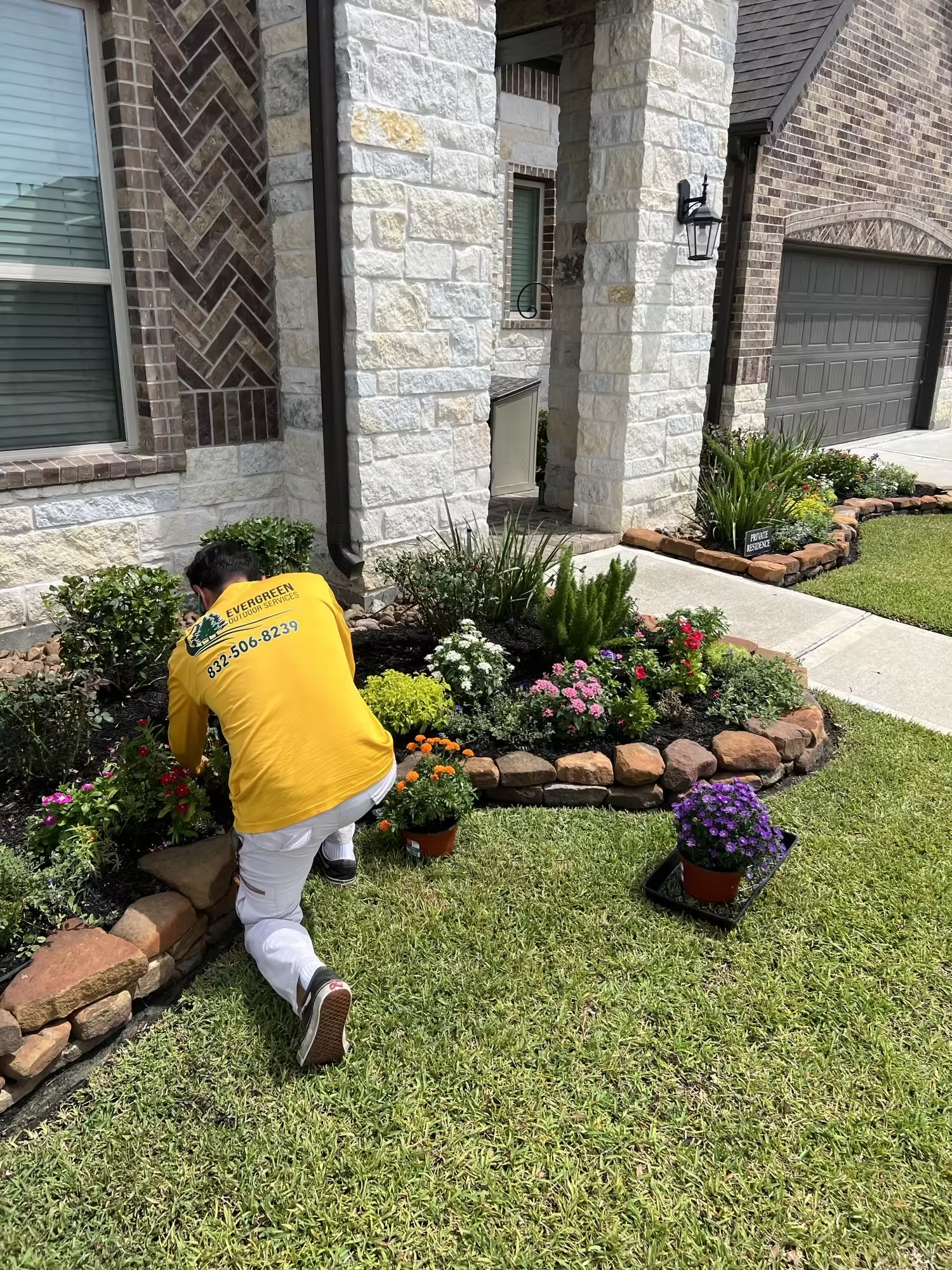 Healthy soil structure—the result of organic matter building, microbe cultivation, and strategic amendment. This is the foundation every Houston lawn needs.
Houston's soil is polarized. Some neighborhoods sit on dense Black Gumbo clay that expands when wet and shrinks into hard cracks when dry. Others have sandy, nutrient-poor soil that drains everything away. A few have mixed conditions that shift from block to block.
This matters because synthetic fertilizers work the same way everywhere. They dump soluble nutrients into the soil and hope the plant takes them before they wash away. Organic fertilization works differently. It builds soil structure so it holds water and nutrients. The path to improvement depends on whether you're fighting clay compaction or sandy depletion.
Our native Houston clay is dense, poorly draining in some spots and waterlogged in others. It has low organic matter, which means minimal microbial life and poor nutrient cycling. Roots can't penetrate easily. Water sits or runs off unpredictably.
The solution is not more fertilizer. It's structure. You need to:
Once structure improves, fertilizer effectiveness jumps because roots can actually access the nutrients.
Sandy soils drain too fast and hold almost no nutrients. Plants are always hungry because water washes nutrients away before roots can grab them. Conventional solution: more fertilizer, more often. That's expensive and depletes the soil over time.
Organic approach: add organic matter and slow-release inputs that hold nutrients in place. You need:
Before adding soil amendments, a soil test is one of the most practical first steps. A basic test usually costs $20–$100 and helps identify pH, nutrient levels, and what the soil is actually missing. From there, amendments should be chosen based on the property, the soil condition, and what the test shows.
The issue is dense soil, slow drainage, poor root movement, and seasonal expansion. The solution is a quality grass mix that improves the surface new roots grow into. Our preferred mix includes screened topsoil, sand, shredded organic matter, expanded shale, and soil-building inputs.
Typical amendment needs range from 1–8 cubic yards depending on yard size, grade, and soil condition. Material commonly ranges from $200–$1,800 before labor.
Sandy soil drains too fast and struggles to hold moisture, nutrients, and organic matter. Leaf mold compost is usually the best correction because it helps the root zone hold moisture longer and introduces readily available organic matter.
Our grass mix is also a strong option when the area needs better structure, light grading, or a more balanced growing surface. Typical material needs range from 1–8 cubic yards, often $200–$1,800 before labor.
Synthetic fertilizers go in fast and show results quickly. Nutrients hit the root zone, the blade greens up, and whatever the plant doesn't take washes away or builds up as salt over time. It feeds the grass, not the soil.
Organic fertilization works differently. Organic inputs feed the microbial life in the soil. Those microbes break down organic matter and release nutrients in forms the plant can actually use at its own pace. Beneficial fungi like mycorrhizae form connections with roots and expand their reach beyond what the root system could access on its own. Over time, organic matter binds soil particles together, improving structure, drainage, and water retention all at once.
The result is slower to show up visually—you won't see the two-week green flush you get from a synthetic product. But after two or three seasons of consistent organic management, the soil itself improves. It holds more moisture, drains better, supports more root development, and needs fewer inputs to stay healthy. That's the compounding effect synthetic programs don't build.
| Material | Best For | Cost | Expected Results |
|---|---|---|---|
| Leaf Mold Compost | Premium option for maximum improvement | $100–$300/cu yd | Best results. High organic matter, superior microbial activity, fastest visual improvement. 1–8 cu yds typical for full yard depending on size. |
| Premium Blended Grass Mix | Standard baseline for most projects | $50–$125/cu yd | Great results. Balanced blend of shale, compost, and beneficial microbes. 1–8 cu yds typical. Proven performance across Houston soils. |
| Screened Topsoil + Compost Blend | Budget-conscious option | $30–$75/cu yd | Solid results. Good improvement over time. Lawn moves in right direction. Results lag premium options but realistic expectations matter more than overbuying. |
| Mason Sand (Screened) | Contouring and leveling small ruts/bumps | $50–$100/cu yd | Specialized leveling agent. High-quality screened sand for smoothing small surface irregularities. Also an ingredient in premium grass mix. Light application only—overapplication smothers grass. |
Small touch-ups can be a good DIY project if you have the time, tools, and a clear soil test. The trouble starts when the project involves bulk material, clay correction, grading, or soil prep before sod installation. At that point, guessing on the material, depth, or application can cost more than doing it right the first time.
Professional application is not just about spreading soil. It is choosing the right amendment, applying the right amount, keeping the grade clean, and preparing the root zone for the result you want. For busy homeowners, that difference matters because a lawn project should not turn into multiple dump runs, uneven material, wasted weekends, and a yard that still has the same problem underneath.
Houston's warm season extends from March through October. That's your active growing window. Outside that window, grass is dormant or dormant-adjacent, and fertilizer uptake is minimal.
| Season | Best Timing | What to Do |
|---|---|---|
| Early Spring | March–April | Apply first organic fertilizer feeding as grass breaks dormancy. Aerate and apply compost amendment if needed. Soil temps rising support root uptake. |
| Late Spring/Early Summer | May–June | Second feeding 8–12 weeks after spring. Light feeding—summer heat stress reduces efficiency. Avoid heavy nitrogen in peak heat. |
| Summer | July–August | Skip or minimal feeding. Grass under heat stress. Fertilizer efficiency drops. Focus on irrigation management, not feeding. |
| Fall (Critical Window) | September–October | Third feeding—this is when roots anchor and build reserve energy for winter. Apply quality organic fertilizer. Heavy feeding in fall produces healthier winter dormancy. |
| Winter | November–February | No fertilizer feeding. Grass dormant. Skip. Any nitrogen applied sits in soil and risks nutrient runoff in winter rains. |
Standard program: A strong Houston lawn care program usually includes about 4–6 fertilization applications per year, timed around spring green-up, early summer growth, late summer stress recovery, and fall root support. Applications are commonly spaced 6–8 weeks apart, depending on weather, grass type, soil conditions, and product quality. Annual cost typically ranges from $400–$900 based on yard size and the materials used.
Organic fertilization works best when it starts with a soil test. A basic test commonly costs $20–$100 and tells you what the soil actually needs before you start spending money on amendments. Without it, you're working from assumptions—and the right amendment for clay is often the wrong one for sandy soil.
What a basic soil test tells you:
Local resources: Texas A&M Extension Office offers soil testing for ~$10. Private labs (found through local garden centers) charge $20–$50. Get the basic package, not the premium test. You don't need 20 data points; you need these four.
Before spending money on amendments or fertilizer, let's test your soil and build a plan specific to what's actually happening in your yard. Our $125 soil consultation includes an on-site visit to your property, soil analysis, and a tailored recommendation report. Whether you choose to go DIY or work with us, you'll have the data you need to make the right call.
Learn more about what's included in a professional soil evaluation.
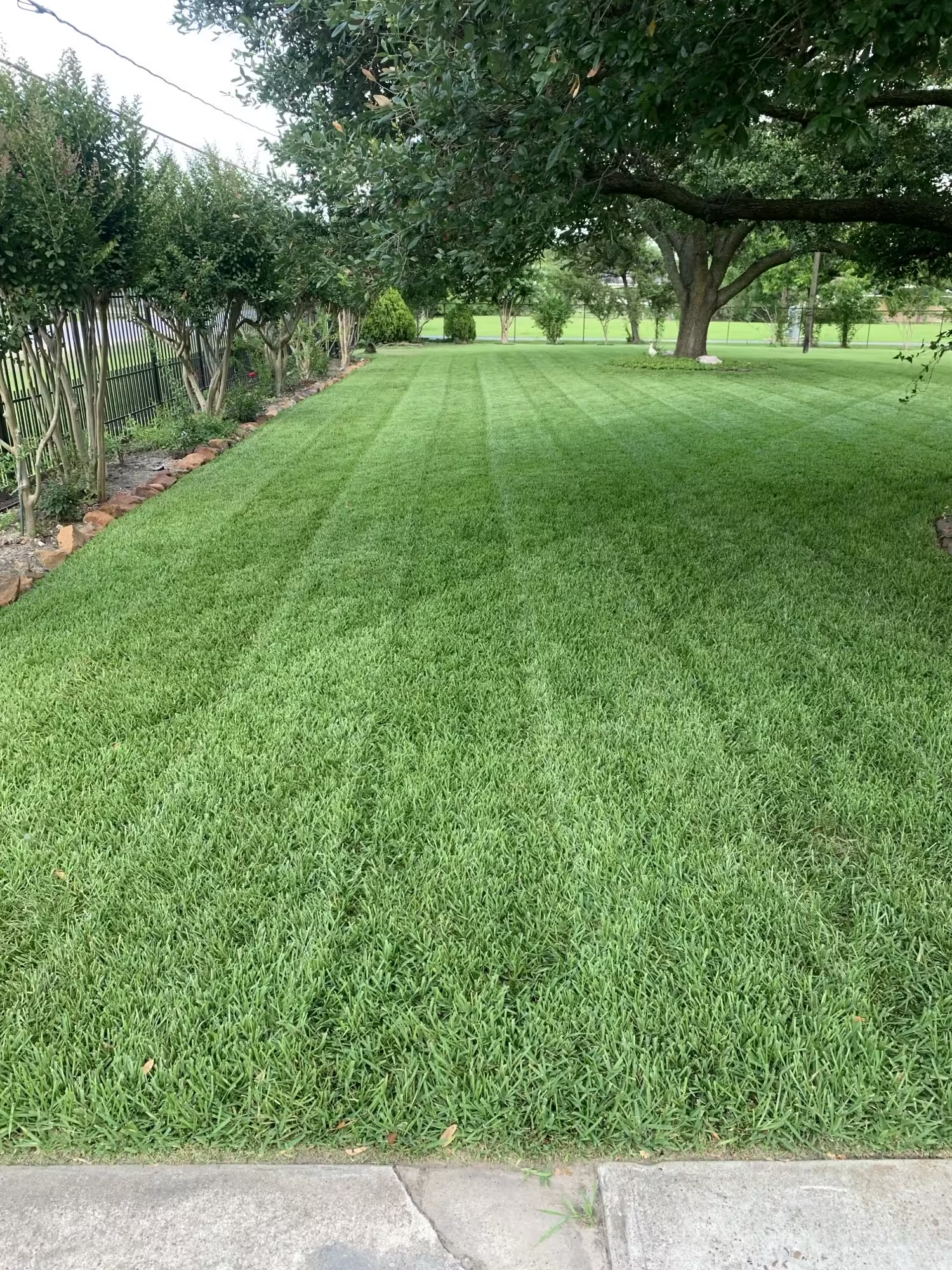 A lawn that responds to organic management—the result of proper soil structure, consistent amendment, and strategic timing.
Organic fertilization works best when it starts with a real diagnosis. We test, assess, and build an amendment strategy specific to your yard's actual conditions—so you're not spending money on a product that doesn't match your soil.
Call us at 832-506-8239 to schedule your soil assessment.