Lawn repair vs sod replacement guide · Published August 2026 · Evergreen Outdoor Services · Houston, TX
After a Houston summer, a lot of homeowners are standing in the yard asking the same question: can this lawn be saved, or am I wasting money trying to fix it? The lawn repair vs sod replacement decision comes down to three things: how much healthy turf is left, what caused the damage, and whether that cause is something you can actually correct.
This guide is a decision framework, not a sales pitch. We walk Houston yards through this exact process during evaluations, and the recommendation is different almost every time. In some cases, the right call is patience and a program adjustment. In others, it's sod in the dead spots and recovery everywhere else.
And sometimes, the honest answer is that the lawn is too far gone, or that grass was never going to work in that spot and a redesign is the smarter investment. The trick is knowing which one you're looking at before you spend money on a lawn repair or sod replacement.
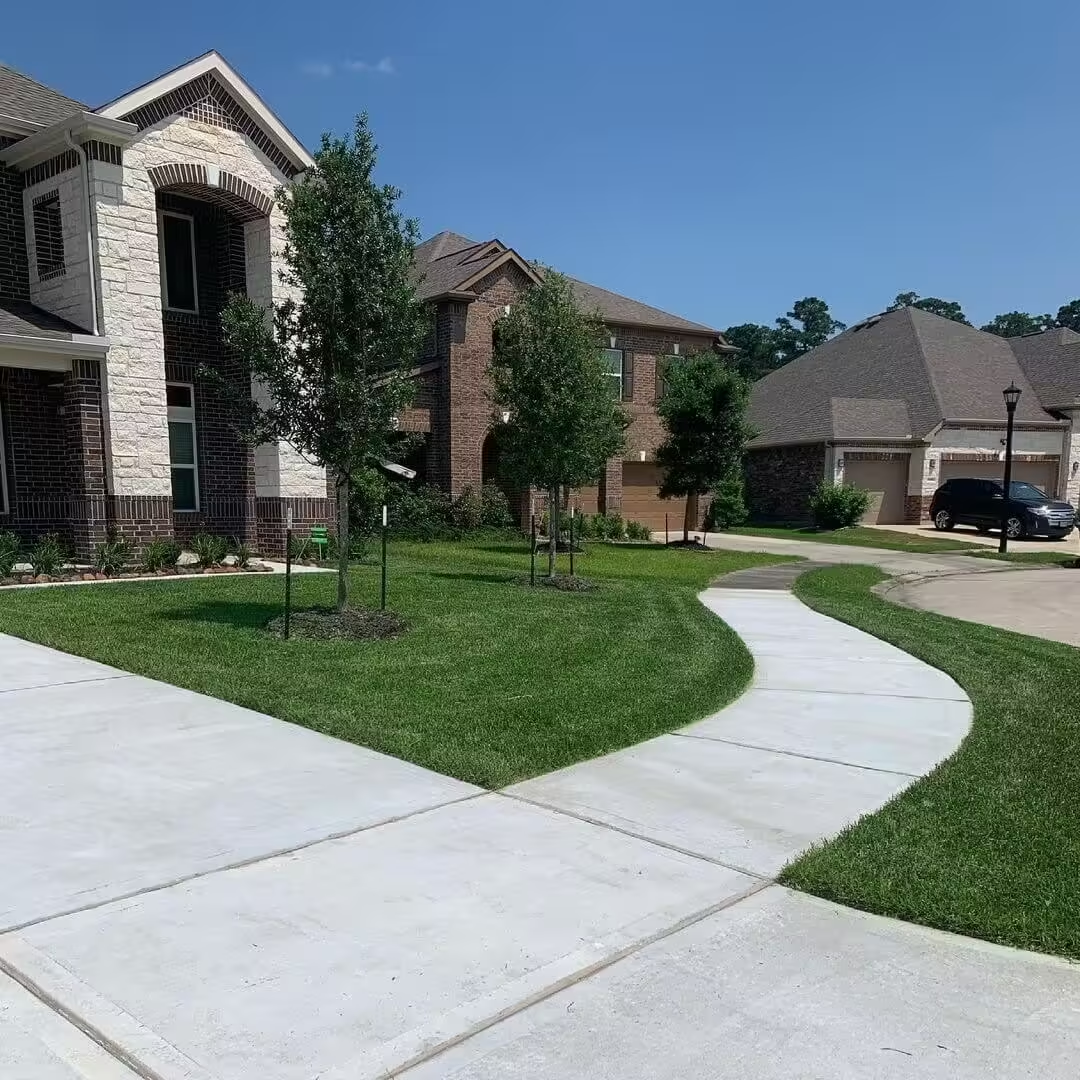 Summer stress damage on a Houston lawn. The question is whether the remaining turf can recover or whether the damaged areas need sod.
Almost every damaged Houston lawn we walk falls into one of three paths. The decision comes down to how much healthy turf is left, what caused the damage, and whether that cause is something you can actually fix. Sometimes the honest answer is that the lawn was never going to work in that spot, and the smart move is to stop fighting it rather than forcing another sod replacement.
The grass is stressed but alive. Fix the program: mowing height, watering, fertilization, and if the soil needs it, aeration and topdressing. Let it fill back in on its own.
Sod the worst spots that are dead and won't come back. Run the recovery program on everything else. This is the most common recommendation we make in the real world.
Either install new sod across the full area (renovation) or stop fighting the conditions and redesign the space (shade-tolerant ground covers, mulched beds, hardscape). Work with Mother Nature instead of against her.
One thing you'll notice is missing from that list: "just throw some seed on it." St. Augustine can't be repaired from seed at all, because it's established vegetatively through sod, sprigs, or plugs. Bermuda and Zoysia do have seeded cultivars, but matching the existing turf with seed can be more complicated because many improved cultivars are vegetatively propagated. For most targeted repairs where appearance and variety matching matter in a lawn repair vs sod replacement, matching sod or plugs are usually the more predictable option.
This is the part that matters most, and it's the step most homeowners skip. Laying new sod over a problem you haven't diagnosed turns fresh grass into an expensive repeat of the same failure. Unfortunately, we've seen it too many times. The new sod looks great for six weeks, then the same brown patches show up in the same spots because the cause was never addressed.
Before you decide on lawn repair vs sod replacement, work through the likely causes in order. The cheapest fix is usually at the top of this list, not the bottom.
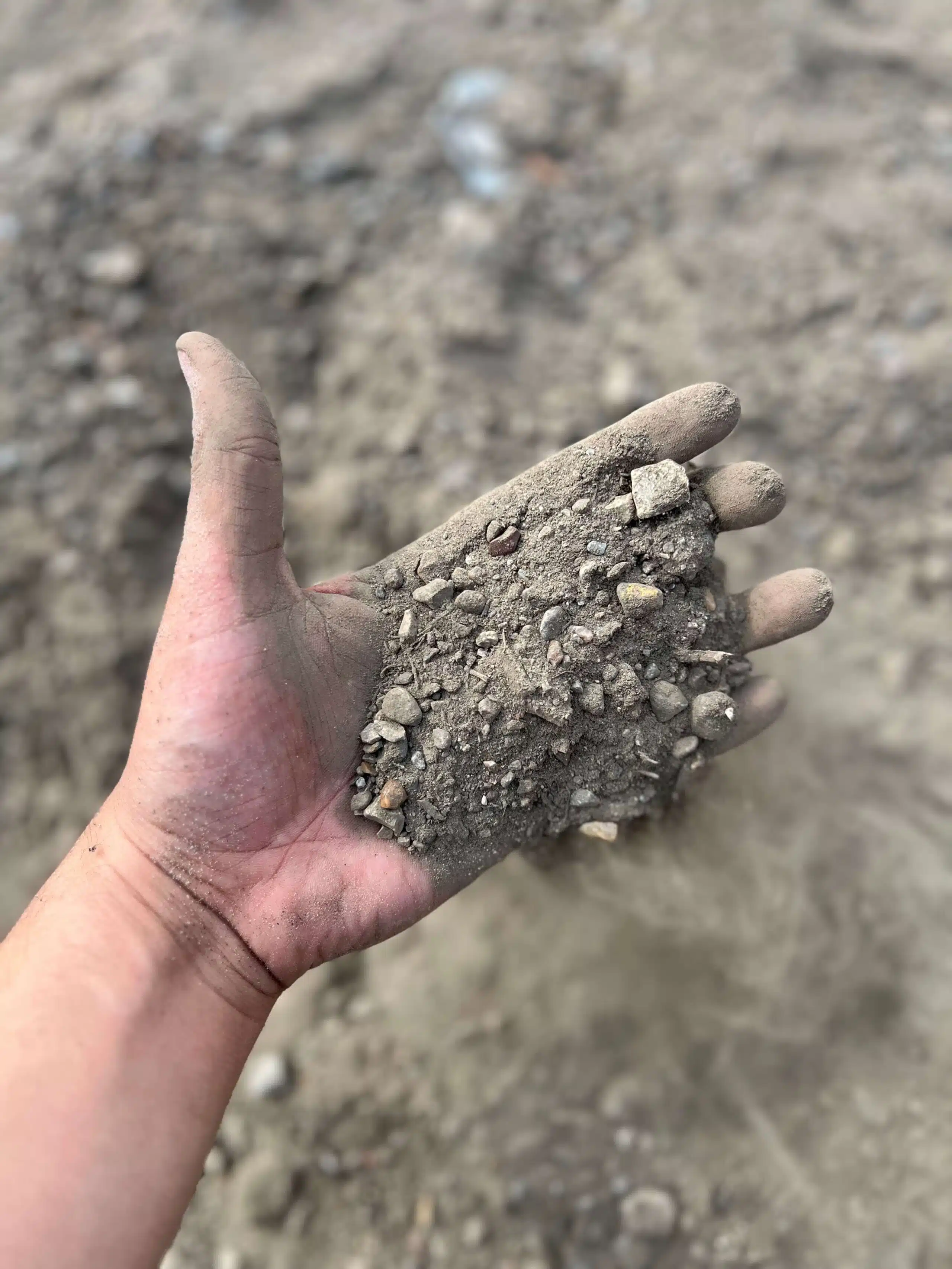 Poor, compacted soil with low organic matter. When the soil is the problem, new sod on top of it is set up to fail the same way the old grass did.
If you can identify and correct the cause, the lawn has a real chance to recover or the new sod has a real chance to survive. Otherwise, if you can't identify the cause, that's the point to bring in a professional diagnosis before you spend money on grass. A lawn evaluation (not just an estimate) is the right starting point.
Recovery is the right call when the lawn still has enough healthy turf to fill back in and the cause of the damage is something you can fix. After a Houston summer, recovery is often one of the first options worth evaluating in the lawn repair vs sod replacement decision, and when the turf is viable, it's the least expensive path by a wide margin. However, it's not one thing. Rather, it's a program. Here's what we actually do when we're trying to bring a stressed lawn back.
The signals that recovery is realistic:
These are the five inputs we adjust when we're running a recovery program. Get them all right, and the grass mostly does the rest. Conversely, get one wrong and the others can't fully compensate.
This is the first thing we fix and the most common mistake we see. St. Augustine is generally maintained around 2.5 to 4 inches depending on cultivar and conditions. In Houston's summer heat, we often favor the higher end of that range when the lawn and equipment allow it. Cutting it shorter thins the canopy, exposes the soil to weeds, and weakens the root system. The higher you mow within that range, the deeper the roots tend to run, and that's what carries the lawn through August.
Never remove more than one-third of the blade height in a single cut. If the lawn got away from you and grew too tall, raise the deck for that cut and bring it down gradually over the next two mows. And keep the blades sharp. Dull blades tear rather than cut, the ragged edge browns within a day, and disease gets in through the wound.
Stop running the irrigation on a fixed twice-a-week schedule regardless of rainfall. That's how you get fungal problems in a wet month and drought stress in a dry one. Instead, watch for the first sign of wilt: leaf blades that fold in half, take on a bluish-gray cast, or footprints that stay pressed into the grass instead of springing back. That's the lawn asking for water.
When you do water, water deep. Enough to wet the soil 4 to 6 inches down. After that, wait until it asks again. That cycle builds the deep root system that carries the grass through dry stretches. Water between 5 and 9 AM so the blades dry during the day. Extended leaf wetness from evening irrigation is one of the main conditions fungus needs. Finally, adjust your schedule during municipal water restrictions so you stay compliant without starving the lawn.
Get on a nitrogen-driven program. Texas A&M's guidance for St. Augustine is roughly 2 to 4 pounds of nitrogen per 1,000 sq. ft. per year, split into smaller applications of about 0.5 to 1 lb at a time. We prefer spoon-feeding (smaller, more frequent nitrogen applications) because it keeps color and growth even without the surge-and-crash that heavy infrequent feeding causes.
One important note: don't apply a "balanced" or complete fertilizer (N-P-K) year after year without a soil test. Routine complete fertilizer can build phosphorus to harmful levels, which Texas A&M specifically warns against. Build the program around nitrogen, then add phosphorus, potassium, and micronutrients only when the soil test says they're needed. A soil-health layer underneath the nitrogen program pays off over time.
Houston's heavy clay soils compact over time, especially in high-traffic areas. Compacted soil can't absorb water or oxygen, and the roots suffer. If water is pooling or running off instead of soaking in, that's the signal that compaction is part of the problem.
Core (hollow-tine) aeration physically removes plugs and is the evidence-based method. We recommend it when compaction is diagnosed, not on a calendar. Not every lawn needs it every year. However, if your lawn has been thinning and water isn't getting into the soil, aeration is often the missing piece.
Topdressing with compost or a sand/soil blend after core aeration improves soil structure and helps level minor surface irregularities. The aeration holes let the topdressing material integrate into the root zone rather than sitting on top. On its own, topdressing can still help with minor surface leveling or adding organic matter to a thin canopy. Pairing topdressing with core aeration helps more of the material work into the upper root zone instead of remaining primarily at the surface.
The key word is "pair." Topdressing and aeration work together. One opens the soil, the other improves it. See our topdressing guide for when each applies.
 Rich, loose soil with good organic matter. That's the foundation recovery and new sod both need. Aeration opens it up, topdressing feeds it.
Give it 4 to 16 weeks of this program during active growth (late spring through early fall), depending on conditions and how much turf is still alive. If the turf is going to fill in, you'll see new runners extending into the thin areas within that window. Otherwise, if you don't see real progress by then, the damage was deeper than the program could fix, and it's time to revisit the lawn repair vs sod replacement decision and look at targeted repair or full replacement.
Not sure if the grass is dead or dormant? Grab a handful of brown blades and pull gently. If the blades come away easily with no resistance and the runners at soil level are brown and brittle, that section is dead. If there's resistance and you can see green at the base or in the runners, the grass is alive and stressed. Dead sections won't recover on their own. Stressed sections will, with the right program.
This is the most common recommendation we make in the lawn repair vs sod replacement conversation, because most damaged Houston lawns aren't uniformly dead. They've got dead spots and thin spots and healthy areas all mixed together. The smart move is to sod the spots that are genuinely gone and run the recovery program on everything else. You're not replacing the whole lawn. Nor are you waiting on dead sections to magically come back. Instead, you're putting grass where grass is needed and letting the rest recover.
The signals that this hybrid approach is the right call:
In a lawn repair vs sod replacement, cut out the dead sections down to bare soil. Not just the brown grass. The dead thatch and roots too, down to clean soil. Next, rough up the surface, lay sod that matches your existing grass variety, water it in thoroughly, and keep the sod and underlying soil consistently moist while the new roots establish. Adjust watering for heat, rainfall, soil conditions, and how quickly the sod begins rooting.
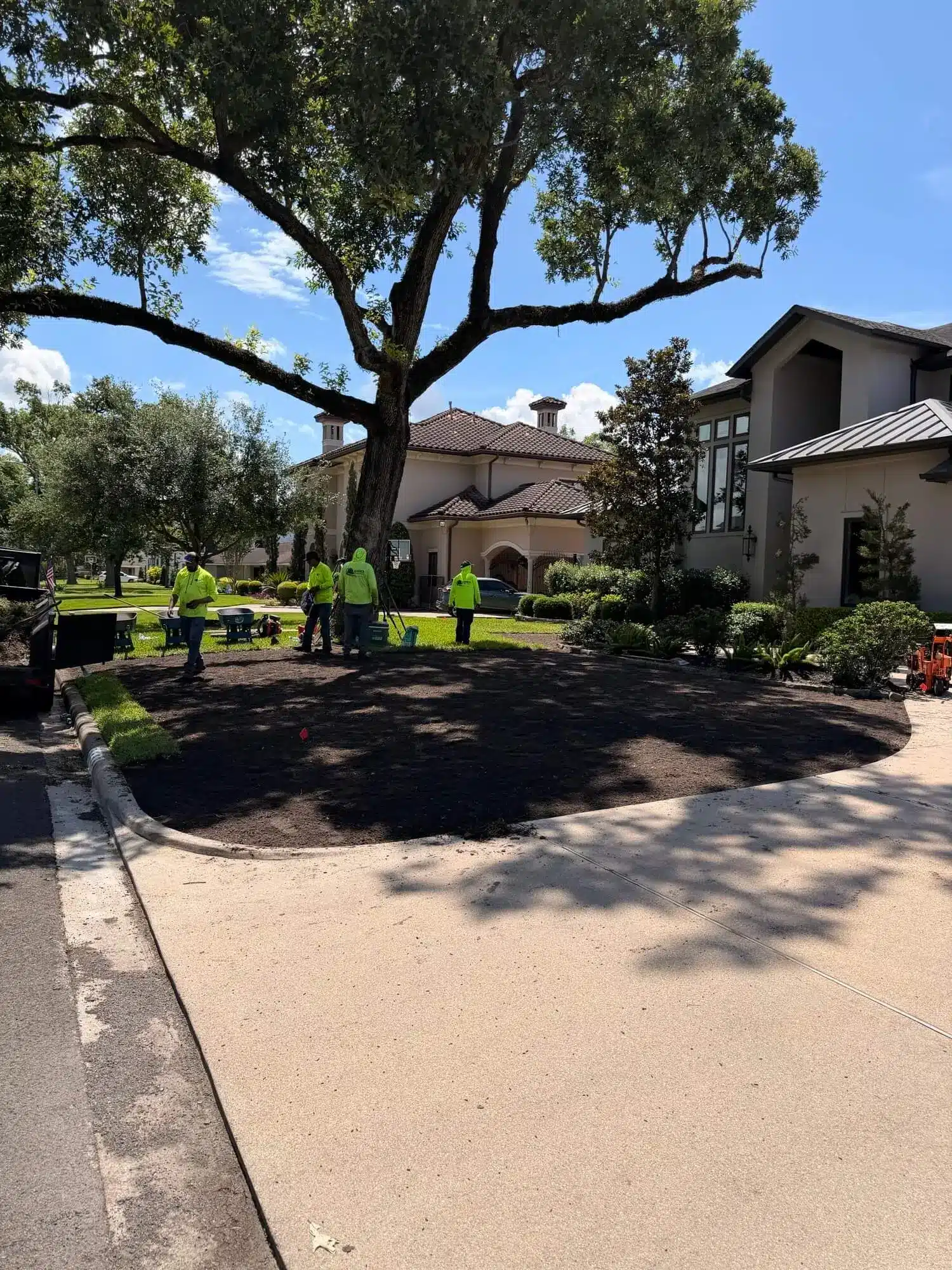 Sod prep work in Houston. Dead turf cut out, surface roughed up to bare soil, ready for the new sod to root into clean ground.
The key is matching the variety. St. Augustine doesn't blend with Bermuda, and even a different St. Augustine cultivar can look noticeably different from the rest of the lawn. If you're not sure what you have, a lawn evaluation will confirm it before you order the sod.
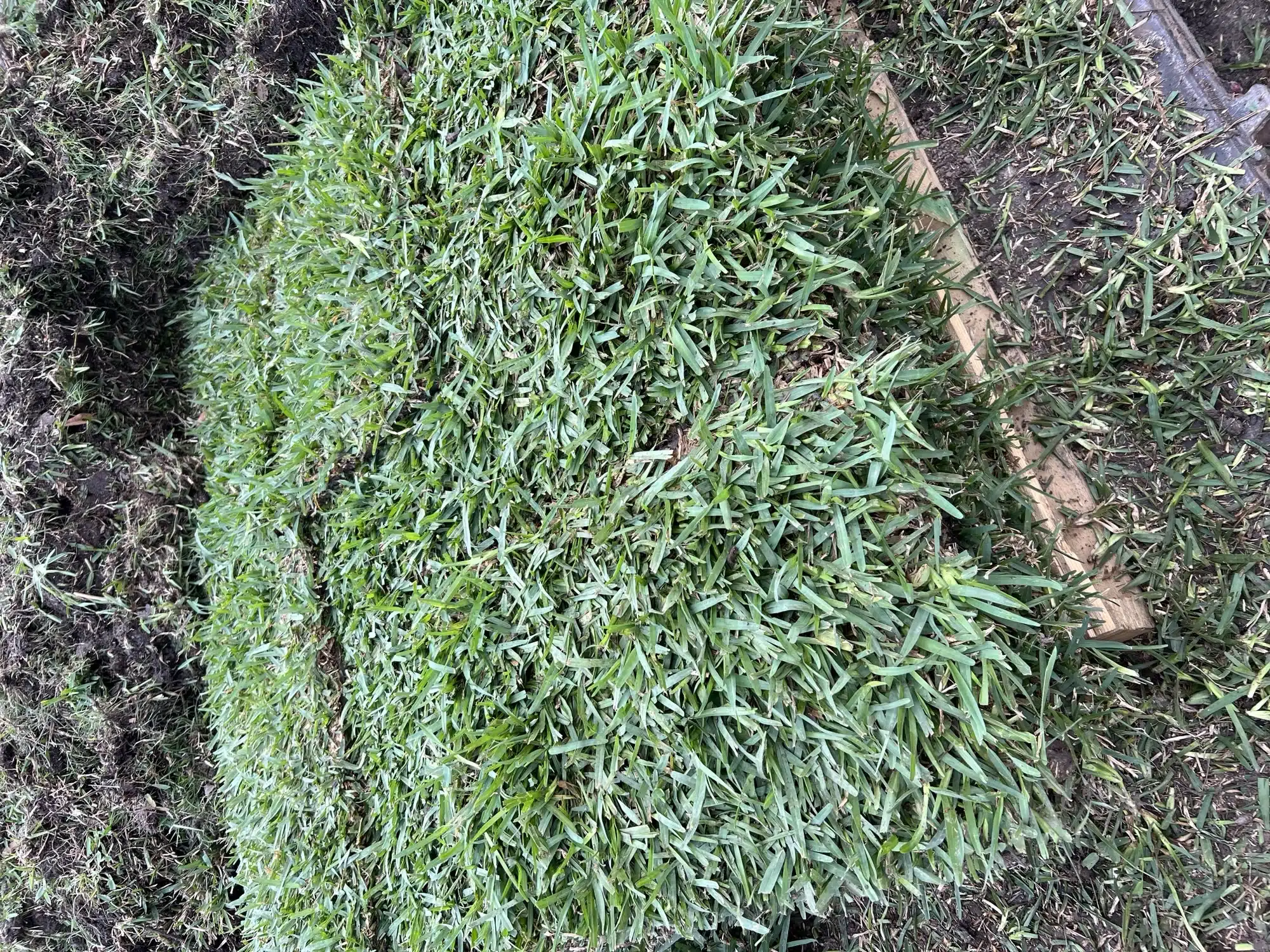 Fresh St. Augustine sod ready for a patch repair. Matching the existing variety is what makes the repair blend instead of standing out.
Meanwhile, run the full recovery program on the rest of the lawn. Mow at the right height. Water condition-based. Get on a nitrogen-driven fertilization program. Aerate and topdress if compaction is part of the problem.
As the new sod patches establish, the existing turf fills in around them. The repair may begin blending within several weeks during active growth, and it can continue blending over the following weeks as the new sod establishes and the surrounding turf spreads.
This is why the hybrid approach works so well in the real world. You're not paying to replace a lawn that's 70% alive. Nor are you waiting on dead spots that will never recover. Instead, you're putting your money exactly where it's needed and letting the rest of the grass do what it does naturally when the program is right.
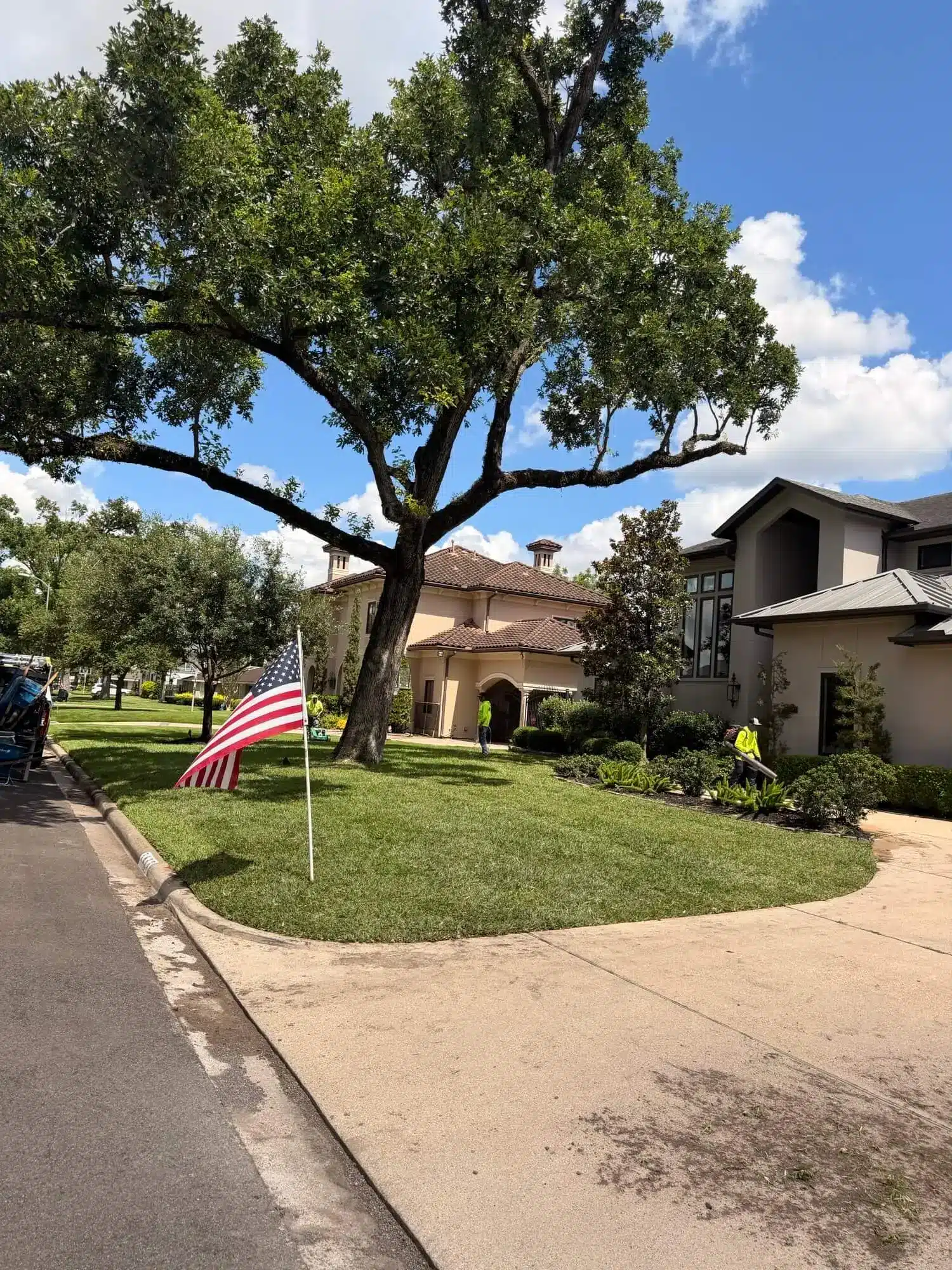
 Targeted sod repair on a Houston front lawn. The dead sections were cut out and patched with matching St. Augustine while the healthy turf around them was left to keep growing. A few weeks in, the patches blend right in.
This is the starting-over path in the lawn repair vs sod replacement decision, and it has two versions depending on what's going on. One is installing new sod across the full area because the old lawn is too far gone. The other is accepting that grass was never the right answer for that spot and redesigning the space instead. Both are legitimate. Nevertheless, the wrong move is installing new sod on a site where grass will never sustain itself and calling it a renovation.
Sod replacement is the right call when the turf loss is too widespread for recovery or targeted repair to make sense, or when the existing grass variety is fundamentally wrong for the conditions. Ultimately, this is the starting-over option, and it's the one that requires the most homework before you pull the trigger.
The signals that full renovation is the right move:
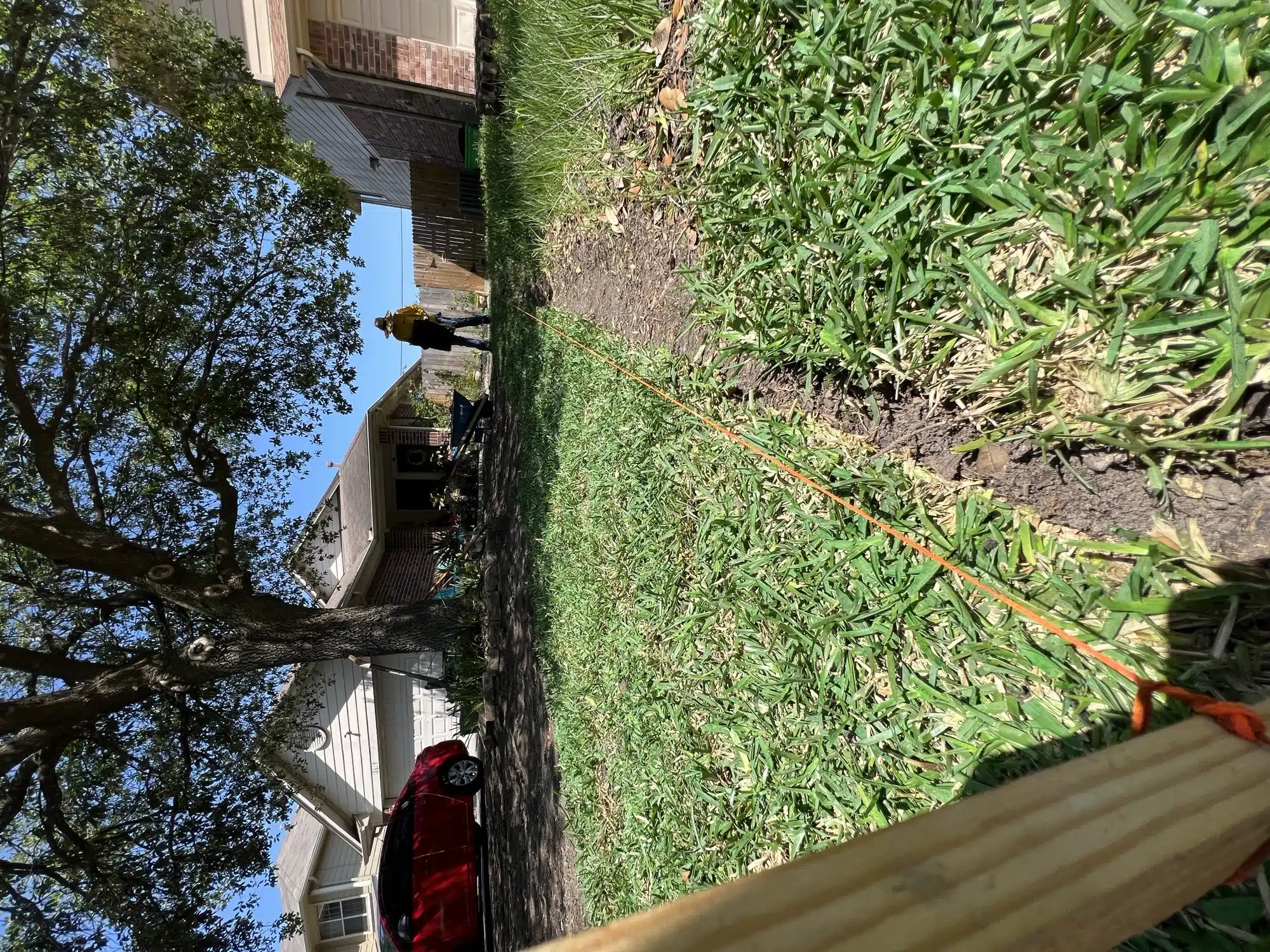
What renovation actually looks like: remove the existing turf, address the underlying condition, prepare and grade the surface, and install fresh sod across the full area. If replacement is the right path, our sod installation service in Houston covers the professional installation side. For budgeting, see our sod installation cost guide.
 Full renovation in West Houston. A string line is set to grade the surface before the new sod goes down. When more than half the turf is gone or the variety is wrong for the site, this is the path that starts the lawn over the right way.
Sometimes the honest assessment is that a lawn was never going to work in that spot. Deep shade under a mature tree canopy. A low area that stays soggy after every rain. A narrow side yard that gets no sun and no airflow. In these cases, installing new sod isn't a renovation. It's setting up the same failure on a timer.
The redesign option is about working with Mother Nature instead of fighting her. If you're fighting the same dead patch in the same spot for the third season in a row, that's the signal to stop fixing the grass and start fixing the plan. Here's what that can look like:
This isn't giving up. It's being honest about the site. A well-designed landscape that works with its conditions looks better, costs less to maintain, and doesn't need to be reinstalled every few years. We'd rather tell you that honestly than install sod we know will fail.
Here's how the three lawn repair vs sod replacement paths compare on the factors that usually drive the decision.
| Factor | Recover | Targeted Repair + Recovery | Full Renovation / Redesign |
|---|---|---|---|
| Best when | Roughly half or more of the turf remains viable and the cause is correctable | Dead spots mixed with salvageable turf | Widespread loss, wrong variety, or grass won't work there |
| Timeline to look good | 4 to 16 weeks depending on conditions and how much turf is still alive | Sod spots provide immediate coverage. Surrounding turf may take several weeks or longer to blend depending on season, growing conditions, and turf health | Instant visual improvement after installation. Preparation and scheduling vary by property and season |
| Relative cost | Lowest (program adjustment) | Medium (sod for spot areas + program) | Highest (full section, lawn, or redesign) |
| What makes it last | Fix the cause, then let the program work | Fix the cause before the new sod goes in | Fix the cause before the reinstall |
| When it's the wrong call | Most turf is already dead | Damage is widespread, not isolated | Grass could have recovered with the right program |
Importantly, here's the part most guides skip: the right answer in a lawn repair vs sod replacement isn't based on turf condition alone. It also depends on how quickly you want the lawn to look more uniform, how patient you're willing to be, and how important appearance is for that part of the property.
Two similar lawns can reasonably end up with different recommendations.
For example, full renovation tends to make more sense where appearance and turnaround carry the most value. For storefronts, offices, business entrances, and other highly visible commercial properties, a faster visual reset can justify the additional investment.
Similarly, the same applies to some residential properties, especially the front lawn where turf has the greatest impact on curb appeal and first impressions. In a backyard or lower-visibility area, repairing damaged sections and allowing healthy turf to recover may make much more financial sense.
There isn't one path that's automatically better. Our job is to explain what the lawn is capable of, what each realistic option involves, and where we'd lean based on the property and your priorities. From there, you can choose the approach that makes the most sense for you.
If you're standing in the yard right now, here's the sequence we'd run through:
For the university-level reference on warm-season turf recovery and renovation, Texas A&M AgriLife Extension publishes a turfgrass maintenance guide that covers renovation timing, aeration, and pest scouting. We align our repair and replacement recommendations with their guidance for Houston conditions.
Here's the truth that doesn't get talked about enough after a lawn repair vs sod replacement. You can have the best installer in Houston, the highest-quality sod, and the best soil money can buy, and it still comes down to what happens after the install. Ultimately, no install and no material outperforms a bad maintenance program in the long run. The mowing height, the watering discipline, and the fertilization rhythm are what decide whether the new grass is still there in three years.
That's true whether we install it, another contractor does, or you do the work yourself. A great install gives the lawn a strong start. Meanwhile, a good program keeps it there. If the maintenance side falls off, the same problems come back, and they usually come back to the same spots. That's not a pitch for a service package. It's just how warm-season turf works in Houston.
So before you spend on the install, make sure you, or whoever handles the maintenance, are set up to run the program. The recovery and care inputs in this guide are the same ones that keep a new lawn alive after the sod roots in. Remember, the install is one day. After that, the program is every week.
We'll evaluate the lawn, identify the most likely cause of the decline, and tell you honestly which path fits the property. If recovery is possible, we'll say so. If the grass was never going to work there, we'll tell you that too. No blanket programs, no sod installs we know will fail.
And if you'd rather have a clear plan you can take to any contractor, or use to do the work yourself, we also offer a paid consultation. You get a real professional diagnosis, clear recommendations, and an honest estimate of what the work takes, whether it ends up on our schedule or yours.
Call us at 832-506-8239 or request your evaluation online.