
Published May 2026 · Evergreen Outdoor Services · Houston, TX
A concrete driveway in Houston is a solid long-term investment when it's built correctly for the soil and climate. When it isn't, early cracking, drainage issues, and resurfacing costs can follow within a few years. This guide covers real 2026 Houston pricing, walks through what pushes costs up or down, and shares what to ask before any concrete is poured.
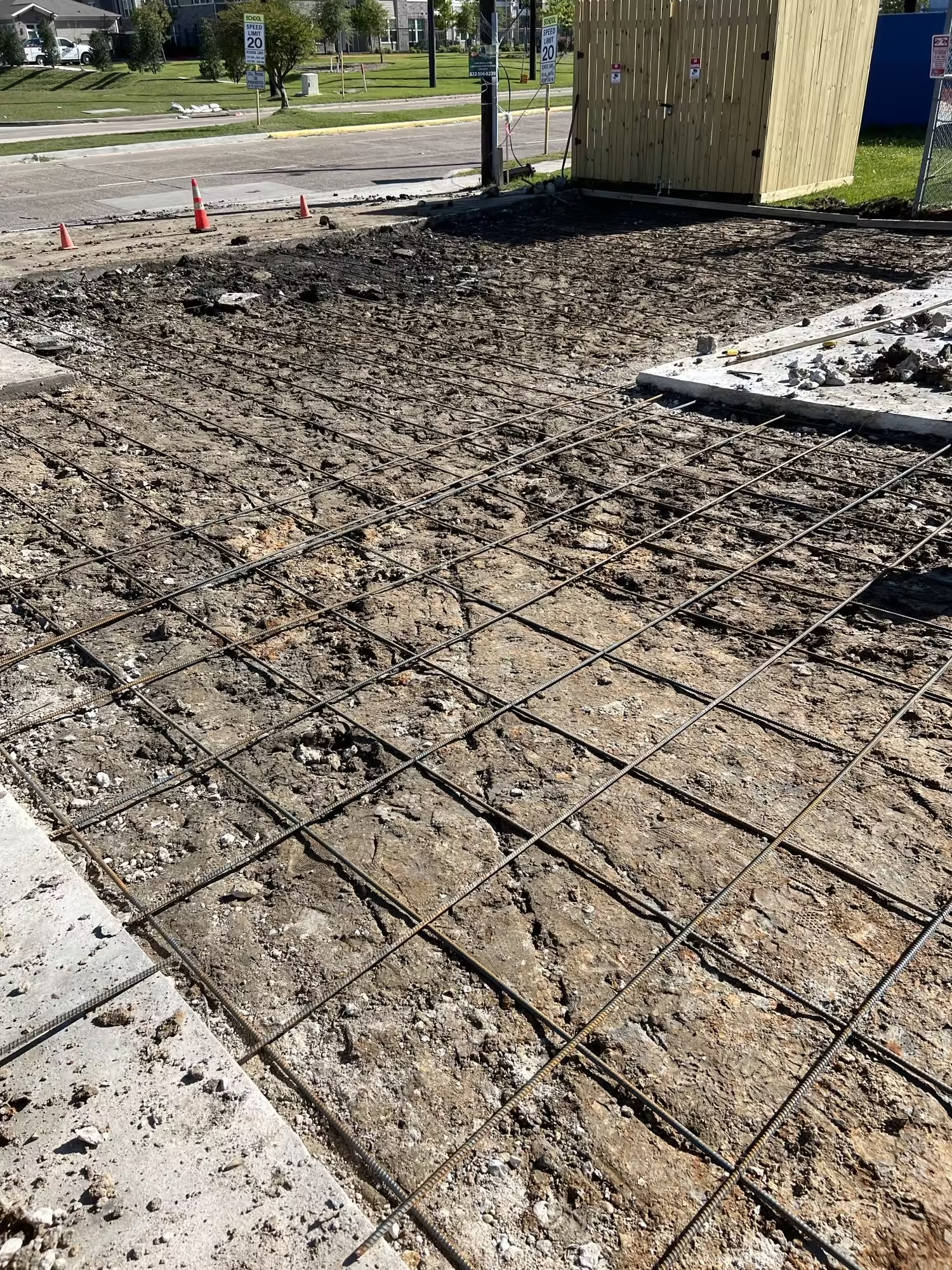 A long-lasting Houston driveway starts below the surface, with proper grading, drainage planning, subgrade preparation, and reinforcement before the concrete is poured.
Short answer: A standard concrete driveway in Houston runs $6-$14 per square foot installed. A typical 2-car driveway (400-600 sq ft) costs $4,500-$9,500. Decorative finishes, demo of an existing surface, and clay soil preparation can push that number higher, so it is important to confirm what each quote includes before comparing prices.
Note: Smaller jobs typically run a bit higher per square foot due to fixed mobilization costs. Demo and haul-away of existing concrete is usually priced separately. Removing a thick rebar-reinforced slab generally costs more than removing basic asphalt or thinner concrete, so it's worth confirming what's on your property before comparing quotes.
Most concrete cost guides are written for general-climate markets with stable soils. Houston introduces specific variables that change how a driveway should be built and what it costs to do it right.
Houston is known for expansive clay soils that can shift significantly through wet and dry cycles. Black Gumbo clay swells when wet and contracts when dry, which means the ground under your driveway shifts with every rain cycle and dry spell. Over time, that movement can stress a slab from underneath. Properly preparing the subgrade before the pour helps reduce that movement and gives the slab a more stable base to sit on.
Houston driveways almost always connect to or run close to the home's foundation. When a driveway slopes toward the house, rain runoff flows directly into the foundation zone, which can accelerate the clay swell-shrink cycle underneath the slab. Getting the drainage slope right during forming is one of the more important decisions on any Houston driveway project. For a deeper look at how this connects to the broader drainage picture, see our Houston drainage guide.
Concrete surface temperatures in Houston can climb very high in July and August, especially in full sun. Concrete cures differently in that kind of heat, and keeping the slab moist for the first several days after the pour matters more here than in milder climates. Asking your contractor about their curing protocol in summer is a reasonable question, and a good crew will have a clear answer.
The most obvious variable. But layout matters beyond raw size. A straight rectangular driveway is simpler to form than one with curves, rounded edges, decorative borders, or multiple pads. Complex geometry adds labor time and shows up in the quote.
A standard 4-inch slab with wire mesh is the baseline. Upgrading to 5-6 inches with rebar adds $1-$2 per square foot but extends lifespan significantly on clay soil. For driveways that will carry RVs, boat trailers, or commercial delivery trucks, 6 inches with rebar is the correct spec, not an upsell.
Removing an old concrete or asphalt driveway adds $2.50-$5 per square foot for most professional concrete contractors. On a 500 sq ft driveway, that's $1,250-$2,500 in demo before the new slab is even formed. Many low quotes leave demo out or price it as a separate line item later. Confirm upfront whether removal and disposal is included.
In Houston, some driveways are poured over properly compacted native soil, and that can work well when the grade, drainage, and compaction are handled correctly. Others include a base layer of crushed limestone, crushed concrete, or flex base for added support. Base material is not automatically required on every job, but proper subgrade preparation is important on all of them. Because Houston soils hold moisture and shift through wet and dry cycles, what happens under the slab tends to have a big influence on how the slab holds up. A good quote should explain the subgrade approach, not just the concrete thickness.
Broom finish is the base rate. Exposed aggregate adds $2-$4 per square foot. Stamped concrete adds $4-$10 per square foot and requires a more skilled crew. Colored concrete adds $1-$4 per square foot. The finish does not affect structural longevity but significantly affects project cost and appearance.
If the existing grade drains toward your foundation or pools in the driveway area, correcting it before the pour adds cost. Not correcting it costs more long-term. Regrading, adding a channel drain at the apron, or routing a French drain before the pour are legitimate line items that protect the driveway and the foundation. A quote that ignores drainage on a visibly problematic lot is not accounting for the full scope of a correct job.
Before moving forward with a contractor, it's worth asking: "What are you doing to prepare the subgrade, and are you adding any base material?" A contractor with a clear process will explain their approach whether that's compacting native soil, adding crushed limestone or flex base, or something specific to your site. On Houston soil, what's under the slab tends to have more influence on long-term performance than almost anything else.
| Finish Type | Cost Add-On | Best For | Houston Notes |
|---|---|---|---|
| Broom Finish | Base rate - no add-on | Standard residential driveways. Clean, functional, durable. | The most common choice. Provides good slip resistance in Houston rain. Lowest maintenance of any finish option. |
| Exposed Aggregate | +$2-$4/sq ft | Texture and visual interest without stamped pricing. | Stone aggregate is revealed by washing the surface before it fully sets. Very durable, excellent traction. Aggregate color selection matters - darker stones absorb more heat in a Houston summer. |
| Stamped Concrete | +$4-$10/sq ft | High-end curb appeal. Mimics pavers, slate, or stone patterns. | Requires sealer reapplication every 2-3 years in Houston's UV environment. Can become slippery when wet if sealer is applied too heavily. Periodic pressure washing helps keep it looking clean. Beautiful when maintained, more work when neglected. |
| Colored Concrete | +$1-$4/sq ft | Subtle color without the full stamped cost. | Integral color is mixed into the concrete - it will not chip or peel like surface stain. Lighter colors reflect heat better, which matters for a surface you walk on barefoot in summer. |
| Salt Finish | +$1-$2/sq ft | Light texture and visual variation. Less dramatic than stamped. | Rock salt is pressed into the surface and removed after curing, leaving small pits that add texture and depth. The pits collect dirt over time - periodic pressure washing keeps it clean. |
The two most commonly underquoted or omitted items in Houston driveway bids are demo/disposal and base preparation. Knowing what to ask about upfront prevents the most common situation where the final bill looks nothing like the original quote.
Removing an existing concrete driveway means breaking it up with a jackhammer or excavator, loading the debris, and hauling it to a concrete recycling facility. On a 500 sq ft driveway, that's typically 10-15 tons of material. Demo and haul-away costs $1,250-$2,500 for an average driveway, and that cost is real whether your contractor includes it in the quote or invoices it separately after the job starts. Ask directly: is demo and disposal included in this number?
Not every Houston driveway requires added base material. Some are poured directly over properly graded and compacted native soil, and that can hold up well when the subgrade conditions, drainage, and slab design are right. Where base material is used, common options in the Houston market include crushed limestone, crushed concrete, and flex base. What matters on every job is that the subgrade is properly prepared: Houston clay holds moisture and shifts through wet and dry cycles, and a slab poured over poorly prepared ground tends to show that over time. When reviewing quotes, it's useful to ask what subgrade work is included.
Concrete shrinks slightly as it cures. Control joints are the saw-cut or tooled lines you see on concrete slabs. They are intentional score lines that guide any cracking to predictable locations rather than letting it run randomly across the surface. Spacing of roughly every 8-10 feet in both directions is typical for a residential driveway. It's worth confirming that control joints are included in the scope and asking about the spacing plan before work starts.
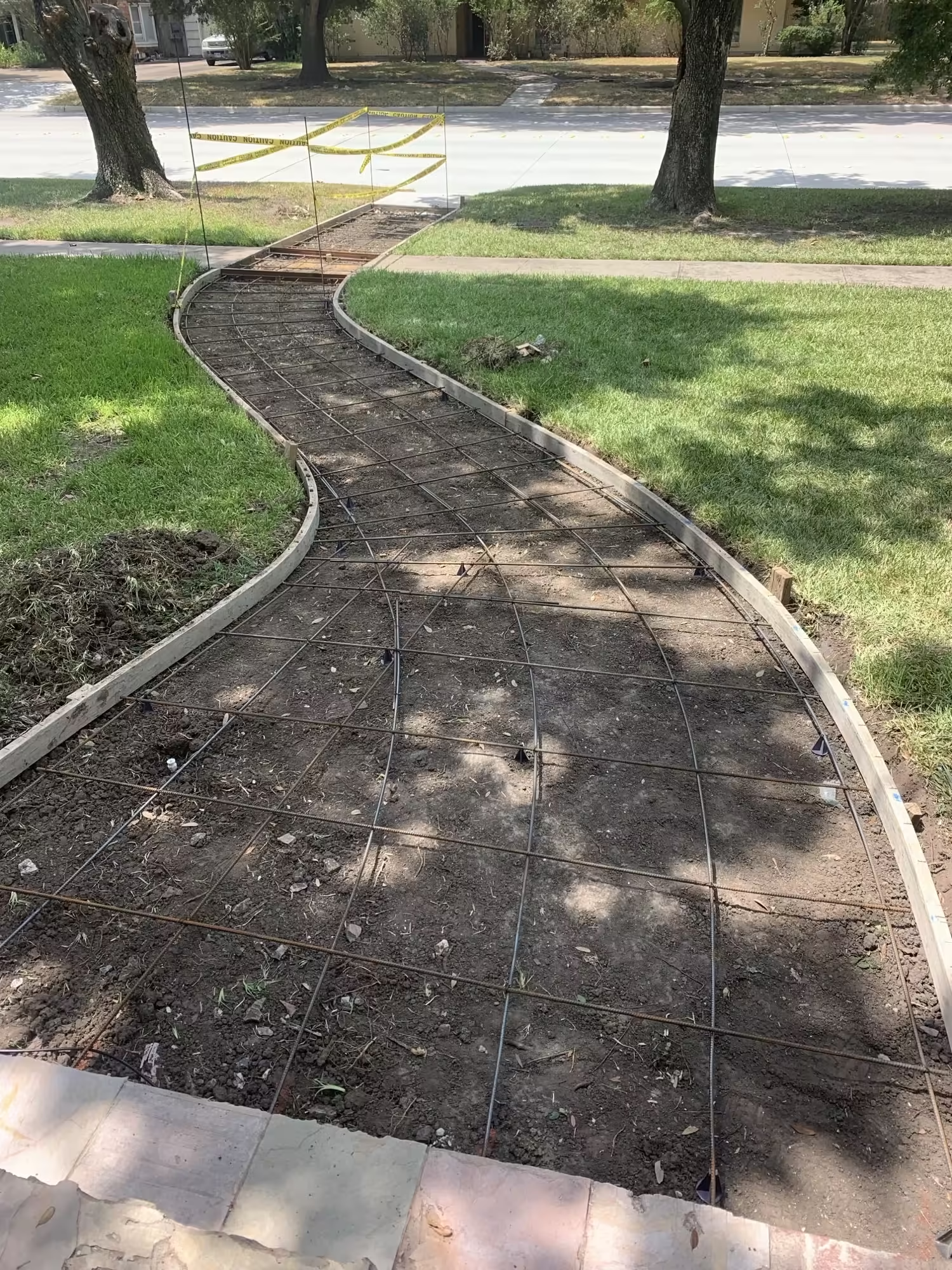 Every driveway job starts with what is underground: base prep, drainage routing, and clay management before the first yard of concrete is ordered.
In markets with stable sandy soil, drainage is mostly a convenience issue. In Houston, it is a structural one. The relationship between water, Black Gumbo clay, and concrete is the core variable in driveway longevity, and it rarely comes up in the quotes homeowners receive.
A concrete driveway apron should slope away from the foundation, generally at least 1/8 inch per foot, so water drains toward the street or a collection point rather than pooling near the house. When a driveway is poured flat or slopes slightly toward the foundation, rain runoff tends to saturate the clay in that zone over time, which can contribute to slab heave and foundation movement. It's a drainage issue as much as a concrete one, and the forming stage is the right time to address it.
Where a driveway meets the garage floor or a low point near the foundation, a channel drain can collect and route water before it has a chance to pool. These are fairly common on Houston driveways where low spots exist near the structure, and typically add $300-$800 depending on length and connection point. For lots where standing water near the foundation is already an issue, they are worth factoring into the scope discussion.
A driveway that drains well but deposits water into an already-saturated yard may just move the problem to a different spot. The full picture includes where runoff exits the property. On lots with standing water issues, connecting driveway drainage to a French drain or surface drain system is often the better long-term approach. Our Houston yard drainage cost guide covers system options and real pricing.
We will assess your grade, soil, and drainage before recommending a scope - so you are not fixing the same problem twice.
The right surface for a Houston driveway depends on budget, priorities, and how long you plan to stay in the home. Here is a straight comparison for Houston's specific conditions.
| Surface | Installed Cost | Lifespan on Clay | Houston Notes |
|---|---|---|---|
| Concrete | $6-$14/sq ft | 15-30+ years (installation quality and site conditions vary) | Best long-term value when built correctly. Rigid surface handles clay movement when reinforced properly. Stays cooler than asphalt in summer. |
| Pavers | $15-$25/sq ft | 30-50 years | Highest upfront cost, best repairability. Individual pavers can be pulled and replaced without disturbing the rest of the surface. Flexible jointing tolerates minor clay movement better than rigid concrete. |
| Asphalt | $5-$9/sq ft | 10-20 years | Lowest upfront cost. Can soften during peak Houston summer heat, especially under sustained tire load or heavy vehicles. Requires periodic sealing and maintenance every 3-5 years. |
| Gravel | $3-$5/sq ft | Ongoing upkeep | Lowest cost. Needs periodic replenishment, edging maintenance, and weed control. In Houston's heavy rain, loose gravel migrates into lawn areas. Better suited to rural lots than urban Houston properties. |
For most residential applications, concrete tends to offer a good balance between upfront cost, lifespan, and maintenance. It costs more than asphalt and less than pavers, and when built with the right spec for Houston soil, it typically performs well over the long term. The variation in quotes you'll see in the Houston market often comes down to differences in that build spec, not just the surface.
One of the more common issues in Houston driveway work is pouring over clay that hasn't been properly prepared. Seasonal moisture changes in the clay can stress the slab from underneath over time, and slab thickness alone doesn't fully offset that. Proper subgrade prep costs more upfront, but tends to pay off in how the driveway holds up over the years.
It helps to understand that some cracking in concrete is normal. The concrete industry generally treats hairline cracks as a cosmetic issue rather than a structural failure. What control joints do is give that cracking somewhere predictable to go, rather than letting it run randomly across the surface. Without them, or with spacing that is too far apart, surface cracking tends to be less controlled and more visible. For a residential driveway, joints cut or tooled within the first 24 hours and spaced around every 8-10 feet in both directions is a reasonable guideline. The goal is not a crack-free slab forever. It is a slab that stays structurally sound and drains correctly for as long as possible.
Slope is set during forming, which means it's essentially permanent once the concrete is poured. A driveway formed flat or slightly toward the house can create drainage issues that develop gradually over time. It's worth confirming the intended slope direction with your contractor before the forms go in.
Concrete poured in July or August in Houston benefits from active curing management. Keeping the surface moist for several days after the pour, using burlap, curing compound, or wet membranes, helps the slab develop properly in peak heat. If summer timing is part of your project, it's a reasonable thing to ask your contractor about as part of the process.
In many Houston-area municipalities, replacing or installing a driveway requires a permit, particularly for the apron that connects to the public street. Requirements vary by city and municipality. A contractor familiar with the local market will know what applies to your address and handle the permitting as part of the project scope.
We look at your grade, drainage, and site conditions before recommending a scope, so the work addresses what's actually going on rather than just covering it.
Call us at 832-506-8239 or request your driveway estimate online.