A mid-range landscape installation in Houston runs $3,000 to $10,000 for most residential projects, with the wide gap driven almost entirely by what your specific yard requires before a single plant goes in the ground. The scope, drainage conditions, soil type, tree work, and concrete needs on your property are what determine where your number lands—not the mulch price at the supply store. This guide breaks down what each budget tier actually delivers, what moves the number, and why sequencing the work correctly in spring matters more than the plants you choose.
*These are general ranges, not fixed packages. Final pricing depends on layout, access, property size, existing conditions, and the exact scope requested. If we notice drainage, grading, soil, or access concerns during a visit, we may point them out and recommend optional corrections, but those items are only included if listed in the approved scope.
If you already know what you want installed, we're happy to provide a straightforward estimate. If you're unsure what should come first, comparing multiple options, or planning a larger phased project, ask us about a paid consultation or property evaluation before installation.
This is where most of the confusion around pricing comes from. Many homeowners start by pricing the plants—but plant material is rarely what drives the total cost on a project like this.
In Houston, the cost variables that actually drive a landscape installation into the $5,000–$10,000 range are almost always site conditions: what the soil is doing, where the water is going after a rain event, what's already in the ground (roots, concrete, buried debris from old construction), and how hard it is to get equipment to the work area.
Four things move the number most in this market:
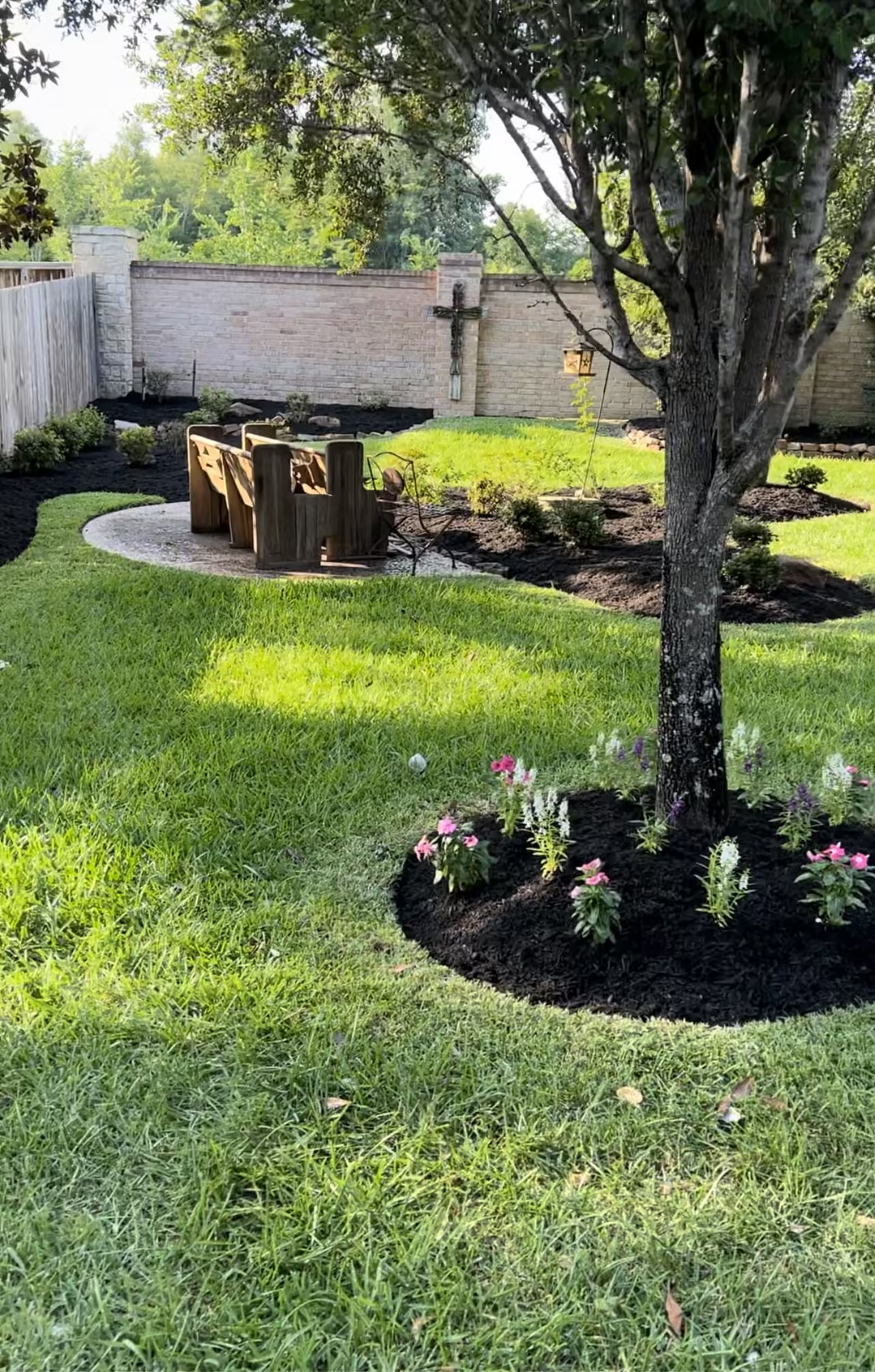
 A completed backyard landscape installation in Houston. The grading, drainage prep, and soil amendment done before this photo was taken is what determines whether this investment lasts five years or five months.
The single most expensive mistake in a local landscape project is doing the work in the wrong order.
I see this all the time in Kingwood and Summerwood. A homeowner gets excited about the finished look, installs new plants and sod first, then realizes halfway through that the drainage problem is still there. Now there's standing water next to $2,500 worth of new shrubs & trees. The repair requires digging through the new landscape to run the drainage line. Half the plants come out to make room for the equipment. Some get replanted. Some don't survive. The homeowner paid for the installation twice—plus a drainage fix they should have done first.
The correct sequence for a full landscape project in Houston is:
A good landscape plan looks beyond the plants themselves. We've seen it too many times in the field—beautiful plants installed first, only for drainage, grading, or border work to come later and disturb everything that was just finished. The order of work matters. Drainage, grading, soil prep, and access all play a role in how well the project holds up over time, not just how it looks on day one.
Houston gets an average of 50 inches of rain per year. Most of it arrives in large, fast events—the kind that overwhelm standard yard grades in under 20 minutes. The April Deluge is the most predictable of them, and it's the best diagnostic tool you have: walk your yard 30 minutes after a heavy spring rain and map every spot where water still sits after an hour. That map is your drainage problem list.
The Bathtub Effect is what we call a yard with no functional outlet path. Water comes in from the sky, hits the impermeable clay surface, and has nowhere to go. It collects in the lowest areas—often against the foundation, in the back corners, or in areas where a previous owner graded incorrectly. Plants installed in those areas don't drown dramatically. They just slowly suffocate as the oxygen-depleted, waterlogged soil collapses the root systems over three to six weeks. By the time the foliage shows distress, the root damage is already done.
The fix—whether it's a surface drain, channel drain, or French drain system—needs to be in the ground before any planting begins. Not after. Not during. Before. This is not negotiable on properties with active drainage problems, and over half of Houston residential lots we assess have at least one drainage issue worth solving before spending $5,000+ on landscape installation.
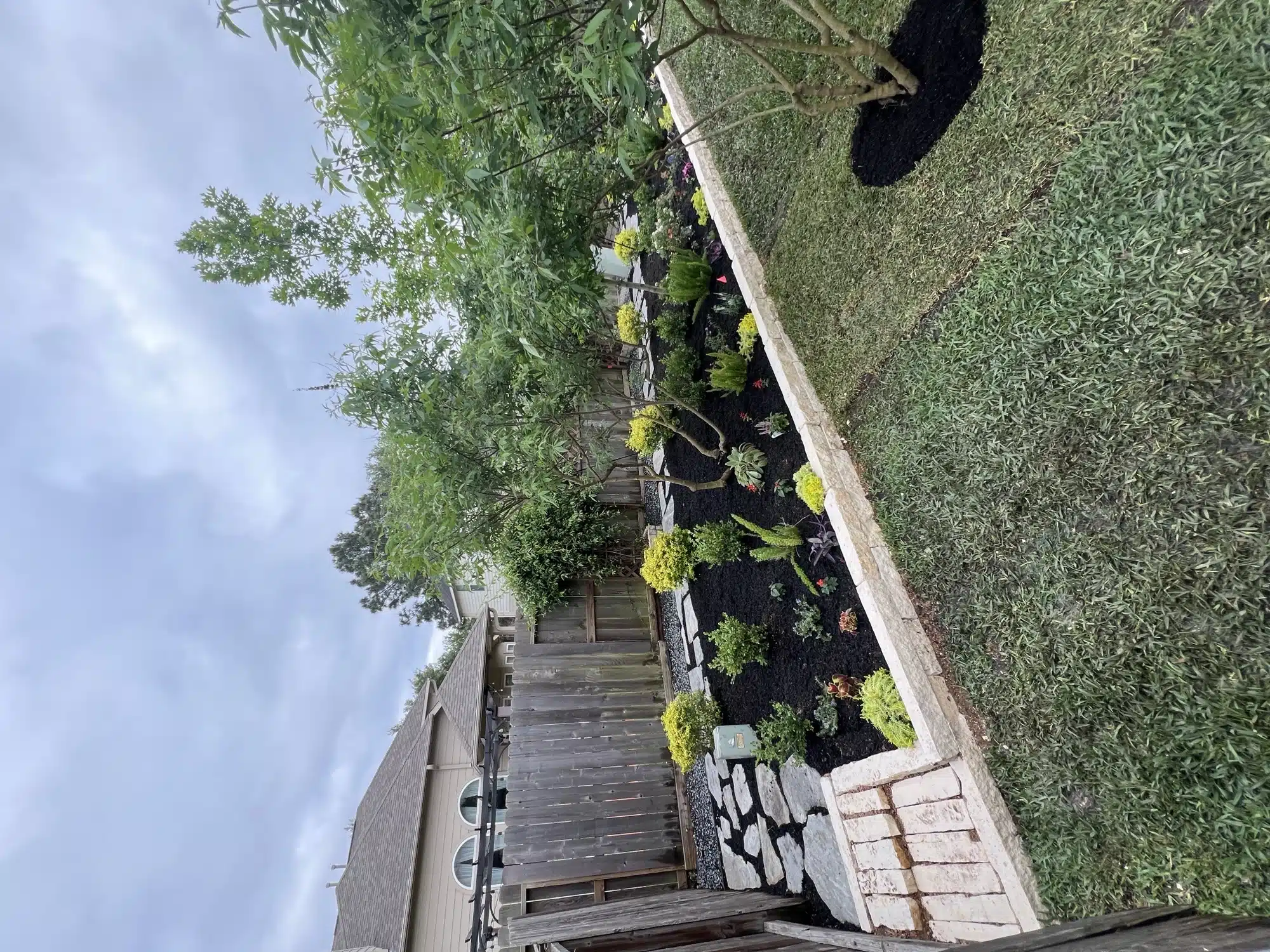
 Proper bed preparation before planting—soil amendment, grading, and drainage correction—is what separates a landscape that thrives from one that struggles through its second season.
 Specimen tree installation — a single accent tree can anchor an entire bed design and add immediate vertical interest.
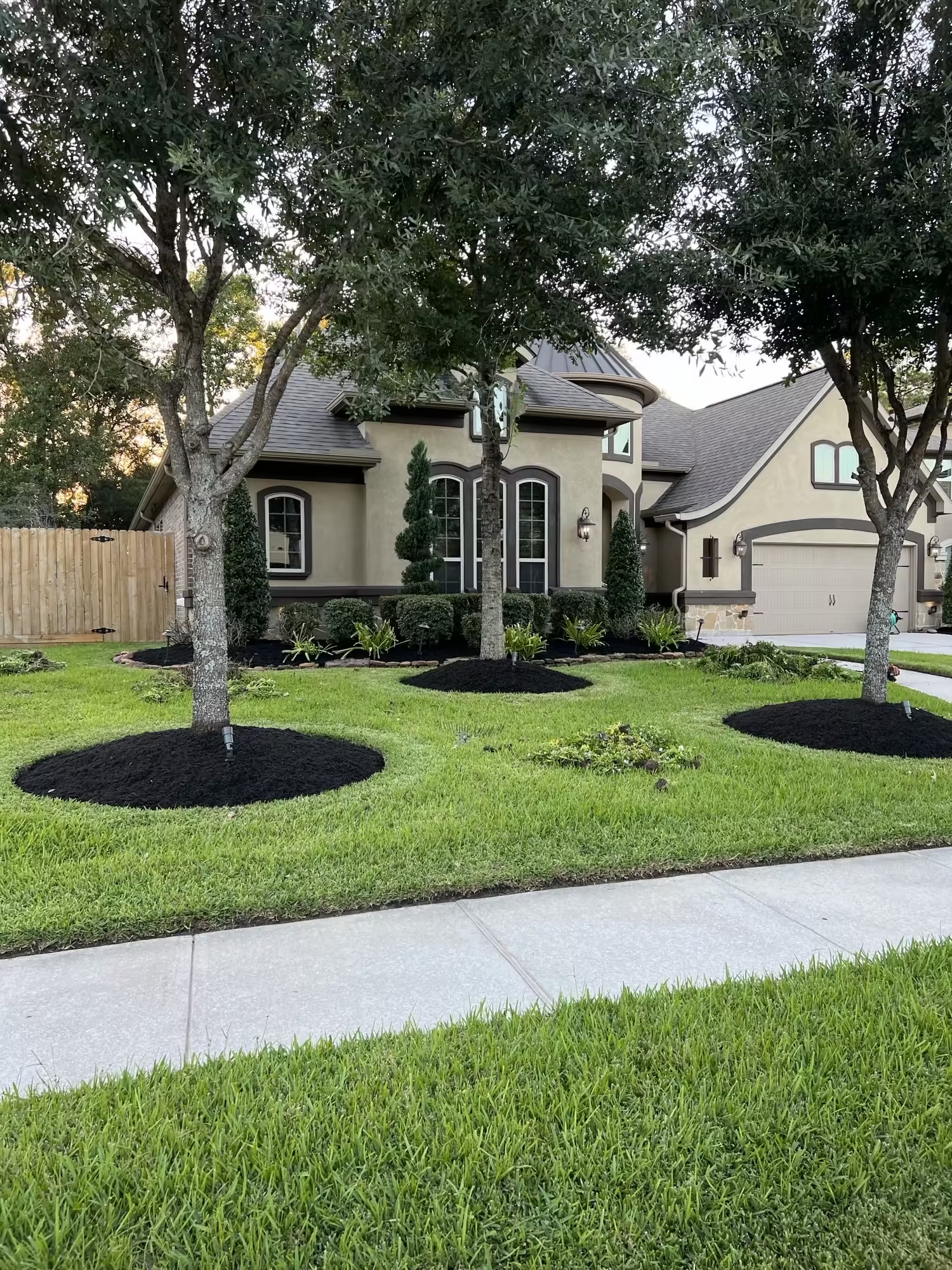 Fresh black mulch installation — mulch goes in last, after all plants are positioned, to retain moisture and define the finished bed edge.
Tree work is another common prep item before a mid-to-large landscape install. Not because anyone is trying to add unnecessary work, but because trees often shape the entire project. A declining oak, low canopy, surface roots, or heavy shade can affect plant selection, sod success, drainage, access, and even where beds or hardscape should go.
Here's the reality of Houston tree work within a landscape project:
These numbers should not feel like surprise add-ons when the site is looked at honestly upfront. The problem usually happens when a quote is built around plants only, then tree work, stump grinding, canopy issues, or access limitations get discovered after the project is already moving. That is when the budget conversation gets uncomfortable. For larger landscape projects, tree conditions should be discussed early so the scope is clear before design and installation decisions are finalized. You can learn more about how we approach this on our tree service page.
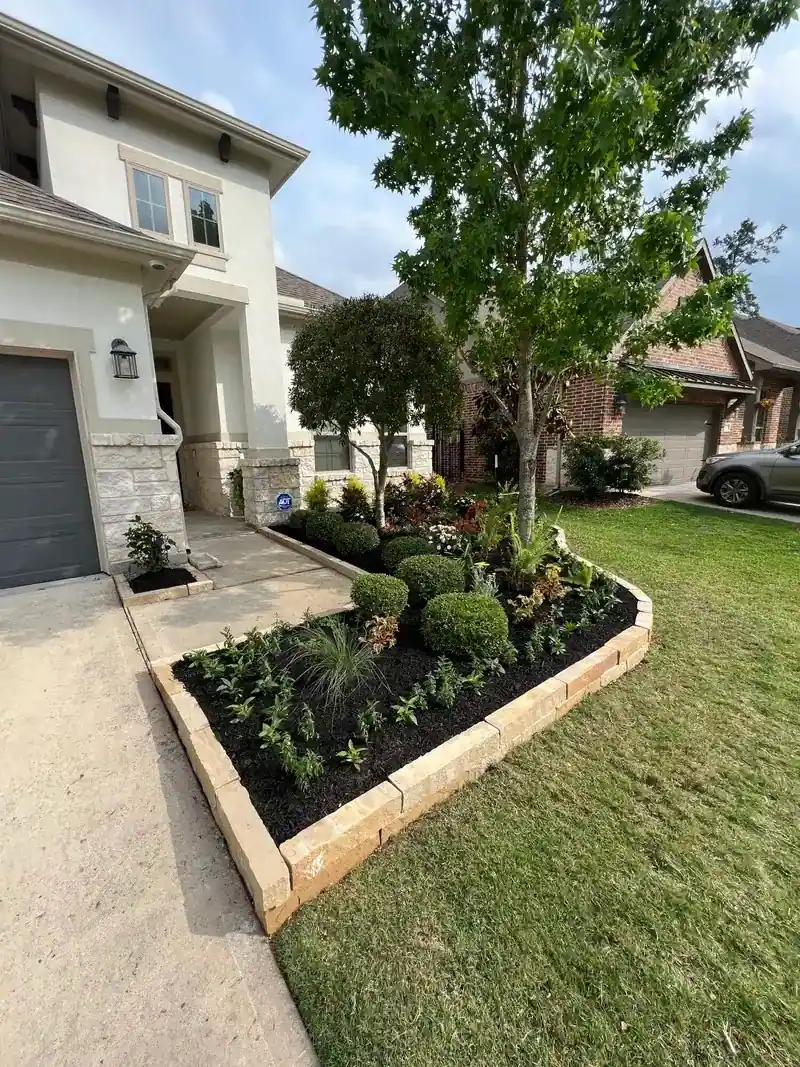 Stone border installation — defines the bed edge cleanly and eliminates the grass encroachment that undermines bed aesthetics over time.
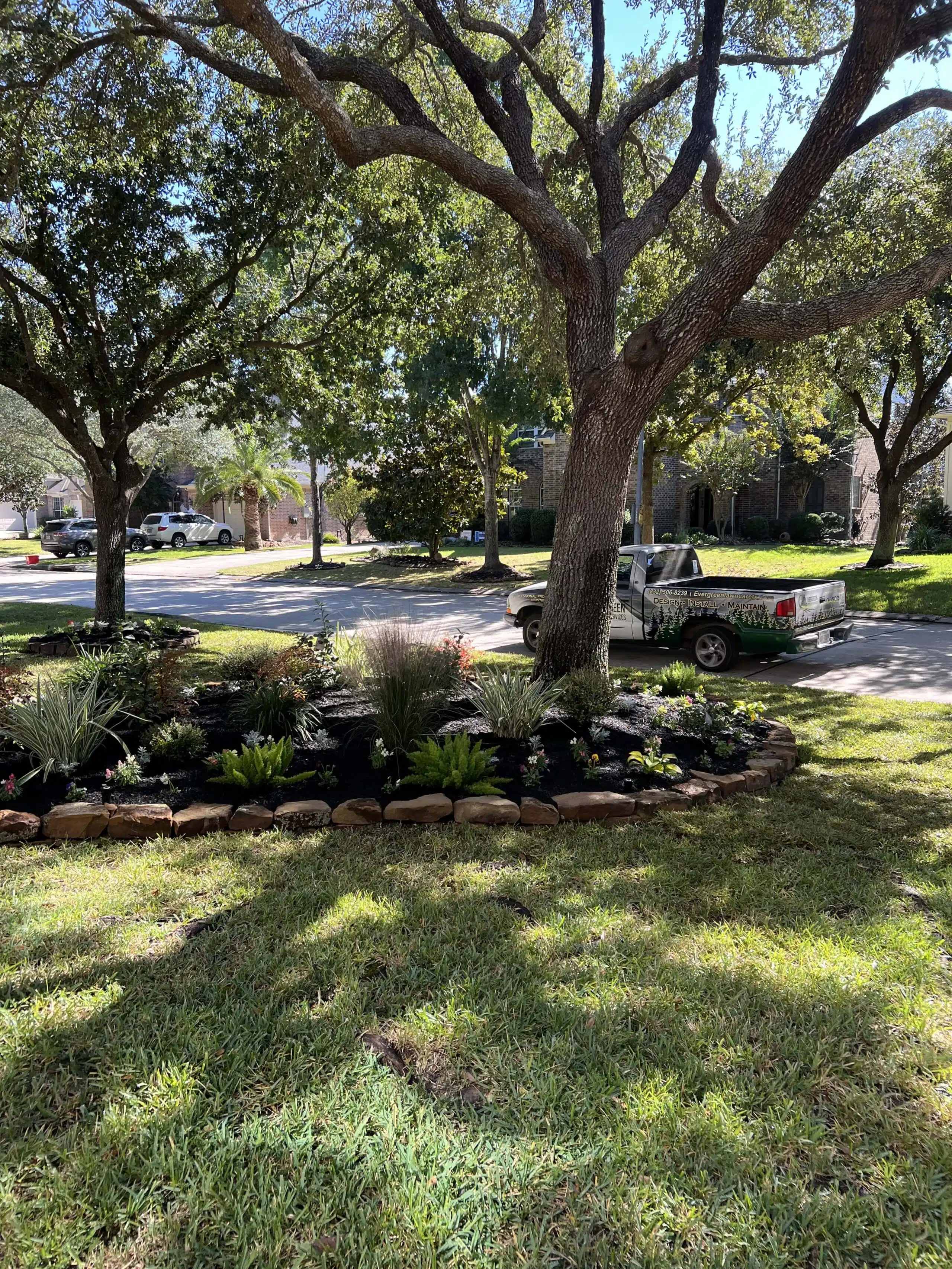
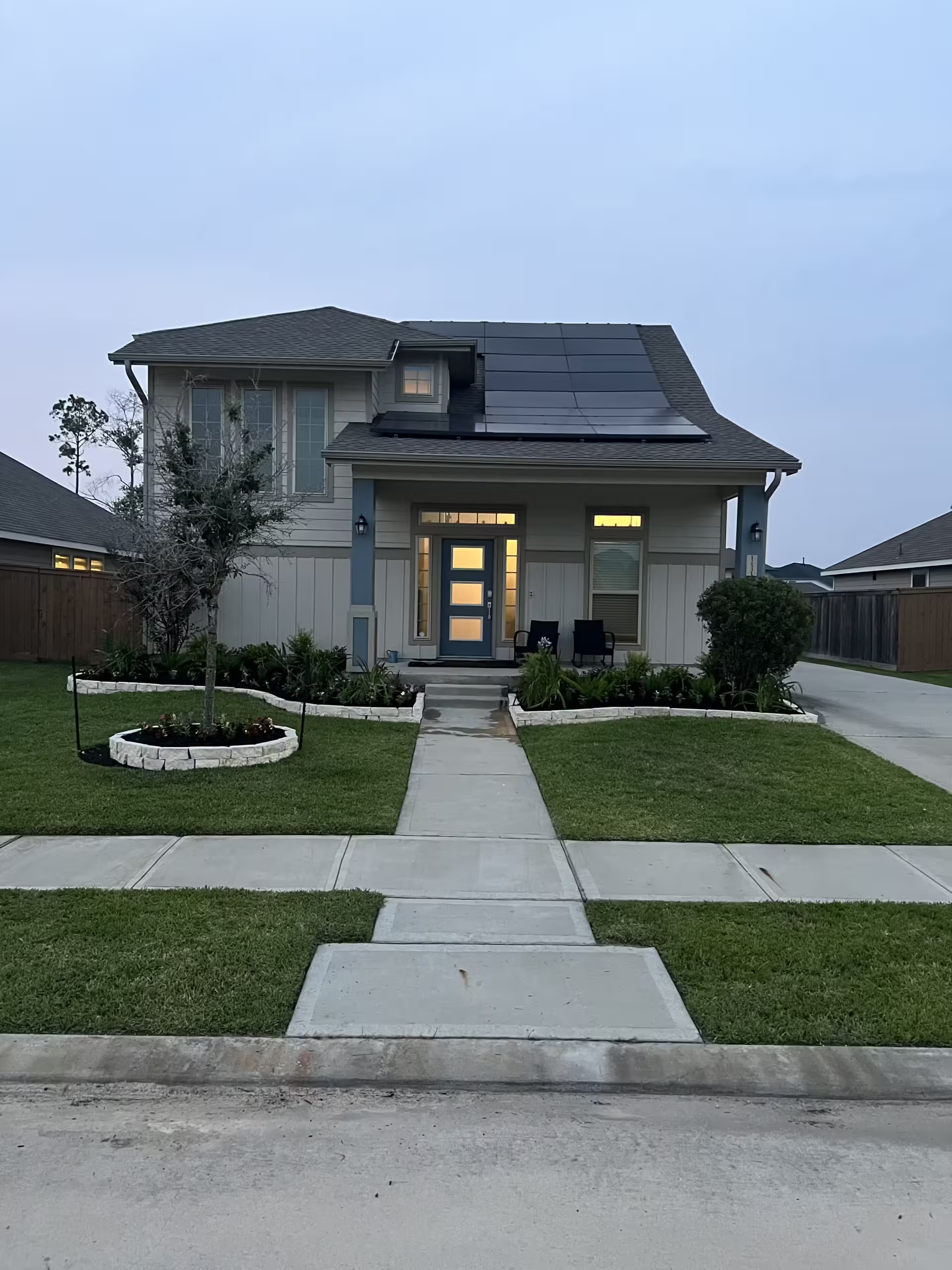 Front garden with stone border — the combination of concrete edging, specimen plants, and fresh mulch is what gives a project a finished, professional look that holds year over year.
Concrete isn't glamorous. It's also what separates a landscape that holds its shape for ten years from one that looks good in the photos and starts deteriorating by fall.
In Houston, concrete work within a landscape installation typically falls into three categories:
The 7 Concrete Projects guide covers which concrete additions deliver the most function per dollar in Houston yards. Worth reading before finalizing a scope that includes any hardscape element.
| Project Scope | Typical Budget Range | What It May Include | Key Cost Variables |
|---|---|---|---|
| Bed Renovation | $1,500–$3,500 | Removing old material, trimming or removing existing plants, soil amendment, select new plants, mulch, and basic edging | Bed size, access, disposal needs, soil condition, and how much existing material stays or goes |
| Front Yard Enhancement | $3,500–$6,500 | New or refreshed beds, focal plants, shrubs, mulch, soil conditioning, clean edging, and minor grading where needed | Drainage concerns, bed layout, access, tree canopy, existing roots, and plant maturity |
| Full Front + Side Yard Upgrade | $5,500–$9,000 | Expanded bed work, drainage corrections if needed, garden border or mow edge, soil amendment, sod touch-ups, and stronger curb appeal improvements | Lot size, clay severity, equipment access, drainage outlet options, and how connected the project needs to feel |
| Full Front or Backyard Transformation | $8,500–$15,000+ | Multi-area installation with drainage, grading, tree work, concrete or border work, sod, plant installation, and fuller design continuity | Hardscape needs, drainage complexity, property size, tree/root conditions, access, and site preparation requirements |
| Commercial / Multi-Zone Project | Custom quote | Site-specific upgrades for entrances, frontage, tenant-facing areas, drainage, beds, turf, trees, cleanup, or phased improvements | Property size, traffic areas, visibility needs, irrigation, safety concerns, scheduling, and phasing requirements |
Spring is one of the best installation windows in Houston. Soil temperatures are warm enough to support strong root establishment across most landscape plants, and rainfall is usually consistent enough to reduce heavy irrigation during the first couple of weeks. More importantly, new plantings have time to establish before the extreme summer heat becomes a factor.
That said, quality landscape work can be done year-round in Houston—the approach just has to adjust to the season. Spring tends to offer the most forgiving conditions, while summer installs require tighter irrigation discipline, and winter installs may establish more slowly.
The reality is that spring is also one of the busiest times of the year. Most well-run crews begin filling their schedules in late winter and early spring, and by mid-spring, availability can become limited. Not because of artificial scarcity, but because quality work takes time, and a good crew can only complete so many projects each week without cutting corners.
If you are planning a spring installation, it is usually best to start the quote and planning process earlier in the season. That simply gives you more flexibility in scheduling and helps ensure the project lands in a more favorable window.
For larger projects, especially those involving drainage work or tree removal, a phased approach can make sense. For example, site prep or drainage can be completed first, followed by planting and finishing once conditions are right. This helps the final installation perform better and reduces the risk of rework.
The Heights and Montrose: Tight lots, zero lot lines, and narrow gates are the defining constraints here. Getting a skid steer or equipment trailer into a Montrose backyard often requires disassembling a fence section, coordinating with neighbors, or doing the work entirely by hand. Hand labor on a clay-heavy, root-filled Heights lot takes significantly longer than machine-assisted work on an open Katy property. Budget for access premiums on any back yard scope in these neighborhoods—$300–$800 above what the same work would cost on an open lot.
Cypress, Crosby, and Sugar Land: Open lots mean better equipment access and faster timelines, but the Black Gumbo clay here is often at its worst. Ground cracking in August is the visual indicator of just how severely this clay shrinks and expands with moisture changes. New plantings going into unamended clay in these areas tend to struggle in year two even if year one looks fine—because the roots haven't been able to push through the clay layer to find consistent moisture. Soil amendment on Crosby and Sugar Land projects is highly recommended.
Memorial and River Oaks: Massive live oak canopies are the defining challenge. A yard that gets six hours of sun in March may get two hours by May once the canopy fills. Plant selection has to account for deep shade tolerance, and any decision to lift the canopy needs to consider the oak's long-term health. Aggressive pruning of a mature live oak to get more light to new plantings can stress the tree significantly. The right answer is often choosing shade-adapted plants rather than fighting the tree.
The Woodlands and Kingwood: Pine needle acidity shifts soil pH over time, which affects plant performance and fertilizer response. Beds that were installed three years ago may have drifted to a pH that's suppressing new growth even if irrigation and fertilization look correct on paper. A soil test before installing new plant material in these neighborhoods is a basic pre-installation step, not an optional upgrade. See how our maintenance approach adapts to specific Houston neighborhood conditions.
A $5,000–$10,000 landscape project usually needs more than a quick phone quote. A rough range may be possible from photos, measurements, or a clear description, but a real quote should be based on the property itself. Access, drainage, soil, existing plants, tree roots, irrigation, and grade changes can all move the scope.
Here is what a proper quote process often looks like for an installation of this size:
If you already know exactly what you want installed, a straightforward estimate may be enough. If you are comparing multiple options, unsure what should come first, or trying to protect a larger investment, a paid consultation or property evaluation can help create a clearer plan before installation begins.
Our landscape installation service page covers what we assess and how we approach scope—and our portfolio shows completed projects across Houston neighborhoods so you can see what the finished work can look like.
At the $3,000–$5,000 range, most projects cover bed installation or renovation, mulch, select plant material, and basic grading. The $6,000–$10,000 range may add drainage corrections, larger plantings or accent trees, defined edging or borders, and sometimes sod. The exact scope depends on site conditions—drainage, access, soil, and existing features all influence the final plan. You can see how these projects come together on our landscape installation page.
Drainage corrections and soil preparation are often the biggest cost variables—not the plants. If your yard has clay-heavy soil, low spots, or compaction issues, that work typically needs to happen before installation. Skipping those steps can lead to avoidable problems later. Our French drain vs. surface drain guide explains how to evaluate the right approach.
Most mid-range projects take one to three days of on-site work depending on scope, crew size, and access. Projects involving drainage, concrete, or tree work may take longer or be completed in phases. Weather and material availability can also influence timing, especially during peak seasons.
Spring is one of the most favorable times because temperatures and rainfall support plant establishment. That said, landscape work can be done year-round in Houston with the right approach. Summer requires tighter irrigation management, while winter installs may establish more gradually. Planning ahead can help you secure a better install window and avoid peak-season delays.
If your yard has areas that hold water, stay saturated after rain, or feel consistently soft underfoot, it is worth evaluating drainage before installing beds or sod. Not every property requires drainage work, but addressing known issues early can help protect the overall investment. You can explore options in our Houston drainage solutions guide.
An accurate quote is usually based on a site visit, where layout, soil, drainage, access, and project goals can be reviewed in person. If you already know what you want installed, a straightforward estimate may be enough. If you are comparing options or planning a larger project, a more detailed evaluation can help clarify scope before moving forward. You can also review completed work in our project portfolio to see real results across Houston.
If this guide made one thing clear, it is that a $5,000–$10,000 landscape project in Houston is not just a plant-list decision. It is a site conditions conversation, a sequencing plan, and a clear scope of work before the first shovel goes in the ground.
After working on a wide range of landscape installs across Houston, we've learned how soil, drainage, shade, access, and property size change the right plan. If you already know what you want installed, we're happy to quote that scope. If you need deeper planning, ask us about a paid consultation or property evaluation.