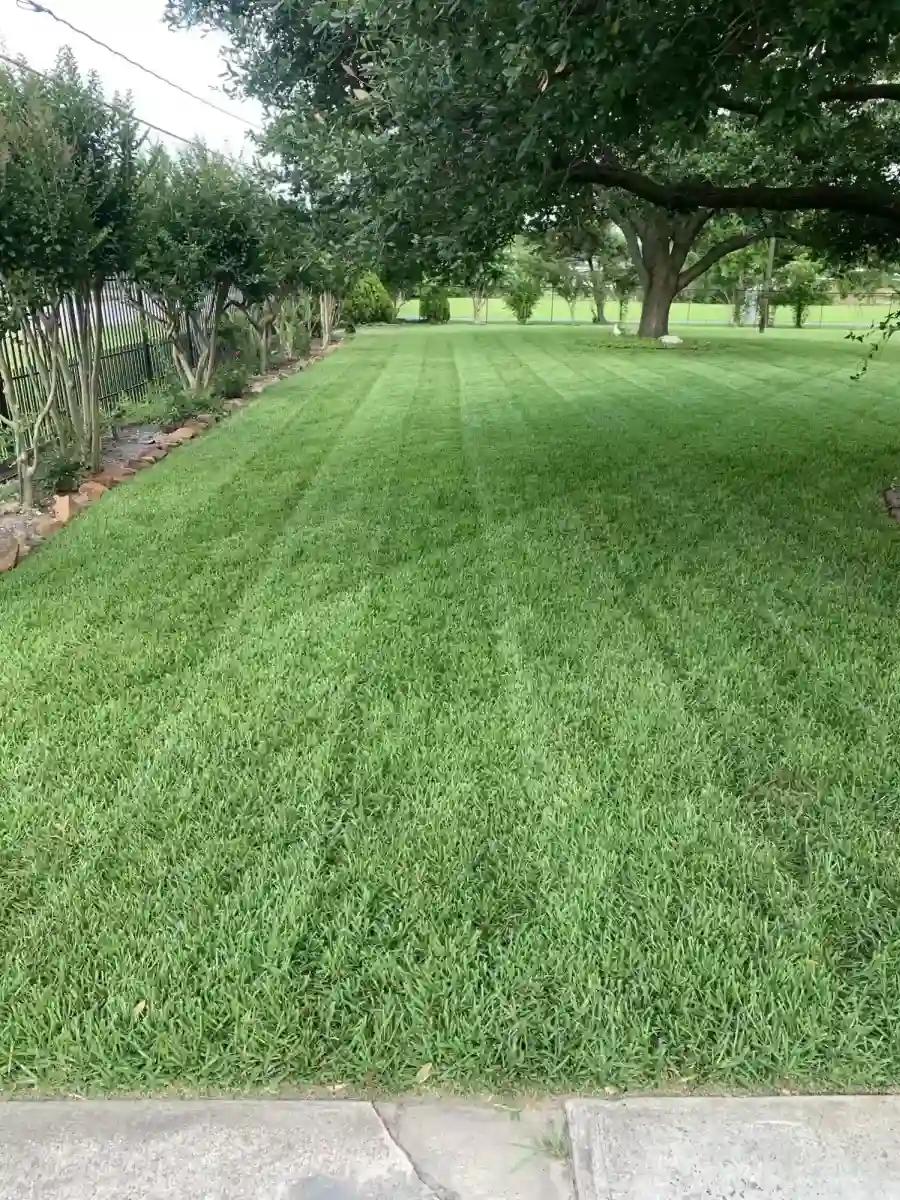
Review your grass type, irrigation, sunlight, soil, recent weather, mowing, and visible symptoms. The tool follows a practical inspection order and gives you a primary concern, a secondary possibility, and the next checks to make before treating the lawn.
Water-First Review
Houston Turf Logic
Ordered Action Plan
Step 1: Lawn Context33%
For the clearest result, assess one problem area at a time instead of combining unrelated areas of the yard.
Tell us about the lawn
Start with the conditions that most often change how lawn symptoms should be interpreted in Greater Houston.
Recent fertilizer, aeration, or treatment is context, not proof that a lawn is healthy or unhealthy. The tool uses those details only when they help explain the visible pattern.
Complete all lawn context fields to continue.
What are you seeing in this problem area?
Select every observation that applies to the same section of lawn. The tool will rank likely patterns and give you an inspection order, not a guaranteed diagnosis.
Healthy Baseline Signs
1. Irrigation and Water
2. Mechanical, Site, and Installation Factors
3. Insects and Root Damage
4. Disease and Moisture Patterns
5. Nutrition, Soil, and Turf Density
Select at least one observation before analyzing the lawn.
Helpful Next Resources
Need a Professional Lawn Review?
Contact Evergreen if you would like help reviewing the lawn and the next practical service step.
Disclaimer: This tool provides educational guidance based on common Houston lawn conditions and user-selected observations. It is not a guaranteed diagnosis, treatment prescription, pest identification, disease confirmation, or substitute for an on-site evaluation.
3 Simple Steps
How the Lawn Health Assessment Tool Works
This tool helps organize what you are seeing in the yard so you can make a smarter next move, whether the issue is heat, watering, shade, soil, drainage, weeds, pests, or new sod stress.
01
Enter the Lawn Context
Select your grass type, sun exposure, soil profile, watering pattern, recent weather, and mowing habits. These details help the tool read the symptoms more accurately.
02
Mark What You Notice
Choose the lawn signs you are seeing, such as yellowing, brown patches, thinning, hard soil, soggy spots, weeds, pest clues, or struggling new sod.
03
Get Practical Next Steps
Analyze your lawn to receive a practical action plan, common mistakes to avoid, and helpful Evergreen resources. If the issue looks bigger than DIY, you can contact Evergreen for help.
From Assessment to Action
Now That You’ve Narrowed Down the Issue, What’s Next?
The Lawn Health Assessment Tool helps you organize the symptoms. The next step is choosing the right action: better mowing consistency, soil support, watering adjustments, drainage review, sod repair, or professional lawn care when the issue keeps coming back.
Lawn Stress
Field Review
Proper Equipment
Cleaner Result
Simple, Professional, and Reliable Lawn Support.
Most lawn problems get worse when homeowners guess, wait too long, or treat every issue the same way. Evergreen helps you move from symptoms to a practical plan, whether that means recurring lawn care, recovery support, sod repair, soil improvement, or a professional review before you spend money on the wrong fix.
Hard soil, runoff, puddling, dry spots, and weak roots can come from different causes. This quick check helps narrow down whether irrigation, compaction, drainage, surface conditions, or the root zone deserves attention first before you choose aeration, topdressing, fertilizer, or sod.
Water-First ReviewSimple Field ChecksClear Next Steps
Step 1: Lawn Context33%
Start with water, site conditions, traffic, and the lawn pattern before interpreting the soil checks.
Tell us about the problem area
Choose the closest answer for one lawn area at a time. “Not sure” is acceptable and lowers confidence instead of falsely lowering the observed stress.
Diagnose one problem area at a time. A dry sunny edge and a soggy shaded low spot can require opposite corrections even when both look thin or yellow.
Complete each context field before continuing.
Complete all lawn context fields to continue.
Run a few simple field checks
Use the worst area and compare it with a healthier area when possible. These checks screen for patterns; they do not replace an irrigation audit, soil laboratory test, drainage design, or on-site diagnosis.
After normal watering, not soaking, push a long screwdriver into the soil. How difficult is it to reach about 6 inches?
Use a smooth-edged infiltration ring or sturdy open-bottom cylinder pressed about 1 inch into the soil. Add about 1 inch of water and observe how long it takes to enter.
Do you see a spongy thatch layer, hard crust, algae, or a surface that beads or sheds water?
Inspect a small plug or exposed edge. Are roots reasonably dense and anchored, or mostly shallow, sparse, or weak?
After a typical heavy Houston rain, how long does water visibly remain in the problem area?
Use several straight-sided catch containers or observe sprinkler overlap. Do some areas get soaked while other corners remain dry?
Infiltration timing varies with starting moisture, ring placement, thatch, slope, and recent rain. Repeat the check in at least two locations and use it as one clue, not as a stand-alone soil or drainage diagnosis. Use only smooth, stable test materials and avoid sharp cut edges.
Complete each field check, or choose “Not sure,” before running the analysis.
Complete all six field checks, or choose “Not sure,” to analyze the area.
Helpful Next Resources
Need Help With This Lawn Area?
If the pattern is still unclear or the problem keeps returning, Evergreen can review the area and help determine the next practical step. Include photos and any relevant watering or drainage details.
Disclaimer: This tool provides educational screening guidance based on common Greater Houston lawn and soil conditions and user-entered observations. It is not an irrigation audit, soil laboratory test, pest or disease diagnosis, drainage design, engineering evaluation, or treatment prescription. Persistent ponding, severe grade problems, repeated turf failure, suspected utility damage, or major site drainage concerns should be evaluated on site.
Helpful Next Tools
Check the Rest of Your Property
Lawn health is only one part of the yard. These tools help you review nearby issues that often show up with stressed turf, such as overgrown areas, compliance risks, weak garden beds, drainage problems, and poor plant performance.
Assessment Helps You See It. Consistency Helps You Fix It.
The Lawn Health Assessment Tool helps you narrow down what may be stressing your yard. That alone puts you ahead of the usual guesswork, where homeowners spend money on fertilizer, extra watering, or random products before understanding the real issue.
The hard part is what comes next. Houston lawns need consistent mowing, smart watering, soil awareness, seasonal timing, and honest follow-through. At Evergreen, we help homeowners turn lawn symptoms into a practical care plan, whether the answer is better maintenance, aeration, fertilization, topdressing, drainage review, or sod repair.
We Hope This Tool Helped You See Your Lawn More Clearly.
At Evergreen, our goal is to help Houston homeowners make better decisions for their lawns and outdoor spaces. Sometimes that means hiring us. Sometimes it means giving you a useful tool, honest education, and enough clarity to handle the next step yourself.
Serving Houston-area lawns and landscapes since 2020.
Practical guidance, local experience, and no pressure.
If this Lawn Health Assessment helped you understand what may be happening in your yard, feel free to share it with a neighbor, friend, or family member dealing with the same Houston lawn headaches.
Common Questions About the Lawn Health Assessment Tool
The Lawn Health Assessment Tool gives practical guidance based on the symptoms you select. It is not a lab test or a guaranteed diagnosis, but it can help you narrow down likely issues like watering stress, mowing problems, soil compaction, pests, weeds, fungus pressure, or weak turf.
If your lawn keeps declining or the symptoms are spreading, a professional lawn review can help confirm the next step before you spend money on the wrong fix.
Yes, that is one of the best uses for it. If your lawn is mostly healthy but inconsistent, better lawn care and mowing may be the right starting point. If the soil feels hard, water runs off, or roots seem weak, lawn aeration or soil support may make more sense.
If the turf is mostly dead, bare, or too far gone, sod installation may be the faster path. The goal is not to sell one service. The goal is to choose the right starting point.
Some lawns show small improvements within 7 to 14 days once basic issues are corrected, especially watering timing, mowing height, traffic stress, or minor heat stress.
Deeper problems usually take longer. Compacted soil, poor drainage, pest damage, disease pressure, heavy shade, or a thinning root system may need a longer recovery plan. For ongoing care guidance, our Ultimate Guide to Lawn Care in Houston is a helpful next resource.
It is smart to get help when:
Brown or yellow areas are spreading quickly
You suspect pests, fungus, or disease pressure
Sprinkler coverage is uneven, with soggy zones and dry corners
Water pools after rain or irrigation
You have already tried basic fixes and the lawn is not improving
If standing water or runoff is part of the issue, it may be worth reviewing drainage installation options before investing heavily into turf repair.
That is normal. Houston lawns often have more than one stressor at the same time. A lawn can be dealing with watering issues, poor mowing height, compacted clay, shade, weeds, and pest pressure all in the same season.
Start with the simplest fixes first: correct watering, improve mowing consistency, avoid scalping, reduce traffic, and watch how the lawn responds. If you want a broader view of your options, the Evergreen services hub can help you compare lawn care, sod, drainage, cleanups, and soil improvement services.
Walk the lawn first and pay attention to:
Where the issue is showing up: front yard, backyard, edges, shaded areas, or near concrete
Whether the problem is spreading, staying the same, or improving
Whether the lawn looks worse after watering, rain, mowing, or heat
Whether the soil feels hard, soggy, dry, or uneven
If you can, take a few photos: one wide shot, one close-up, and one photo showing the surrounding area. That helps if you decide to ask Evergreen for guidance.
Explore Additional Outdoor Guides & Tips
At Evergreen Outdoors, We Build Helpful Guides to Empower Our Community!