
Updated May 2026 · Evergreen Outdoor Services · Houston, TX
Water pooling in Houston yards usually happens because heavy rain falls faster than our clay soil can absorb it. The fix depends on the real cause: low spots, bad grading, compacted soil, downspout runoff, or a missing drainage path.
If your lawn turns into a mini pond after a 20-minute thunderstorm, you are not alone. We see this constantly in Houston yards, especially after the April Deluge when the ground is already wet, the mulch smells like a swamp, and the clay sticks to your shoes like roofing tar.
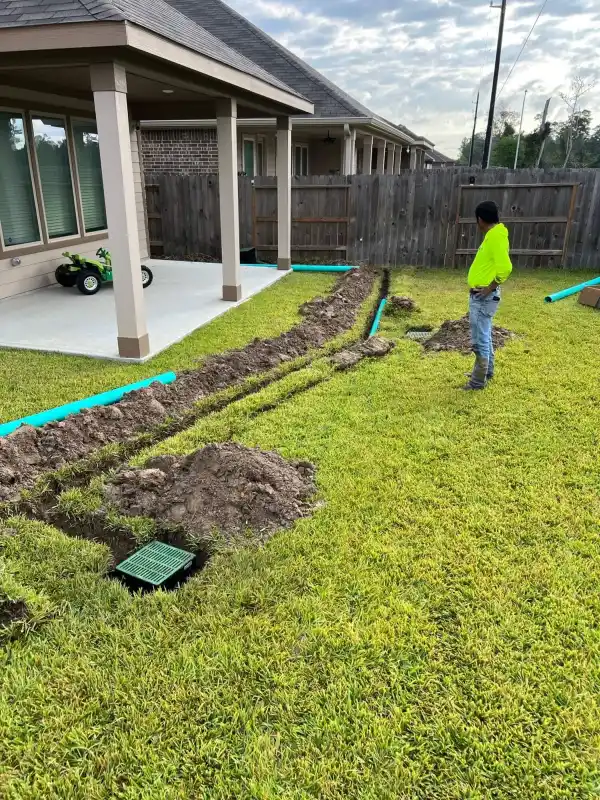 Standing water is rarely random. It usually points to a grading, soil, runoff, or drainage issue that needs a clear water exit path.
Look, the reality is simple: Houston clay does not drain like sandy soil. When it is dry, it cracks. When it is wet, it holds water and swells. That is why a yard can look normal on Friday and feel like pudding by Sunday morning.
Most water pooling comes from one of five issues:
Here is where most people mess up: they think the puddle is the whole problem. It is not. The puddle is the symptom. The real problem is that water does not have a reliable path out.
If a drain is not clear by May, you may have a pond by June. Houston rain does not wait for a convenient weekend, and mosquitoes are a landscaping factor here, not just a nuisance.
Before choosing a fix, you need to know what kind of water problem you have. A French drain, surface drain, downspout line, and lawn leveling job all solve different problems.
If you see visible standing water after rain, you likely need surface water capture, grading correction, or a better route to discharge.
If the water disappears but the ground stays soft for days, the issue may be saturated clay, compaction, or subsurface moisture.
If pooling begins where downspouts empty, roof runoff may be overloading one small area of the yard.
A simple test helps: walk the yard 24 hours after rain, then again at 48 hours. If the same area stays wet both times, you are not dealing with a random puddle. You are looking at a pattern.
If you want to compare the two most common drainage options, our guide on French drain vs surface drain in Houston explains which system fits each kind of water problem.
Standing water does not stay harmless.
In Houston, repeated saturation can slowly damage the parts of your property that depend on stable soil. Grass thins out. Mulch washes away. Edging shifts. Fence posts loosen. Low spots get deeper every season because water keeps dragging soil and organic material downhill.
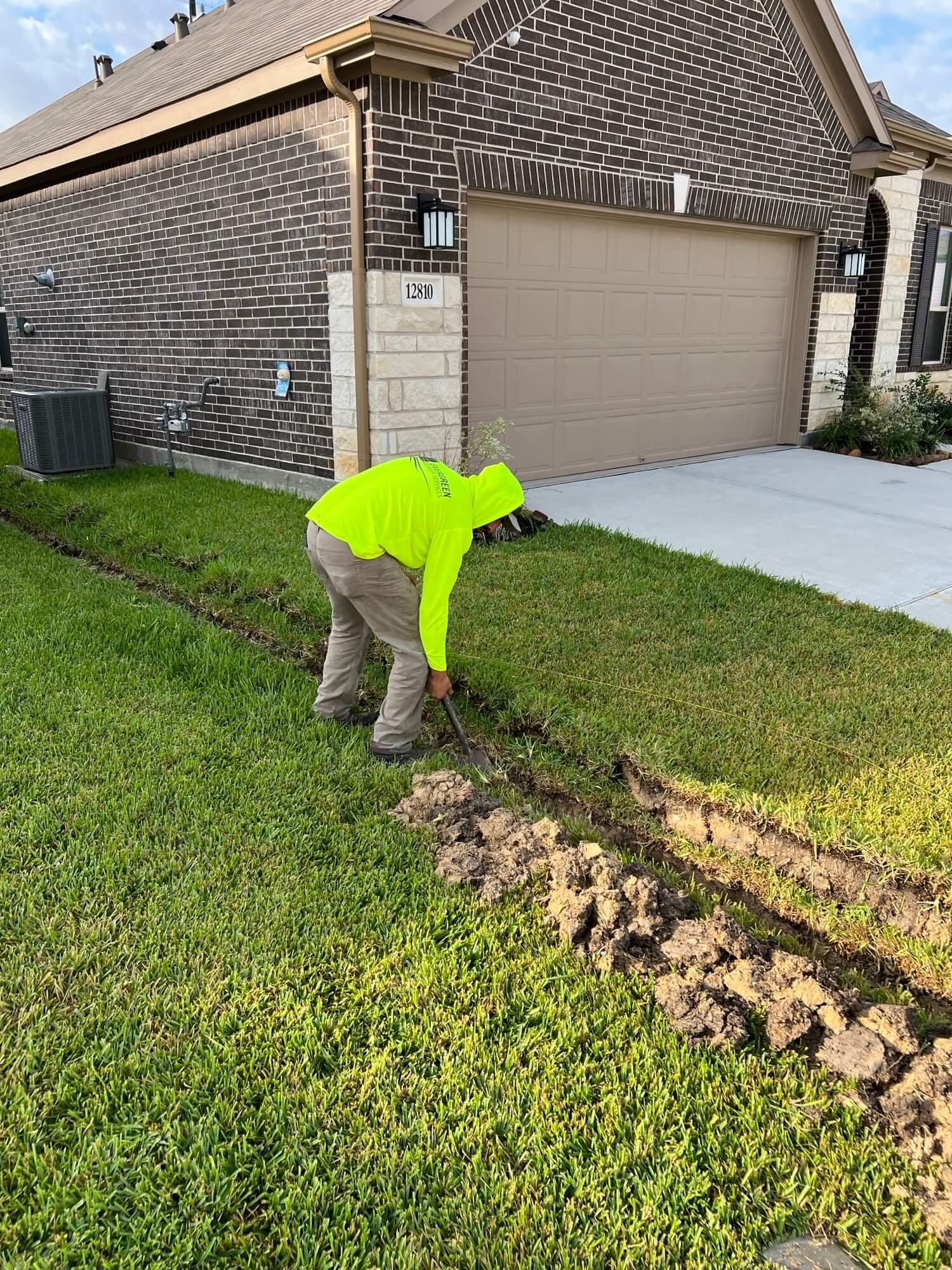 Water that keeps returning to the same spot usually needs a planned drainage path, not another temporary patch.
The bigger concern is water near the house. When Black Gumbo clay stays wet, it expands. If that cycle repeats against your foundation edge, patios, walkways, or beds, the soil movement can create pressure where you do not want it.
This is why we treat Houston yard drainage solutions as property protection, not just yard improvement.
We have tried it the other way, and it does not work. One-size-fits-all drainage creates expensive mistakes.
| Problem You See | Likely Cause | Best Starting Fix | What to Avoid |
|---|---|---|---|
| Standing water in a low spot | Surface runoff collecting faster than soil can absorb it | Surface drain, catch basin, or grading correction | Random gravel without a pipe or outlet |
| Mushy soil for days | Saturated clay or compacted soil | French drain, aeration, or soil improvement depending on severity | Overwatering or adding soil without fixing drainage |
| Water near the foundation | Bad grading, roof runoff, or blocked flow path | Downspout routing, grading, or a drainage system | Letting water sit against the house |
| Water crosses a patio or walkway | Hardscape blocking natural flow | Channel drain, surface drain, or re-routing | Cutting shallow trenches that collapse |
Surface drains are usually the first line of defense for visible pooling. French drains are better for soil that stays wet below the surface. Downspout lines move roof water away before it overloads your beds or foundation edge.
For lawn health, drainage and compaction often overlap. If your yard is wet but also hard as concrete when it dries, our Houston lawn aeration guide explains how opening the soil can help air, water, and roots move better.
Not every puddle needs pipe.
Sometimes the issue is a shallow low spot, especially in lawns that have settled over time. In those cases, the better move may be targeted leveling instead of digging a full drainage system.
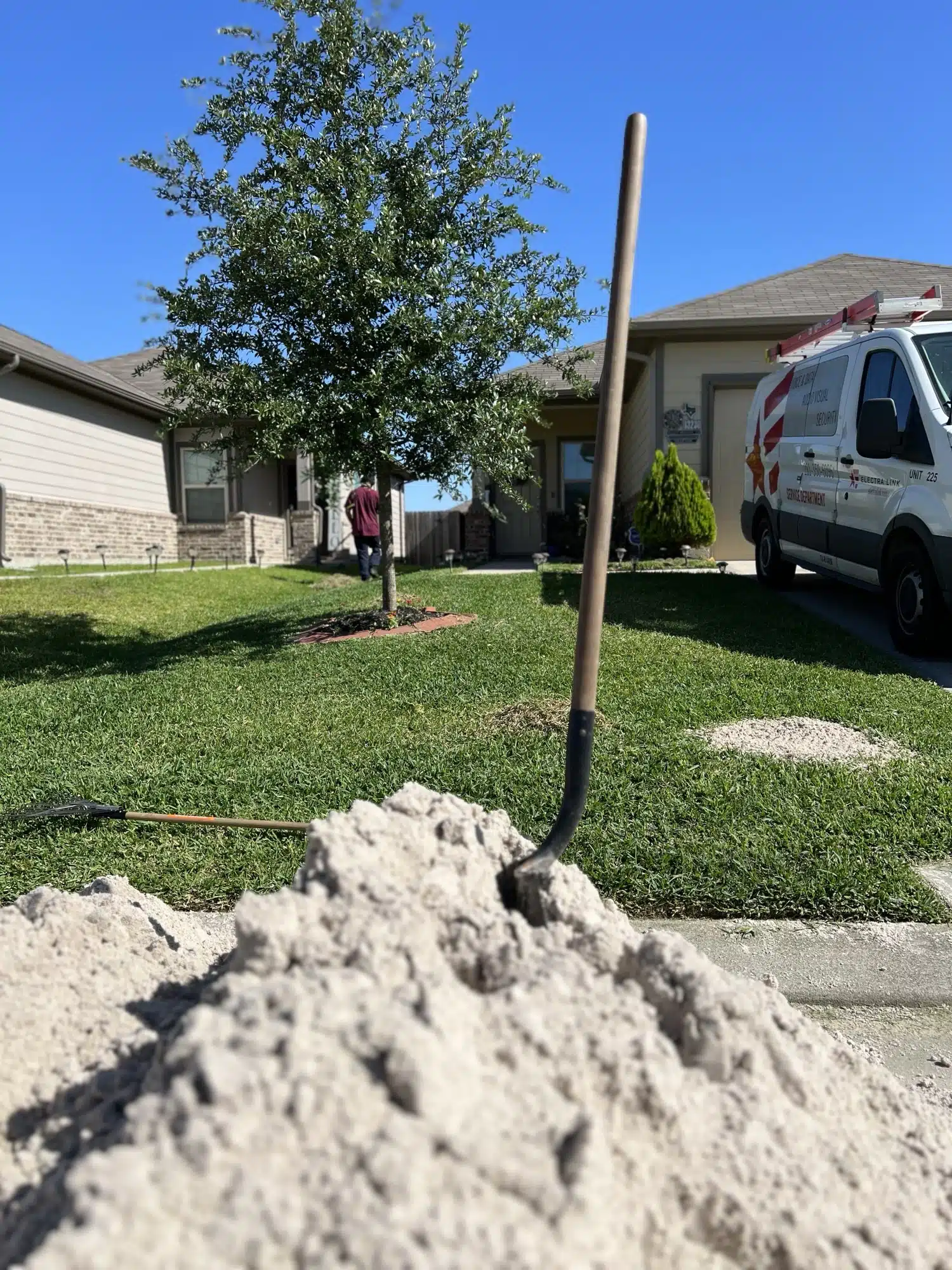 Leveling can help shallow low spots, but it should not be used to hide a bigger drainage problem.
The risk is the Layer Cake Disaster. If you keep adding material over a wet, compacted, poorly draining area, you may raise the surface but trap moisture underneath. The lawn looks fixed for a while, then the same problem comes back with softer turf, weaker roots, and more unevenness.
If the water issue has already damaged your turf, solve the drainage first. That is one of the main reasons new sod fails in our area, which we break down in why new sod fails in Houston.
Drainage work is not just digging a trench.
A working system needs slope, pipe selection, intake placement, discharge planning, and clean restoration. Without those pieces, you can spend money and still end up with the same puddle, just moved ten feet away.
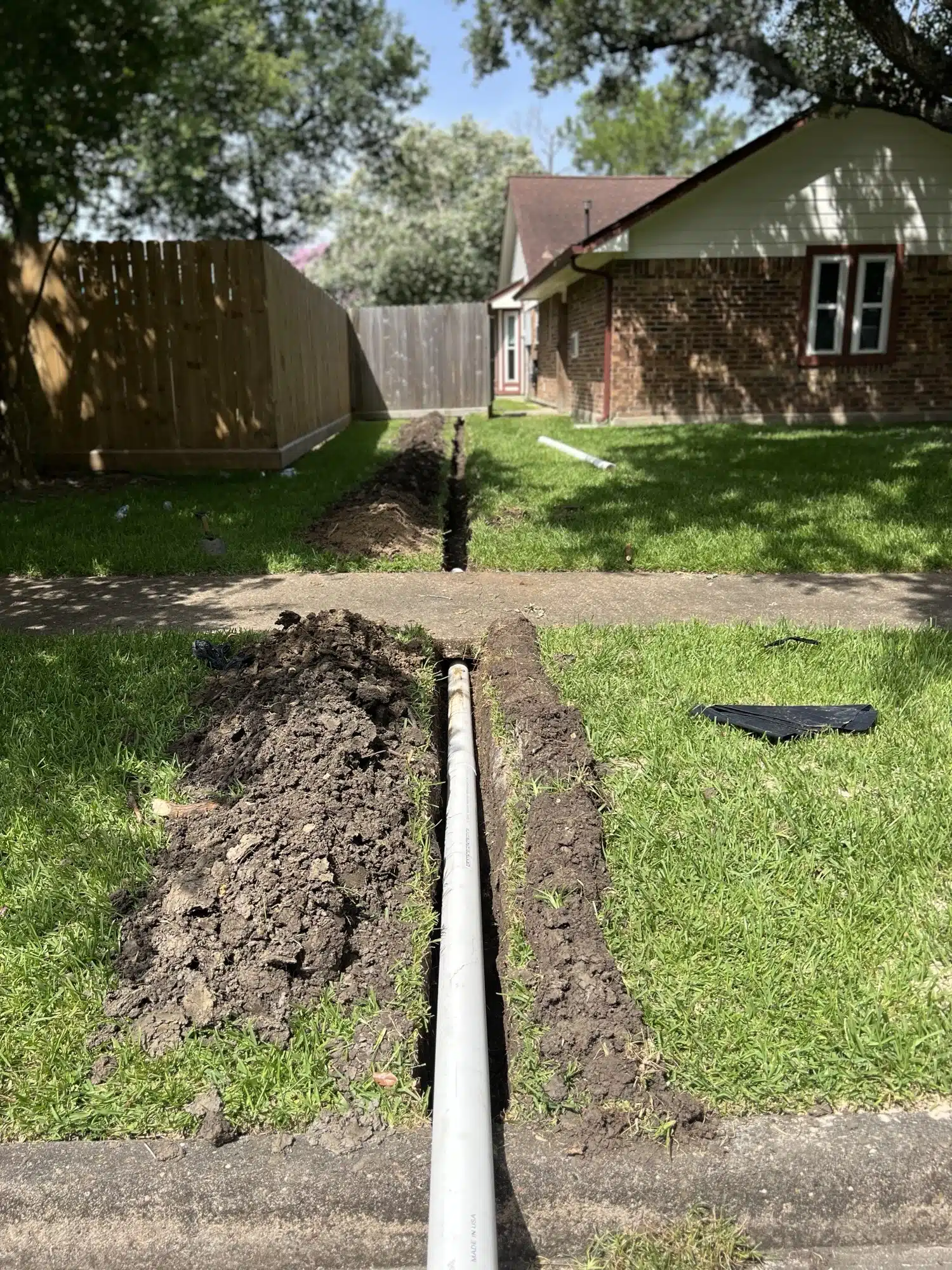 Proper drainage requires trenching, slope control, and a discharge plan that actually moves water away.
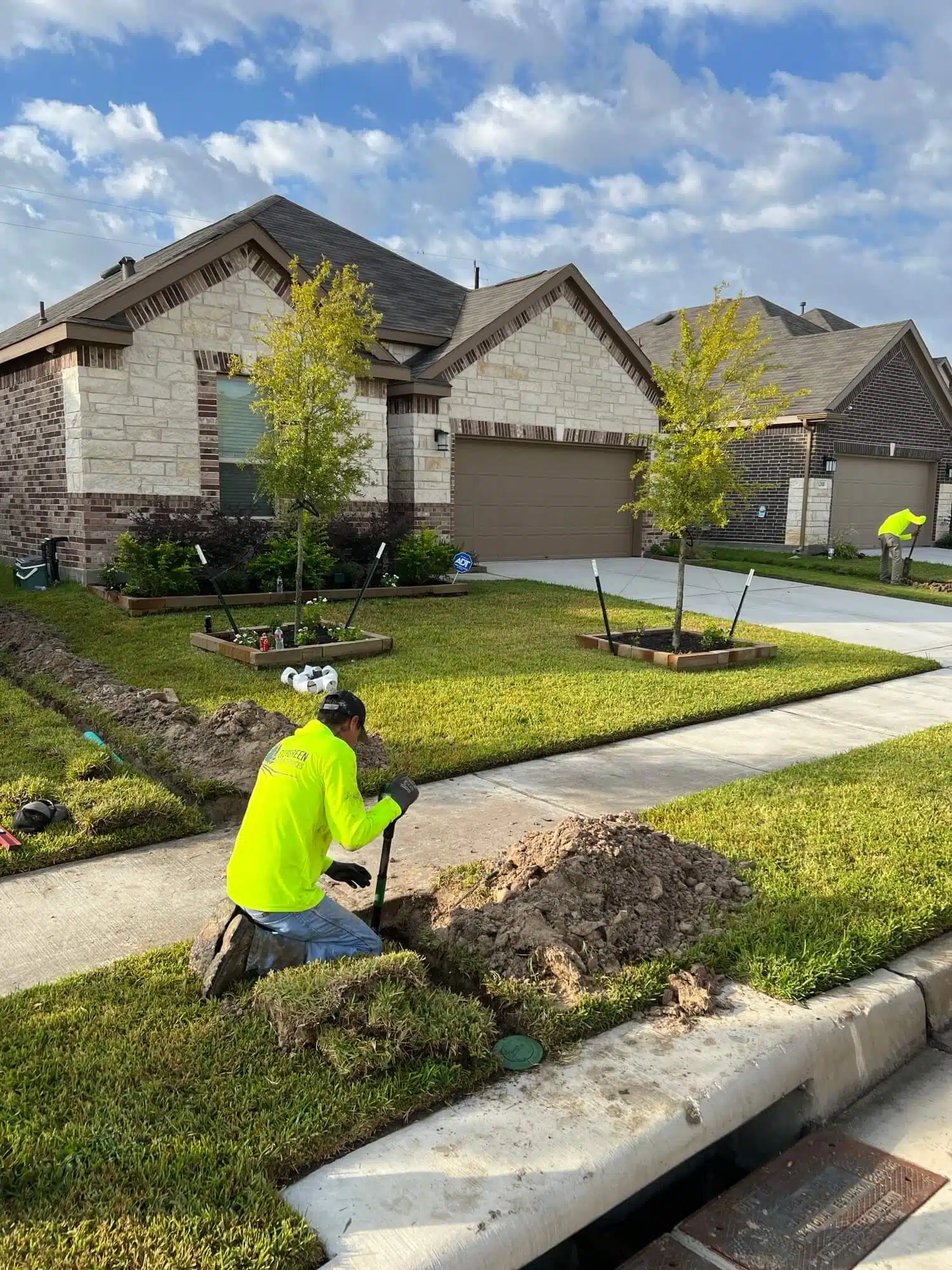 A clean trench is only part of the job. The system still needs the right depth, fall, pipe, and outlet.
For surface systems, smooth-wall pipe often performs better than cheap corrugated pipe because it carries water and debris more cleanly toward the outlet. For subsurface systems, fabric and gravel matter because Houston clay particles can clog rock and pipe openings over time.
If your project involves heavier trenching, routing, or soil movement, excavation services in Houston may be part of the solution depending on the layout and access.
Water usually pools because Houston clay drains slowly and the yard does not have a clear exit path. Low spots, poor grading, roof runoff, compacted soil, and blocked flow paths are the most common causes. If the same area holds water after every storm, it is usually time to look at professional Houston yard drainage solutions instead of treating it like a random puddle.
Gravel alone usually will not fix water pooling. Without slope, pipe, fabric, and a proper discharge point, gravel can create a “bathtub effect” that holds water underground instead of moving it away. If you are comparing drainage options, our guide on French drains vs surface drains in Houston explains when gravel-and-pipe systems actually make sense.
If water is visibly sitting on top of the lawn, patio, driveway, or low spot, a surface drain or catch basin is usually the better starting point. If the soil stays mushy for days after the visible water disappears, a French drain may be more appropriate. Many Houston yards need a combination system because surface water and saturated clay often show up together.
Yes, but only when the problem is a shallow low spot or uneven surface. Lawn leveling can help water move more evenly across the yard, but it should not be used to hide a bigger drainage issue. If the lawn is already struggling from wet soil, drainage should be addressed before investing in major turf repairs or sod installation in Houston.
If water remains for more than 24 to 48 hours after normal rain, or keeps returning to the same area every storm, it is worth assessing. In Houston, repeated standing water can damage turf, wash out mulch, soften soil near fences and patios, and create mosquito problems. If your lawn also feels hard when dry and soggy when wet, our Houston lawn aeration guide can help explain the soil-compaction side of the problem.
Sometimes, yes, but only if the yard has the right slope, curb access, and a safe place for the water to discharge. The goal is not just to “get rid of water.” It is to move it away without sending the problem toward your foundation, your neighbor’s yard, or the street in a way that creates new issues. On larger projects, proper trenching, pipe routing, and outlet planning may require excavation services in Houston so the system drains cleanly from start to finish.
If your yard keeps holding water after every storm, the fix starts with understanding where the water comes from, where it should go, and what is blocking it.
Prefer to talk directly? Call or text us for a drainage assessment.