Published May 2026 · Evergreen Outdoor Services · Houston, TX
Picking a tree for your Houston front yard is one of the bigger decisions you'll make out there. The right tree gives you shade, looks great, and adds value. The wrong one can lift your driveway, stress your foundation, or die in a couple of seasons because it wasn't a good fit for this climate.
This guide covers the trees that actually perform well in Houston front yards, what they cost to plant, and which ones to skip entirely.
Whether you're planting your first tree, replacing one that didn't make it, or just trying to improve the front of your home before a sale, this guide gives you the Houston-specific information that most generic planting advice skips over.
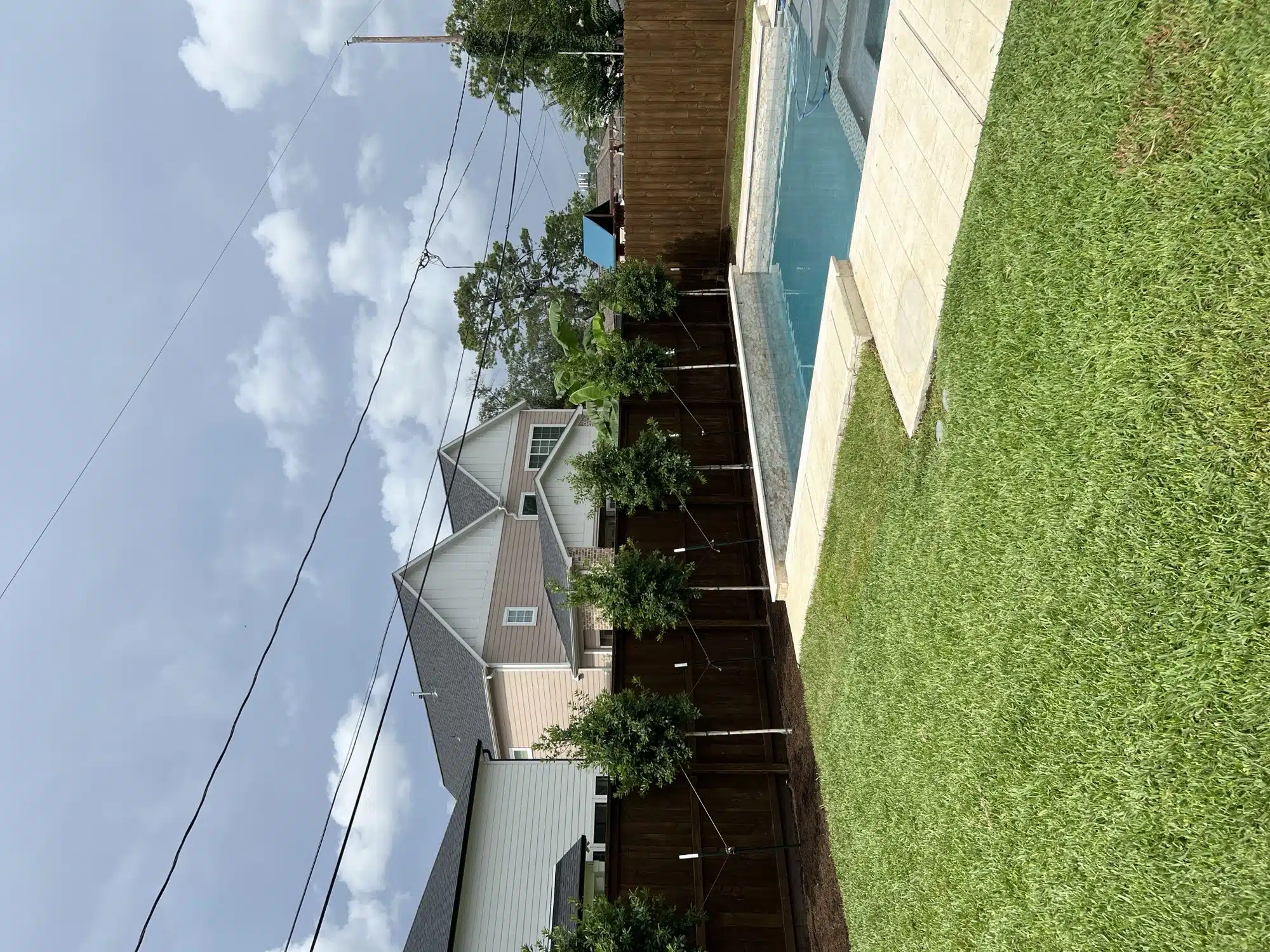 A completed tree installation in Houston. The right species, placed correctly, with clay soil prep done before the first root went in the ground.
| Use Case | Best Pick | Runner-Up | Notes |
|---|---|---|---|
| Best shade tree | Live Oak | Shumard Red Oak | Live oak has the widest canopy spread; Shumard grows faster and offers fall color |
| Best small tree (under 25 ft) | Eagleston Holly | Vitex | Eagleston Holly for year-round structure and dense evergreen form; Vitex for summer color and drought resilience |
| Best wet-soil tree | Bald Cypress | Cedar Elm | Bald Cypress handles standing water; Cedar Elm tolerates periodic flooding on clay |
| Best focal point / entry tree | Japanese Maple | Chinese Fringe Tree | Japanese Maple for fine texture and fall color in a protected spot; Chinese Fringe Tree for striking spring blooms near an entry |
| Best evergreen tree | Eagleston Holly | Southern Magnolia | Eagleston Holly for dense year-round screening, Houston heat tolerance, and manageable size (Zone 7b–9a); Magnolia for larger-scale presence and classic Southern form |
| Best summer bloom | Crape Myrtle | Vitex | Crape Myrtle blooms longest and handles Houston heat best (Zone 7–9); Vitex adds lavender-blue color with a looser, more naturalistic character |
| Best native option | Cedar Elm | Mexican Plum | Both are Texas natives that thrive in Houston without special inputs once established |
In our experience on Houston properties, tree failures almost always come down to the same few things. Poor placement near the foundation or utilities. Clay soil that was never prepped before planting. Or picking a fast-growing tree without knowing what it turns into at full size. A Bradford Pear that looked great at install becomes a storm liability in ten years. A Silver Maple that gave quick shade starts lifting a driveway slab by year eight. The trees we see do well here are the ones that were matched to the actual site before anything went in the ground.
— Evergreen Outdoor Services, Houston, TX
Most tree planting guides are written for places with stable, well-draining soil. Houston is different, and that matters when it comes to which trees actually survive here.
Houston sits on some of the most challenging clay soil in the country. It goes by a few names including Black Gumbo, Houston Black Clay, and Vertisol, but they all mean the same thing: soil that swells when it gets wet and shrinks when it dries out. Trees with shallow, spreading roots make that movement worse near your foundation and driveway. Picking a tree with deeper, calmer roots is one of the most important calls you make in a Houston front yard.
Houston summers are long, hot, and humid. Trees that do fine in Dallas or Austin often struggle here because those cities are hot but dry. Houston hits you with heat and moisture at the same time, and not every tree handles that well.
Being on the Gulf Coast means we get tropical storms and high winds every few years. Trees with weak branches or brittle wood become a real problem when that happens. Branch structure matters a lot more here than in inland parts of Texas.
The best overall tree for Houston front yards. Live oak handles the clay soil, holds up through heat and storms, and grows a wide canopy that makes a real difference in how cool your yard feels. It drops leaves briefly in spring rather than winter, which catches some people off guard, but it comes back fast. The roots stay relatively deep and well-behaved as long as you give it enough room to spread.
One of the few large trees that actually does well in Houston's soggy, poorly draining yards. Bald cypress is native to the Gulf Coast, handles flooding, and grows into a tall, elegant tree over time. It drops its needles in fall, which gives it a light, open look through winter. If your yard has drainage issues that other trees can't deal with, this one is worth considering. Willow trees also tolerate wet conditions well but grow much faster, have aggressive roots, and need a lot of space away from utilities and structures. For most residential front yards, Bald Cypress is the better choice. Willow works better on larger rural lots or along drainage channels where root spread isn't a concern.
If you want real fall color in Houston, Shumard Red Oak is your best bet. It turns deep red and bronze in the fall, which is something most Houston yards never get. It grows faster than Live Oak, tolerates clay, and handles the summer heat well. A good option for lots that aren't quite big enough for a full-spread live oak. Give it at least 20 feet from the foundation.
Cedar Elm is a Texas native that does really well in Houston's clay and handles both drought and occasional flooding better than most elms. It has small, tough leaves that hold up in the heat and grows into a nice upright shape over time. It's also more resistant to elm disease than non-native varieties. A solid, low-maintenance pick for medium to large front yards.
Loblolly Pine is one of the most common native trees in the Houston area and grows faster than most large pines. It provides year-round screening and a tall, straight form that works well in the back of a large front yard or along a property line. It does well in Houston's clay and handles wet conditions better than most pines. Keep in mind that pine needles drop year-round and lower soil pH over time, which matters if you're also trying to grow grass or other plants underneath. Best suited for larger lots where you have room to give it space.
Not every front yard has room for a 60-foot tree. Smaller ornamental trees are a great fit for tighter lots, areas close to the foundation where a big tree would be too much, or anywhere you want something with more visual interest than a straight shade tree.
The most popular ornamental tree in Houston, and for good reason. Crape myrtles love the heat, handle dry spells once they're established, and bloom hard from late spring all the way through summer. They range from small shrub-type plants all the way up to 30-foot trees depending on the variety. The key is picking the right size for your space so you're not cutting it back hard every year just to keep it manageable. Natchez, Tuscarora, and Muskogee are all reliable larger varieties for Houston front yards.
A classic Houston front yard tree with big, glossy evergreen leaves and large white flowers in late spring. It gives you year-round screening and a look that is hard to beat. The trade-off is that it drops large leaves all year, so you will be cleaning up after it regularly. It also needs more room than most people expect. If your space is tighter, the Little Gem variety tops out around 15 to 25 feet and works much better on smaller lots.
A small native tree that puts on one of the best flower shows of any tree in Houston in early spring. White blossoms cover it before the leaves come in, usually in February or March. It stays between 15 and 25 feet tall, which makes it a natural fit near the foundation or on a smaller lot. Once it gets going it handles dry spells well and rarely has pest issues. The fruit brings birds in late summer. It doesn't get planted as often as it should.
One of the toughest and most versatile small native trees you can plant in Houston. Yaupon holly handles wet clay, drought, shade, full sun, and coastal conditions without complaining. You can grow it as a multi-trunk specimen or train it into a single-trunk small tree. Red berries show up in fall and winter. The weeping form is also worth looking at if you want something with a more distinctive, cascading shape.
Eastern Redbud is one of the best small trees you can plant in a Houston front yard for spring color. It covers itself in bright pink-purple flowers before the leaves come out, usually in February or early March, which makes it one of the earliest blooms of the year. It stays manageable at 20 to 30 feet, tolerates Houston's clay soil, and handles part shade well, which makes it a good choice under taller trees or along a house where sun is limited. The heart-shaped leaves add nice texture through summer. The Texas redbud variety is a bit more drought-tolerant and handles the heat slightly better than the standard eastern species.
Eagleston Holly is one of the best small evergreen trees you can plant in Houston (Zone 7b to 9a). It grows into a dense, upright pyramid shape with dark glossy leaves and red berries in fall. It gives you year-round structure and color without the constant leaf cleanup or root issues you get from larger evergreens. It stays around 15 to 20 feet tall with a fairly narrow spread, which makes it a great choice for spots near the front entry, along a foundation, or anywhere space is limited. Very little maintenance once it gets established.
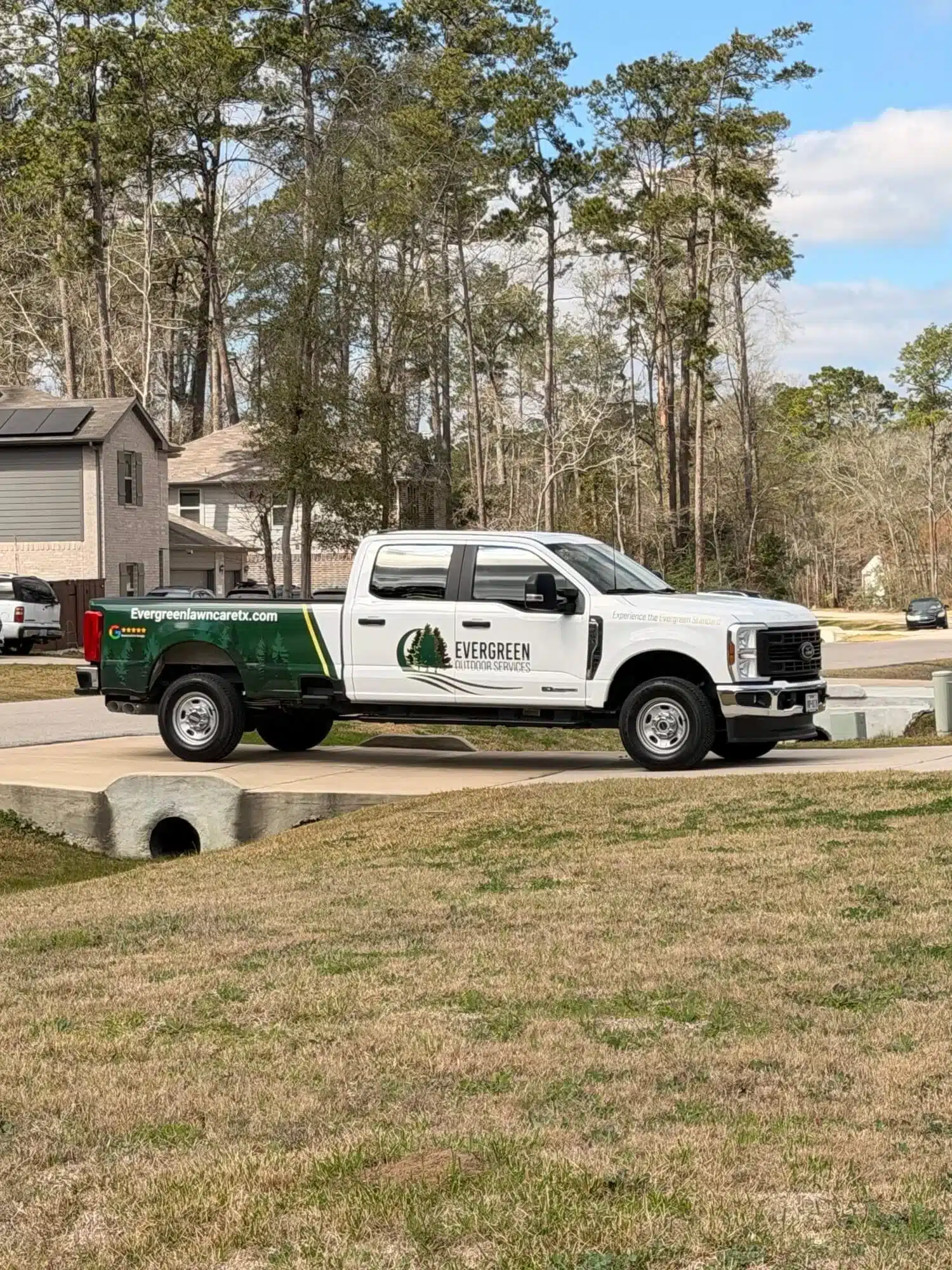 On-site tree consultation in Houston. Species selection and placement get worked out before anything goes in the ground.
For most ornamental trees, the variety matters just as much as the species. Crape Myrtle is not one tree — it's hundreds of different varieties with different mature sizes, bloom colors, and disease resistance. Southern Magnolia ranges from a compact 15-foot Little Gem all the way up to an 80-foot tree. Before you plant anything, find out the mature height and spread of the specific variety you're getting. Most front yard problems start with planting something without knowing what it turns into.
These trees don't fit neatly into shade or ornamental categories. They're the ones that make a front yard feel intentional. A well-placed focal point tree near a front entry, at the end of a bed, or standing alone in the lawn can completely change the feel of the space.
One of the best summer-blooming small trees for Houston. Vitex pushes out long spikes of lavender-blue flowers from late spring through most of summer. It's a color that almost nothing else delivers in this climate. It handles heat well, holds up through dry spells once established, and has a looser, more natural shape compared to a crape myrtle. Grows 10 to 20 feet and works as a multi-trunk specimen or a single-trunk tree. Give it full sun and decent drainage. Cut it back hard in late winter and it blooms better for it.
One of the most underused ornamental trees in Houston. Chinese Fringe Tree blooms white in spring with big, fluffy flower clusters that genuinely stop people on the sidewalk. It stays between 10 and 20 feet, handles Houston's humidity and clay soils well, and rarely has pest problems. It works great near a front entry, at the corner of a bed, or as a solo specimen in a smaller yard. The bloom lasts about two to three weeks in April and is worth planning around.
The weeping form of native Yaupon Holly has a presence that most front yards don't have. The cascading, layered canopy looks like it was intentionally designed rather than just planted. It tolerates pretty much every Houston growing condition including wet clay, drought, shade, full sun, and salt wind. Red berries come in fall. It grows 15 to 20 feet and can be kept smaller if needed. Works really well as a solo focal point in a mulch bed or planted on either side of an entry.
Japanese Maple can work in Houston, but only in the right spot. It needs morning sun with shade in the afternoon, protection from west winds, and consistent water. A courtyard, a north-facing bed, or a location sheltered by the house are about the only places where it holds up reliably. In an open front yard with full Houston sun, it burns by July. When the conditions are right, the fine-textured leaves and fall color are unlike anything else you can plant here. When they're not, it's an expensive and frustrating loss.
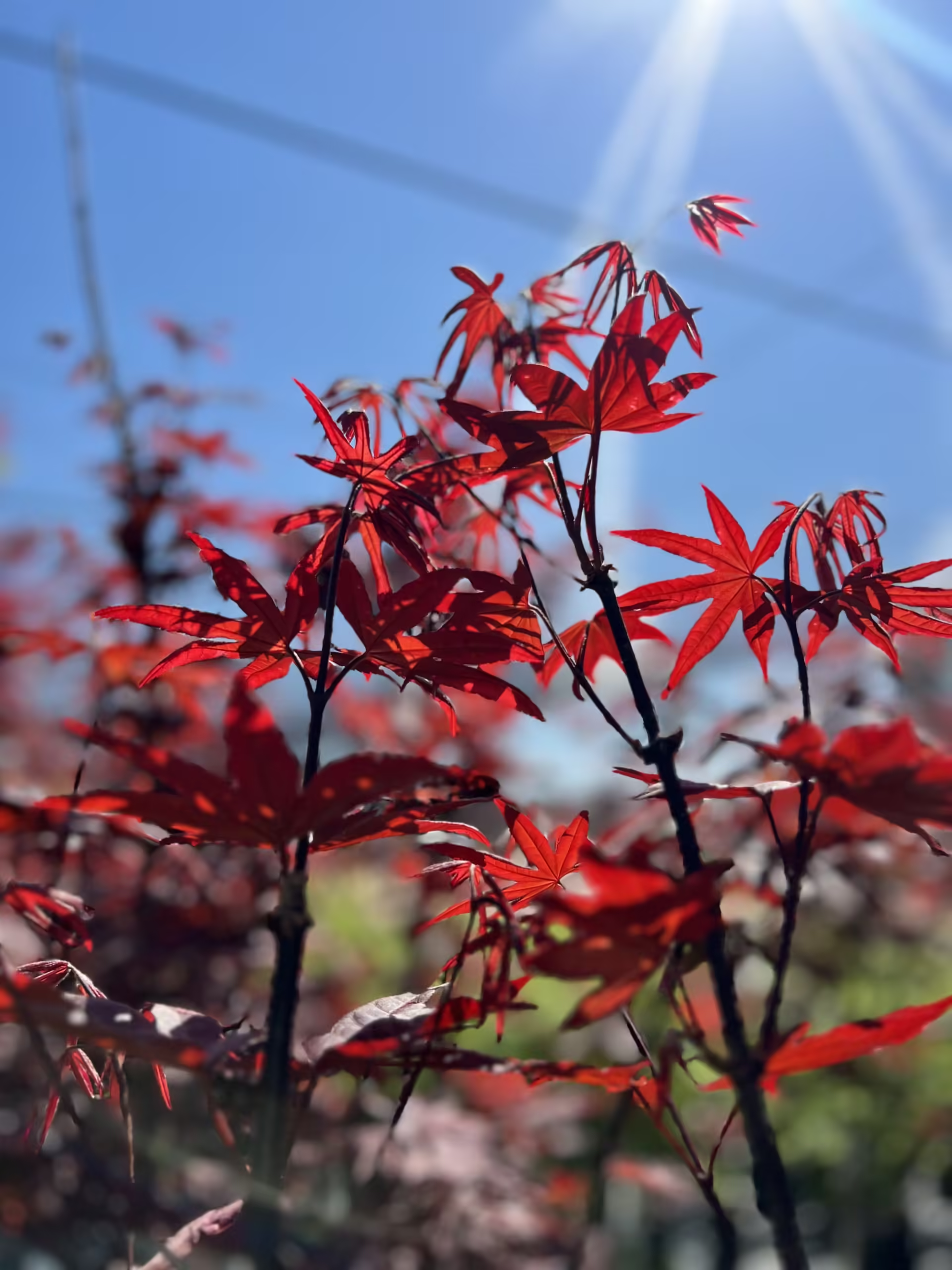 Japanese Maple in a protected Houston setting. Morning sun, afternoon shade, and shelter from west wind are the conditions it needs to hold up here.
These are all-in installed prices, not just labor. A complete tree installation includes the tree itself, soil amendment, fertilizer, root stimulator, mulch, stakes where needed, delivery, fuel, and labor. What you see at the nursery is the tree — what you're paying for with professional installation is everything it takes for that tree to survive Houston's first two summers.
| Container Size | Typical Species Examples | All-In Installed Cost | Notes |
|---|---|---|---|
| 5-gallon | Small ornamentals, Yaupon Holly, Mexican Plum | $150–$350 | Smallest practical planting size. The tree itself often runs $60–$90 or more at a quality Houston nursery depending on species — don't expect bargain-bin pricing on a healthy, well-grown specimen. The rest is soil, amendments, mulch, and labor. Good for budget-friendly projects or when you're planting several at once. |
| 15-gallon | Crape Myrtle, Eastern Redbud, Cedar Elm, Shumard Oak | $400–$750 | The most common size for residential installs. The tree alone at a quality nursery typically runs $150–$300+, and select or rare species go higher. Factor in soil prep, root stimulator, mulch, and delivery and the all-in number adds up fast. Usually a 1.5 to 2 inch trunk caliper at planting. |
| 30-gallon | Live Oak, Southern Magnolia, Bald Cypress | $800–$1,400 | Makes an immediate visual impact. Clay soil prep, deep watering at install, and staking are all part of a proper job at this size. Trunk is typically 2 to 3 inches in diameter. |
| 45-gallon+ | Live Oak, Large Shade Trees, Specimen Japanese Maple | $1,500–$3,500+ | Large specimen trees often require equipment to place them correctly. Root zone amendment, deep watering, and staking are essential. Consistent watering through the first two Houston summers is the difference between success and a very expensive loss. |
| 65-gallon / 100-gallon | Mature Live Oak, Large Specimen Trees | $3,500–$8,000+ | At this size, container gallons become less meaningful and most professionals shift to measuring by trunk caliper — the diameter of the trunk measured in inches a few feet off the ground. A 3-inch caliper live oak is a very different install than a 6-inch caliper one. Equipment is required, site access matters, and root zone prep is non-negotiable. If you've heard a contractor talk about "caliper size," this is what they mean. |
| Site prep add-ons | Clay soil amendment, drainage correction, root barrier | $150–$700 | Often the deciding factor between a tree that thrives and one that fails. Especially important on compacted clay lots or yards with drainage issues. See the drainage cost guide if your yard has standing water. |
 Tree work in Houston. Professional crew handling installation, pruning, and site prep with the right equipment for the job.
Once established, most Houston trees don't need a lot of ongoing care beyond seasonal pruning. Professional pruning for a mature shade tree typically runs $200 to $600 depending on the size and how easy it is to access.
Some commonly planted trees are just a bad fit for Houston. Weak wood, aggressive roots, or they can't handle the heat and humidity here. They show up at nurseries a lot because they grow fast and are cheap. That fast growth usually comes with a catch.
The branch structure fails predictably in Houston storms. It's also invasive across Texas and spreading into natural areas. Short-lived at 15 to 20 years, and messy when it goes. Many Texas cities have banned or discouraged it. Skip it entirely.
Has an extremely aggressive shallow root system that will lift driveways, sidewalks, and start stressing foundations within a decade. It grows fast, but the roots in Houston's clay make it a liability anywhere near concrete or your house.
Invasive throughout Houston. Poor wood, short lifespan, and toxic fruit. It seeds aggressively into nearby areas and is tough to fully get rid of once it gets going.
Extremely invasive. Grows fast, spreads through root sprouts, and puts out chemicals that actually kill surrounding plants. Listed as an invasive species in Texas. Still shows up at budget nurseries. Not worth it at any price.
People plant it for fast growth and fall color, but it's very susceptible to borers and root rot in Houston's humid clay. Most Arizona Ash trees here decline within 10 to 15 years. There are better options for every role it fills.
The flowers look great, but Mimosa is invasive, short-lived at 10 to 15 years, and seeds heavily into surrounding yards and natural areas. It also pulls in webworms every late summer. Not a tree worth planning your front yard around.
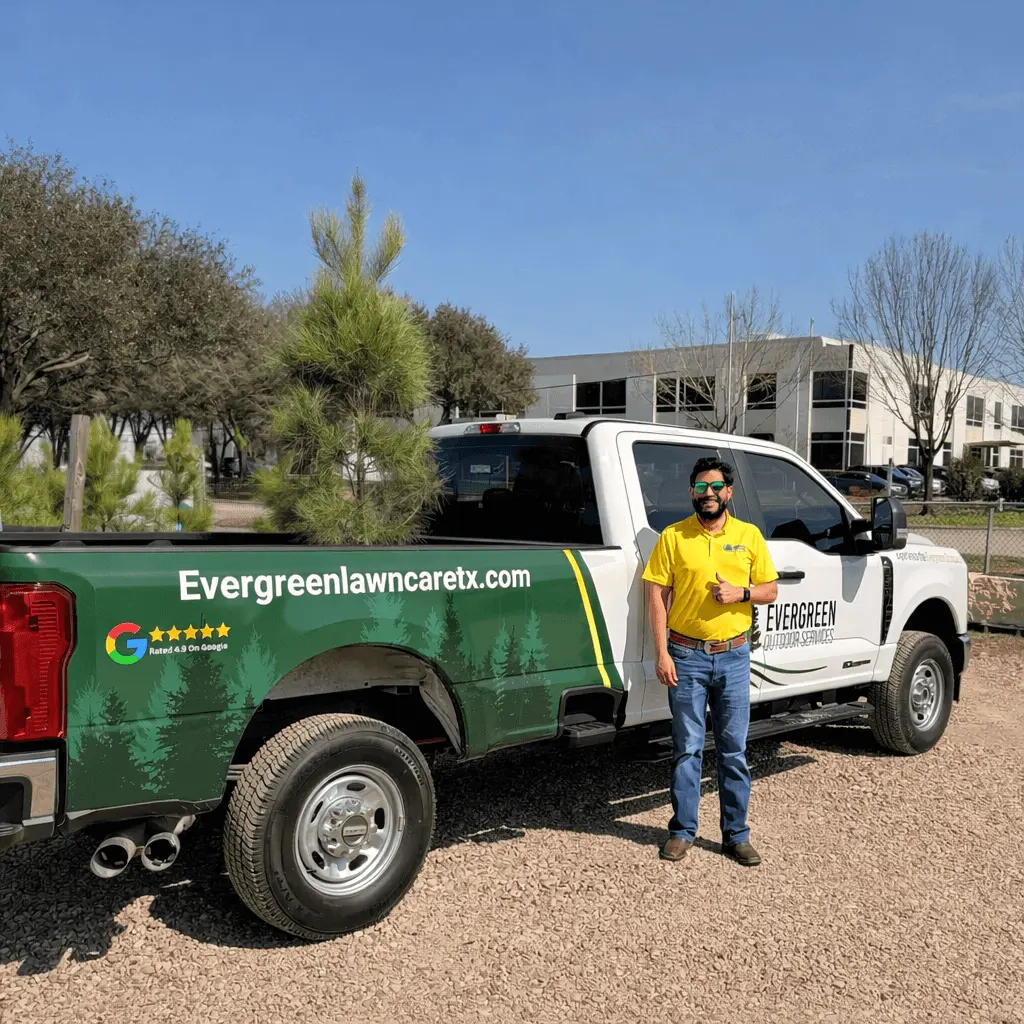 Large tree delivery in Houston. Specimen-size trees need the right equipment, proper soil prep, and a clear placement plan before they arrive on site.
In most places, how far you plant a tree from your house is mostly about looks. In Houston it's a structural question. The clay soil under most Houston neighborhoods reacts to moisture by expanding and contracting, and large tree roots speed up that process in the soil right next to your foundation.
| Tree Size Category | Examples | Min. Distance from Foundation | Min. Distance from Utilities |
|---|---|---|---|
| Small (under 25 ft) | Yaupon Holly, Mexican Plum, Dwarf Crape Myrtle | 10–15 ft | 5–10 ft from buried lines |
| Medium (25–40 ft) | Standard Crape Myrtle, Southern Magnolia 'Little Gem' | 15–20 ft | 15 ft from buried lines, under power lines OK |
| Large (40–60 ft) | Shumard Oak, Cedar Elm, Bald Cypress | 20–25 ft | 20+ ft from buried lines, avoid overhead lines |
| Very Large (60+ ft) | Live Oak, large Cedar Elm | 25–35 ft | 25+ ft from buried lines, avoid overhead lines entirely |
Texas law requires you to call 811 at least 48 hours before any digging. Tree planting means going deep enough to potentially hit buried utility lines in many Houston neighborhoods. It's a free call and it prevents costly and sometimes dangerous mistakes. Professional installers handle this as part of the process. If you're doing it yourself, that call is on you.
We look at your lot size, soil conditions, shade needs, and how close you are to the foundation before recommending anything. That way you're planting a tree that actually fits your yard.
Selecting the right tree gets you most of the way there. Planting it correctly is what determines whether it establishes — or struggles for years because of one avoidable mistake. Houston's clay soil creates a specific set of problems that most generic planting guides don't account for.
Quick Houston Tree Planting Checklist
"I was referred to Evergreen Outdoor Services after purchasing a tree at Warren’s Nursery. From the first contact, Jorge made the process simple. Communication was clear, and Jorge and Jeffery arrived promptly. They explained their planting procedures, including fertilizers, and were happy to re-situate the tree multiple times. After the planting, my gardens were just as neat as before the digging began. These men are very knowledgeable about plants, trees and shrubs. I couldn’t ask for better."
— Laurel Casey · Google Review · Tree Landscaping
The right species, planted at the right distance from your foundation, with proper soil prep for Houston's clay. That is the difference between a tree that adds value and one that creates problems. We handle the assessment, species selection, and installation.
Call us at 832-506-8239 or request your consultation online.