
Stepping onto a healthy, well-maintained Zoysia lawn feels more like walking on an expensive living carpet than a standard patch of Southeast Texas turf. For Houston homeowners who prioritize a "golf course" aesthetic, zoysia grass lawn care in Houston has become the preferred standard. It is the choice for the homeowner who wants the best and understands that a premium lawn requires a specific, disciplined approach to thrive in our unique Gulf Coast environment.
Zoysia offers a density and softness that neither St. Augustine nor Bermuda can replicate. However, it isn't a "fix-it-and-forget-it" grass. Our local heat, humidity, and heavy clay soils present distinct challenges that can turn a premium Zoysia lawn into a patchy, thatch-heavy headache if the care routine is off. This guide is built to ensure your investment in Zoysia pays off with a lush, emerald-green result that lasts for years.
Zoysia is a warm-season perennial grass that spreads through a combination of rhizomes (underground) and stolons (above-ground). This dual-action growth is what makes it so dense. While Houston's most popular grass types all have their place, Zoysia is often chosen for its refined texture and visual uniformity.
In neighborhoods like West University, Memorial, and The Woodlands, Zoysia is frequently the replacement for aging St. Augustine yards. It offers a cleaner look with more color depth. Because it grows slower vertically than Bermuda, you don't get the "overgrown" look quite as fast, allowing for a consistently manicured appearance. You can see how this grass integrates into complete landscape designs in our landscape portfolio.
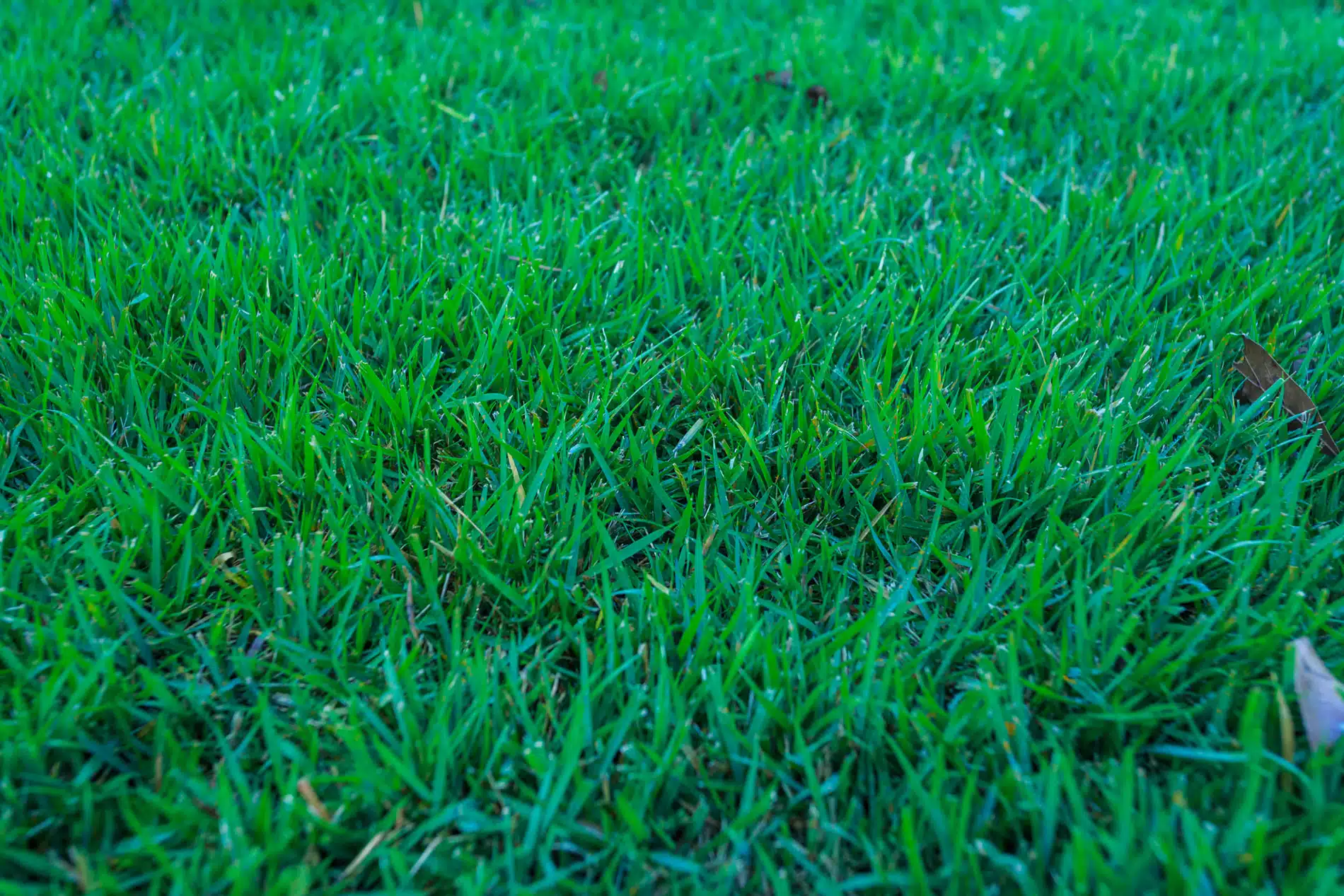 Zoysia's signature density creates a natural barrier against crabgrass and other common Houston weeds.
Our environment is defined by extremes: 100-degree heat waves, 90% humidity, and heavy rains that saturate the gumbo clay. Zoysia handles this better than almost any other variety. It is remarkably heat-tolerant and possesses a "dormancy switch" that allows it to survive long dry spells by turning brown rather than simply dying off.
However, the humidity is Zoysia's biggest enemy. Because the grass is so thick, it can trap moisture against the soil surface. This creates a playground for Large Patch (often called Brown Patch) fungus. Successful care requires a proactive approach to airflow, which is why we emphasize the importance of Houston lawn aeration to keep the root system from suffocating in our clay soil.
The most honest advice we give is that Zoysia is a "slow healer." If your lawn gets damaged by heavy construction, a dog digging, or disease, the recovery time is measured in months, not weeks. Unlike Bermuda, which can grow over a bare spot in a few days of sunshine, Zoysia takes its time.
Cost is the other major factor. Zoysia sod is typically 30% to 50% more expensive than St. Augustine. Because it grows slower at the sod farm, it takes longer to produce, which increases the price at the register. We view it as a long-term investment in property value rather than a quick fix for a patchy yard.
If you mow Zoysia at the same height as your neighbors' St. Augustine, you will likely damage the health of the plant. St. Augustine likes to be tall (3.5 to 4 inches); Zoysia thrives when kept short.
Keep your Zoysia between 1.5 and 2.5 inches. Keeping it at this height encourages the plant to spread horizontally rather than vertically, which increases that carpet-like density. Because of this precision requirement, many homeowners utilize our specialized lawn mowing service in Houston to ensure the height is maintained perfectly week after week.
Watering Zoysia in our humidity requires precision. You want to water deeply and infrequently. Aim for 1 inch of water per week, delivered in two sessions. The early morning hours (between 3:00 AM and 6:00 AM) are the only time you should be watering.
Watering in the evening or at night keeps the grass blades wet for 10+ hours, which is a guaranteed recipe for fungus in Houston. Deep watering forces the roots to push down into the clay, making the lawn much more resilient during a July drought. If the grass starts to turn a blue-grey color or the blades curl into needles, it’s telling you it needs a drink immediately.
Zoysia is a light feeder compared to Bermuda. If you over-apply nitrogen, you will create a massive thatch problem and increase the risk of disease. We advocate for a "slow and steady" approach.
Using organic fertilization methods is often the best choice for Zoysia. It provides a slow release of nutrients that feeds the soil microbes without forcing unnatural, rapid growth. A spring application once the grass is 100% green, a mid-summer boost, and a potassium-heavy fall application are generally sufficient for a thriving Houston lawn.
Thatch is the layer of living and dead organic matter between the green blades and the soil. Because Zoysia is so tough and slow-growing, this material doesn't break down quickly. If it gets thicker than 3/4 of an inch, it acts like a waterproof sponge. It will soak up your irrigation and fertilizer, preventing it from ever reaching the roots. We cover more on this in our soil health guide.
To prevent this, we recommend core aeration every spring. This pulls small "plugs" out of the ground, allowing oxygen to hit the soil and helping microorganisms break down that thatch layer. If the thatch is already out of control, you may need a specialized vertical mowing service to "slice" through the layer and remove the excess material.
| Comparison Factor | Zoysia | St. Augustine | Bermuda |
|---|---|---|---|
| Visual Texture | Premium Carpet | Coarse/Wide | Athletic Field |
| Shade Tolerance | Moderate (4-5 hrs) | High (3-4 hrs) | Very Low (6+ hrs) |
| Drought Survival | High (Dormancy) | Low (Risk of death) | Very High |
| Mowing Height | 1.5" - 2.5" | 3.5" - 4.5" | 0.5" - 1.5" |
| Recovery Speed | Very Slow | Moderate | Extremely Fast |
| Foot Traffic | Moderate/High | Low/Moderate | High |
Not all Zoysia is identical. Depending on your yard's specific sun exposure and soil type, one of these three local favorites will likely work best:
Focus on "waking up" the lawn. This is the best window for topdressing your lawn with a compost/sand mix to level out low spots. Apply a pre-emergent herbicide now to stop crabgrass before the soil hits a consistent 65 degrees.
This is growth time. Mow consistently and keep your blade sharp. Watch for Chinch bugs and sod webworms. If the grass starts to look "wilted" in the afternoons, increase your watering depth, not the frequency. Consistent mowing at 2 inches is vital here.
Apply a second round of pre-emergent for winter weeds like Poa Annua. If your thatch is thick, this is a great time for core aeration. Reduce your nitrogen intake and increase potassium to help the roots prepare for winter dormancy.
Keep the lawn clear of fallen leaves. Zoysia doesn't like being covered during the winter; the moisture trapped under leaves can cause crown rot. No fertilizer is needed while the grass is dormant, but keep an eye on weed growth.
Zoysia is an investment. It is the best choice for the homeowner who views their landscape as an extension of their home's interior. If you want a lawn that makes people stop and stare as they drive by, Zoysia is the only way to go.
However, we always tell homeowners to be realistic. If your yard is a high-speed racetrack for multiple large dogs, or if your budget for maintenance is minimal, you might find Zoysia's slow recovery frustrating. Zoysia rewards those who pay attention to the details and work with the unique Houston soil and climate.
 Our team at Evergreen understands the specific chemistry required to keep Zoysia thriving in Houston's heavy clay.
Absolutely. It is specifically designed for the heat and humidity of the South. While it takes longer to establish than other grasses, once it is rooted, it is incredibly resilient to our climate shifts. For more general answers, visit our general FAQ page.
Zoysia is more drought-tolerant and offers a much softer texture. St. Augustine is still better for very shady spots under deep tree canopies. If you have at least 5 hours of sun, Zoysia is usually the superior visual choice.
During the growing season, once a week is the minimum. If you are fertilizing regularly, you may need to mow every 5 days to keep it at the proper 2-inch height. Our Houston mowing crews handle this for many Zoysia owners.
It needs 1 inch per week. It is more efficient with water than St. Augustine, but it will enter a protective dormancy (turn brown) during extreme droughts if not supplemented with deep soakings.
In Houston, this is usually Large Patch fungus (Spring/Fall) or Chinch bugs (Summer). Because these look similar but require completely different treatments, we recommend a professional diagnostic.
We don't recommend it. Most premium Zoysia varieties are hybrids and do not produce viable seeds. Growing from seed is slow and often leads to a patchy, non-uniform lawn. Sodding or plugging is the standard for high-end results.
A luxury lawn requires a specialized touch. We specialize in the precision maintenance that Houston Zoysia lawns demand. Let's build a care plan that ensures your yard remains a masterpiece.