
Published April 2026 · Evergreen Outdoor Services · Houston, TX
Most yard injuries involving young children don't happen because a parent wasn't paying attention. They happen because the hazard was invisible — a rusted edge flush with the soil, a branch at exactly forehead height, a soggy patch that looked like solid turf until a six-year-old hit it at full speed. According to the CDC, unintentional injuries are the leading cause of death for children ages 1–14 in the U.S. — and a significant portion of those happen in and around the home.
This guide is for Houston families with young kids — toddlers through early elementary age — who want to know exactly what to look for, fix, or flag before the next afternoon outside. Every hazard here is something we encounter in real Houston yards. None of it is theoretical, and all of it is fixable.
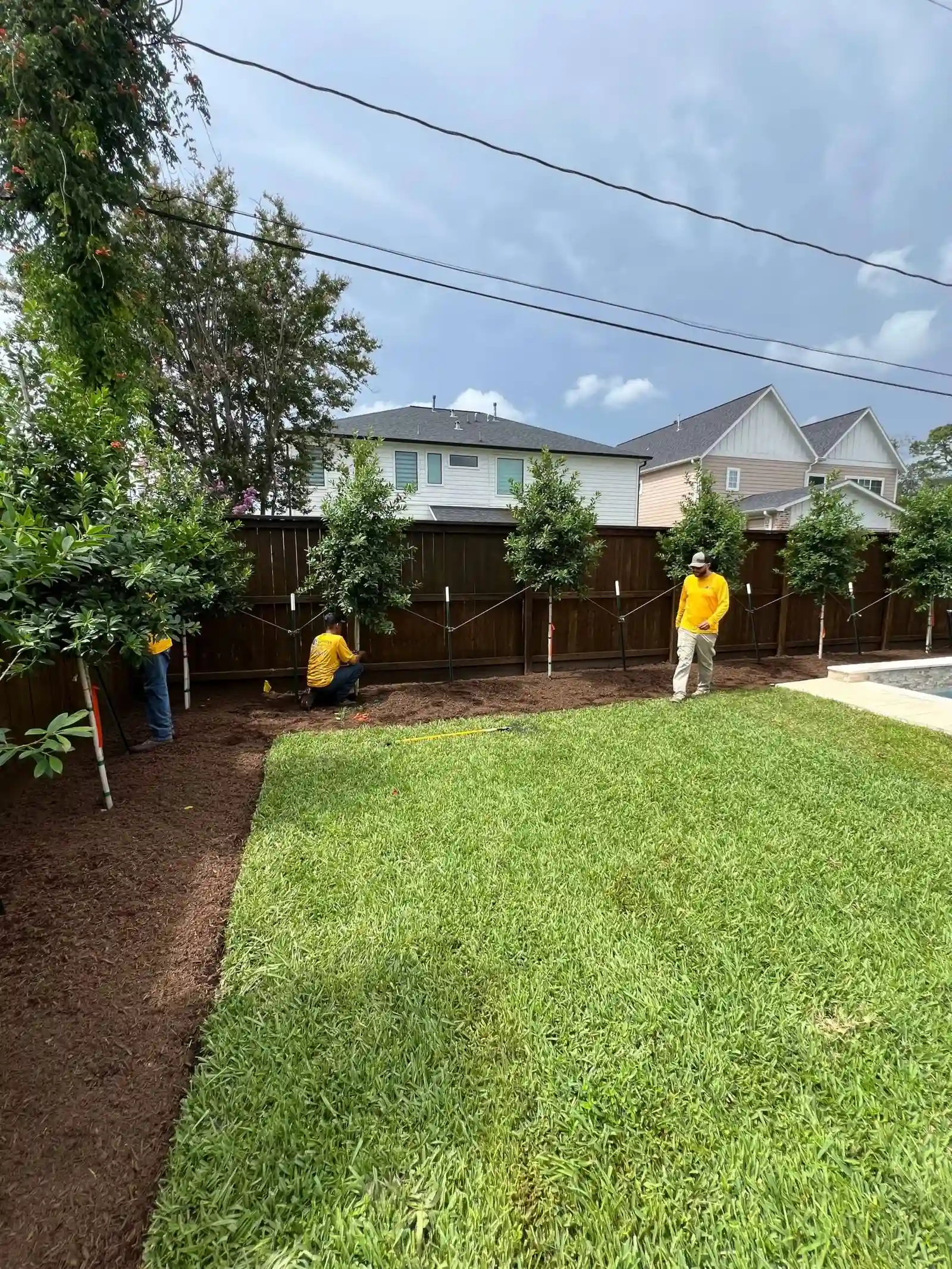 This is the yard every Houston parent imagines. The guide below is about making sure the reality matches the picture — before someone gets hurt.
Steel landscape edging is one of the most common hazards in Houston yards — and one of the least discussed. It's everywhere: separating lawn from beds, outlining driveways, defining garden borders. Installed correctly and maintained properly, it's fine. But over time, Houston's expansive clay soil shifts it. Corners pop up. Edges oxidize. Rust sets in. And what was once a clean buried edge becomes a shin-height blade waiting for a running six-year-old.
When clay soil shifts seasonally, steel edging corners can heave upward — sometimes 1–3 inches above ground. A child running through the yard at ground level may not see it. The top edge of standard steel edging is sharp enough to cause a serious laceration.
Where edging sections overlap or were cut to fit, the raw steel edge is at its sharpest. These cuts are often left unfinished — no cap, no fold, no protection. Rust on cut ends creates a tetanus-risk edge that's invisible at kid height in a garden bed.
For yards where young children play regularly, rubber landscape edging or composite plastic edging eliminates the sharp-edge risk entirely while still doing the same containment job. They don't rust, don't heave as aggressively, and have no cut-edge hazard.
Trees are one of the best things about a Houston yard. Live Oaks, Crape Myrtles, Southern Magnolias — they provide shade, structure, and beauty. They're also, when improperly maintained, a direct hazard to any child running at full speed with their eyes on a ball rather than what's ahead at face height.
Any branch below 7 feet in a yard where kids run is a hazard. Branches between 3 and 5 feet — eye and face level for children — are the most dangerous because children are typically looking forward or at the ground when running, not scanning overhead. A branch at forehead height during full-speed play can cause serious head and eye injuries.
Dead branches — called "widow makers" in arborist terminology — can fall without warning, especially during Houston's sudden summer storms. A dead branch dropping from 20 feet onto a child below is a life-threatening event, not a minor hazard. Dead branches are identifiable by absence of leaves during growing season, grey/dry bark, and brittleness.
Even branches that aren't at head height can create supervision blind spots — zones in your yard that you can't see from the patio or back door. Young children who disappear behind a low canopy zone are unsupervised, even when you're standing right outside.
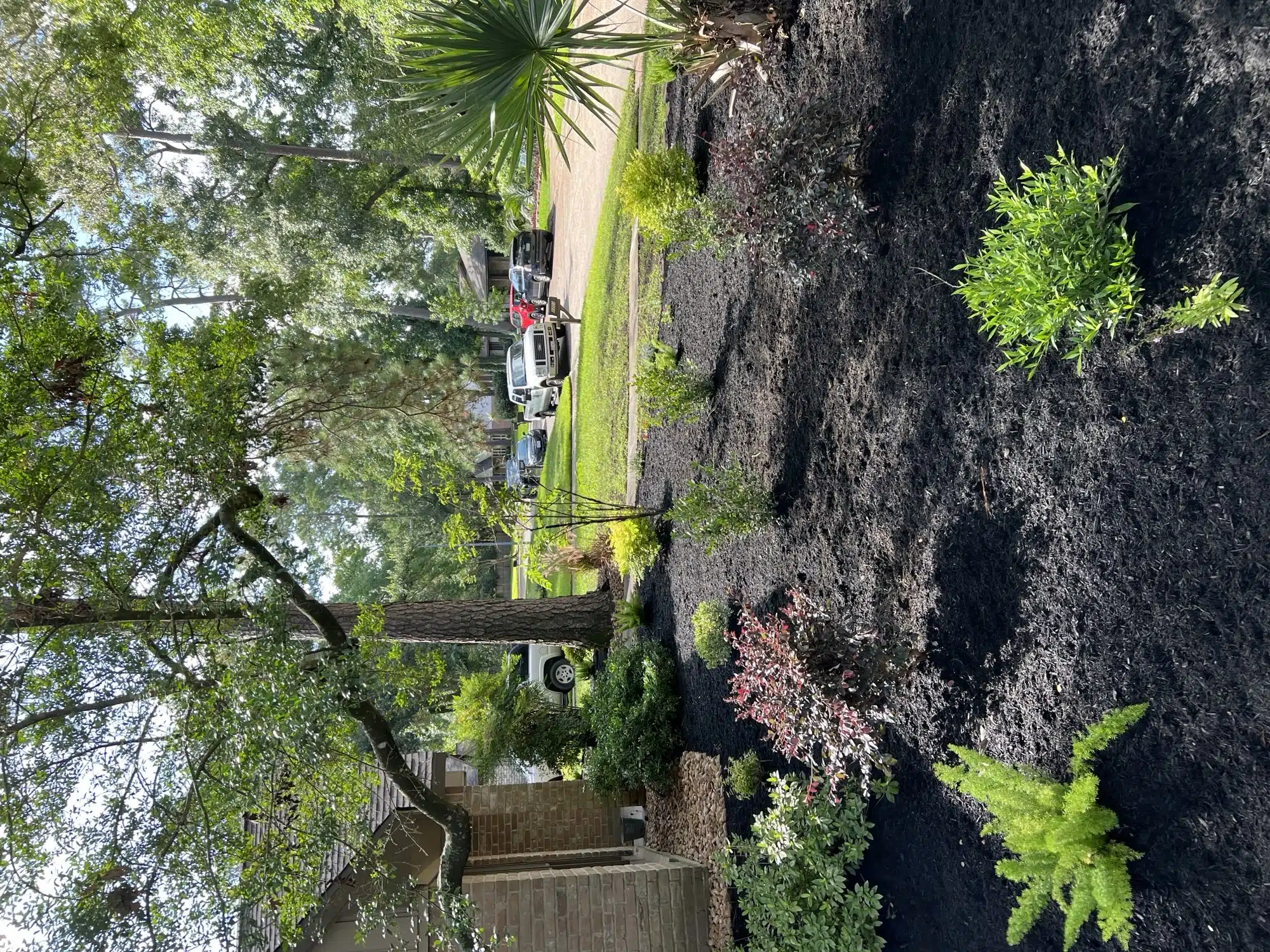 Properly pruned trees with raised canopy clearance eliminate the face-level branch hazard that catches running kids off guard.
We know some of these fixes cost money. A drainage solution, a pruning visit, new edging — none of it is free. But here's the math that actually matters: a single pediatric ER visit in Houston averages $1,500 to $3,000 out of pocket, and that doesn't account for the follow-up care, the time off work, or what it feels like to watch your child in pain over something that was preventable. Every hazard in this guide has a fix that costs far less than what happens when you don't fix it.
Houston's clay soil and annual rainfall create perfect conditions for standing water and persistently soggy ground. For adults, a muddy patch is a nuisance. For a toddler or young child running at full speed, a sudden soft wet spot can cause a slip, a fall, and a head-to-ground impact that wouldn't happen on firm turf.
A yard that doesn't drain properly after rain stays soft for days. Soft ground under a running child changes traction suddenly — one step on firm turf, the next step sinking two inches into wet clay. That shift in footing at speed causes falls, ankle rolls, and in younger children, face-first impacts with the ground.
Sprinkler heads that spray onto hardscape, heavily overlap, or run too long create consistently wet turf zones even without rain. In Houston's humidity, these zones stay soft and develop slick algae growth on adjacent concrete. Both are slip hazards for kids moving between lawn and patio.
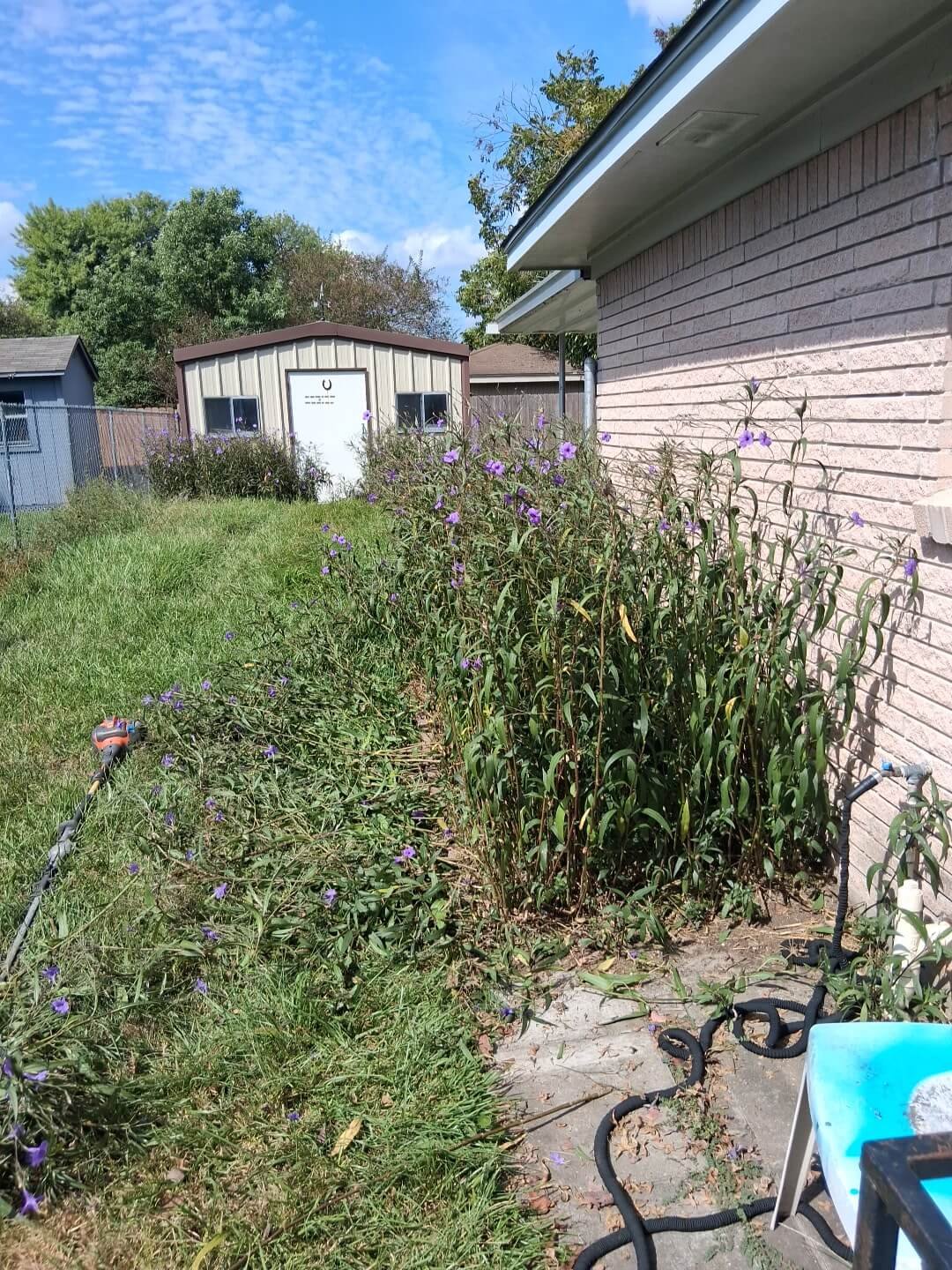 Before: An overgrown side yard with debris, weeds, and overgrowth creating hidden hazards at every level.
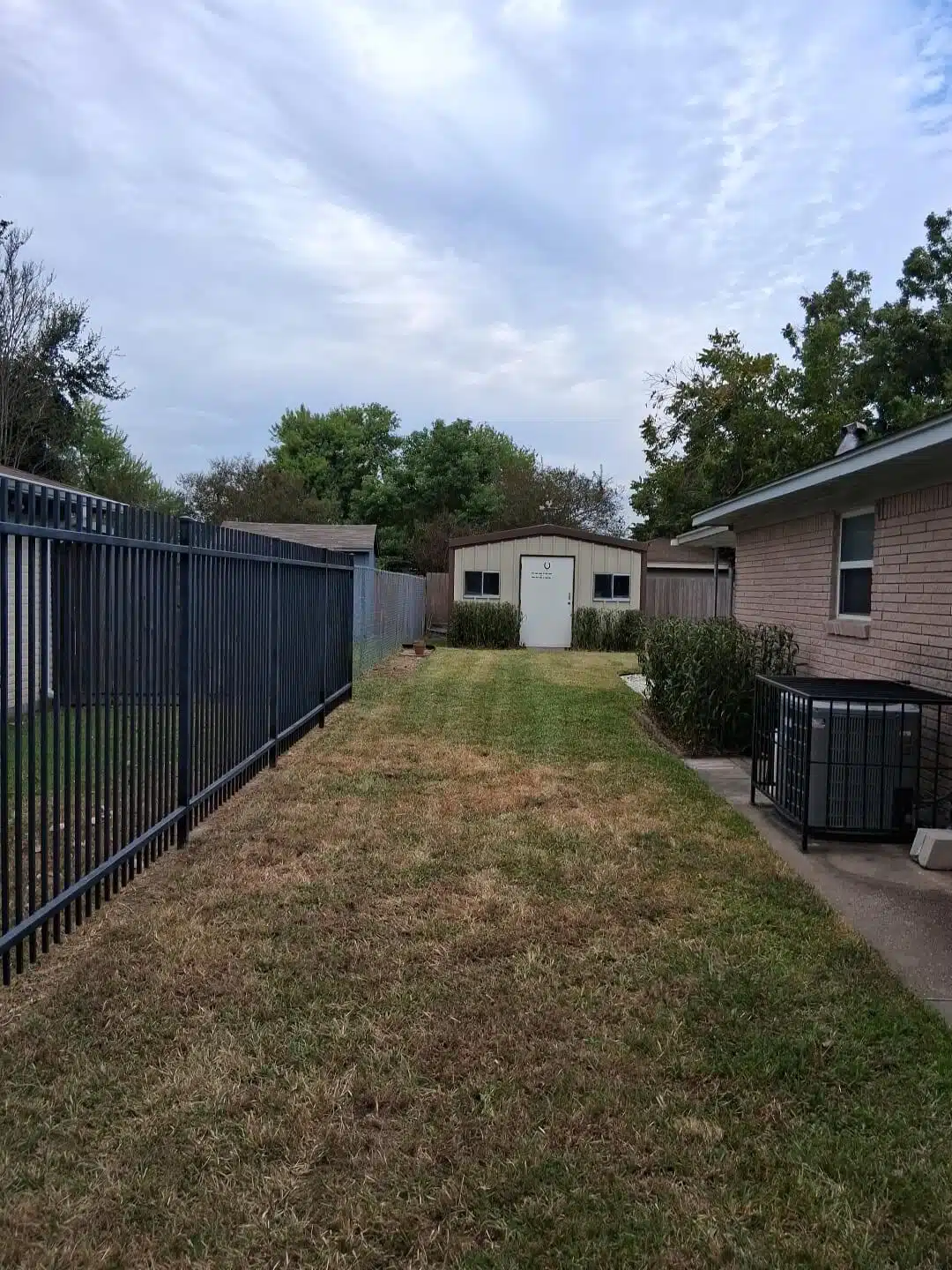 After: The same yard cleared and cleaned out — vegetation removed, space opened up, and hazards eliminated.
Toddlers and young children explore with their hands and their mouths. A plant that an adult would never consider touching becomes a direct ingestion risk when a curious two-year-old pulls off a berry or chews a leaf. The following plants are commonly found in Houston yards and pose specific risks for children — ranging from oral irritation to serious toxicity.
Call Poison Control: 1-800-222-1222 (US Poison Control, 24/7). Identify the plant if possible — take a photo. Do not induce vomiting unless Poison Control explicitly instructs it. For any severe symptom (difficulty breathing, seizure, loss of consciousness), call 911 immediately.
All parts are extremely toxic. The seeds are particularly dangerous — they look interesting to young children and are fatal in very small amounts. If this plant is anywhere on your property, removal is the only appropriate response.
One of the most commonly planted shrubs in Houston — and one of the most dangerous. Fatal cardiac toxin in every part of the plant. Young children are at risk from skin contact followed by hand-to-mouth contact, not just direct ingestion.
The large, dramatic leaves are a magnet for curious toddlers. Chewing any part causes immediate, intense oral burning and swelling from calcium oxalate crystals. Widespread in Houston landscapes as an ornamental.
Lantana is planted everywhere in Houston for low-maintenance color. The berries — which ripen from green to dark purple clusters — are toxic to children, causing severe vomiting, weakness, and potential liver damage. The plant itself is also a skin irritant.
Contains digitalis — a powerful heart toxin. Even a small amount ingested by a young child can cause life-threatening cardiac symptoms. Occasionally planted in Houston gardens for its tall, showy flower spikes.
Increasingly found in Houston yards and roadsides. Resembles Queen Anne's Lace. Ingestion causes progressive paralysis and respiratory failure. Skin contact causes irritation. If found in your yard, wear gloves for removal and do not compost.
Very common in Houston landscaping. Contain grayanotoxins that affect the heart and nervous system. Even a small number of leaves causes vomiting, dizziness, drooling, and in more serious cases, cardiovascular symptoms requiring emergency care.
Children who dig in garden beds may unearth bulbs during planting season. The bulbs are the most concentrated source of toxin — ingestion causes severe vomiting, abdominal pain, and can lead to cardiac irregularities. All parts of the plant are toxic.
Popular in Houston garden beds for their showy blooms. Contain cyanogenic glycosides — ingesting flowers or leaves causes nausea, vomiting, and lethargy. Attractive to kids because of their large, colorful flower clusters.
Widely used as ground cover. Ingesting the berries or leaves causes vomiting, abdominal pain, and excessive drooling. Skin contact with the sap can also cause dermatitis in sensitive individuals — including young children with frequent ground contact.
The seed pods and seeds are particularly toxic to children, causing severe nausea, vomiting, and abdominal cramping. Wisteria's dangling pods can look interesting to young kids. Common on fences and trellises in Houston.
Not an ingestion hazard but a serious skin contact risk. Children playing near fence lines, wooded edges, or brushy areas commonly encounter these without recognizing them. The resulting rash can be severe and takes days to fully appear, making the source hard to trace.
Mildly toxic if ingested — causes vomiting and diarrhea. Very common in Houston landscapes and commonly kept at ground level in garden beds. Best placed in an elevated pot or in areas toddlers don't have access to.
Like daffodils, the bulb is the most concentrated source of toxin. Children who dig in garden beds in fall planting season are most at risk. Ingestion causes drooling, vomiting, and GI distress. Cats are more sensitive than children, but a significant amount is still a concern.
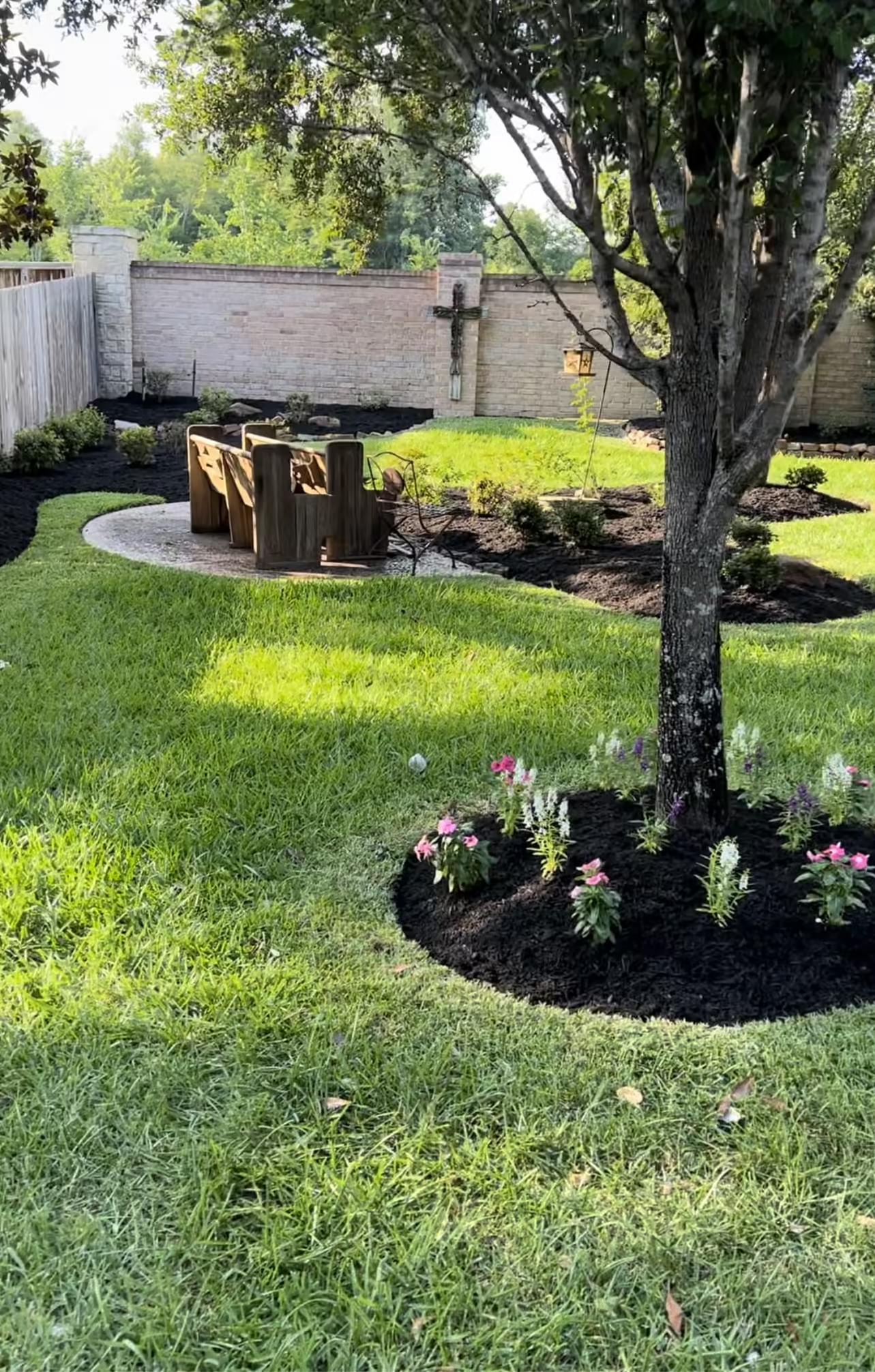 Choosing plants for color doesn't mean choosing unsafe ones — beautiful, vibrant beds can be built entirely from species that pose zero risk to young children.
Texas leads the nation in fire ant territory — and Houston sits squarely in the highest-density zone. Adults learn quickly to spot and avoid mounds. Young children don't. A toddler who stumbles onto an active mound, or falls hands-first into one, can receive dozens of stings in seconds before they can react. The Texas Department of State Health Services documents fire ant stings as a recurring cause of pediatric anaphylaxis in the state — and children under 5 face significantly more severe reactions than adults due to body weight and immune response. This is not a "minor inconvenience" hazard. In young children, it is a genuine medical emergency.
Fire ants are active year-round in Houston and rebuild mounds within days of disruption. A mound that wasn't there on Monday can be fully active by Friday. Regular inspection of the yard — especially after rain, which drives colonies upward — is the only reliable prevention. If a child is stung by fire ants, monitor carefully for systemic allergic reaction signs: hives beyond the sting site, facial swelling, difficulty breathing. Any of these symptoms is a 911 call, not a "wait and see."
Yellow jackets and some ground-nesting bees build colonies in soil — invisible until a child steps on the entrance or a mower runs over the area. Unlike fire ants, disturbed ground-nesting wasps pursue and sting aggressively in large numbers. Check for ground nests when mowing and in areas where the lawn meets structure foundations and wood piles.
Mulch goes directly under children's hands when they play in garden beds — and eventually in their mouths, because that's what toddlers do. Most parents spend real thought on what goes in the garden. Very few think about what's covering the soil around it. In Houston's warm climate, mulch also breaks down faster than in cooler regions, which means mold and fungal growth underneath is a real secondary concern in beds that stay damp. The type of mulch you choose matters more than most parents realize — and one popular variety you may already have in your yard should be removed immediately.
Cocoa shell mulch smells like chocolate — which is exactly why it's dangerous. It contains theobromine, the same compound that makes chocolate toxic to dogs and harmful to young children in sufficient quantities. Its pleasant smell makes both children and pets actively interested in it. It should not be used in any yard where young children or pets are present.
Shredded hardwood mulch is the standard safe choice for family yards — non-toxic, breaks down into organic matter, and doesn't attract children or pets with scent. Cedar mulch adds mild natural pest-repelling properties. Keep depth between 2 and 3 inches — too shallow doesn't suppress weeds, too deep creates an unstable walking surface and hides debris.
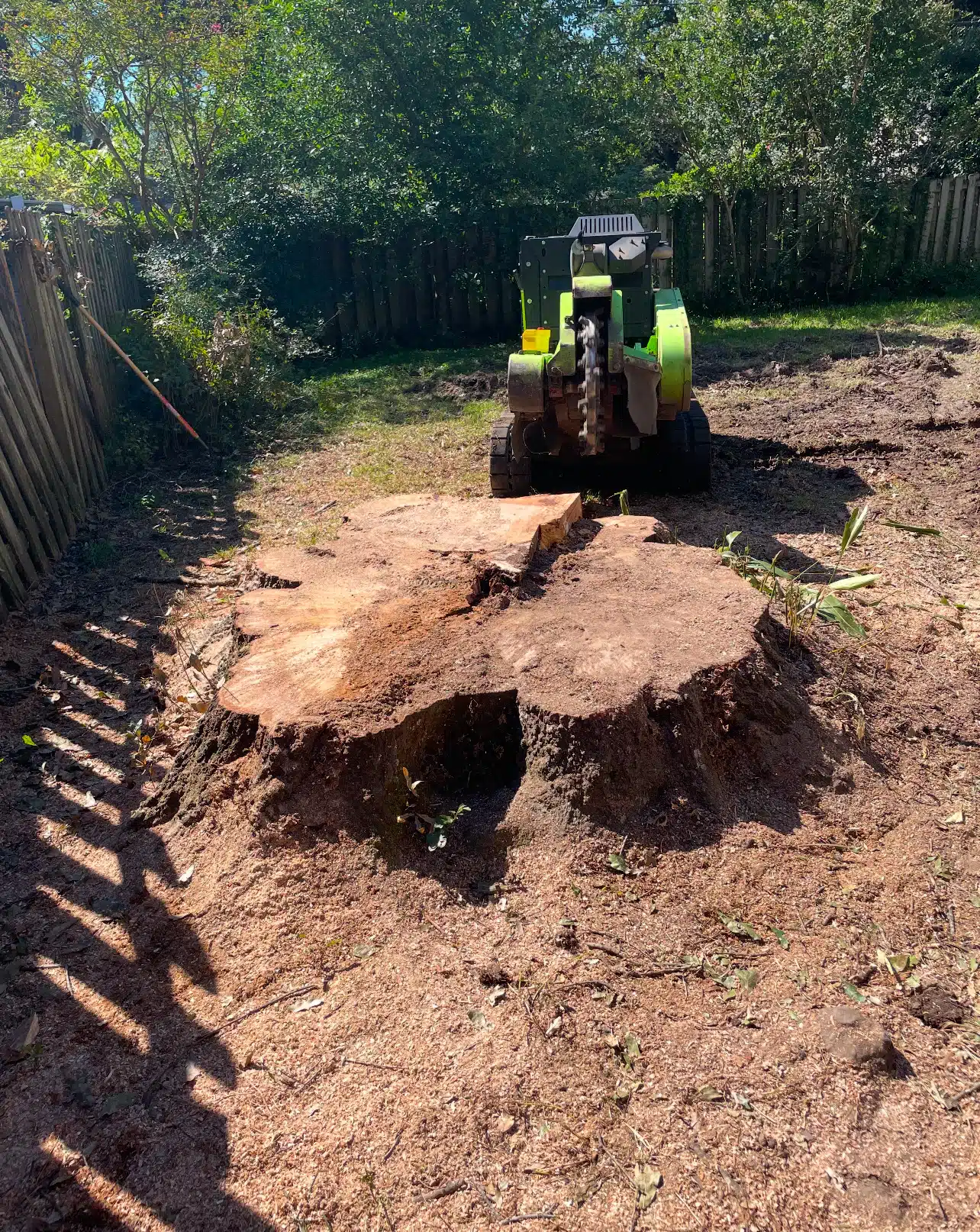 Before: An exposed stump is a hidden trip hazard at ground level — completely invisible to a running child.
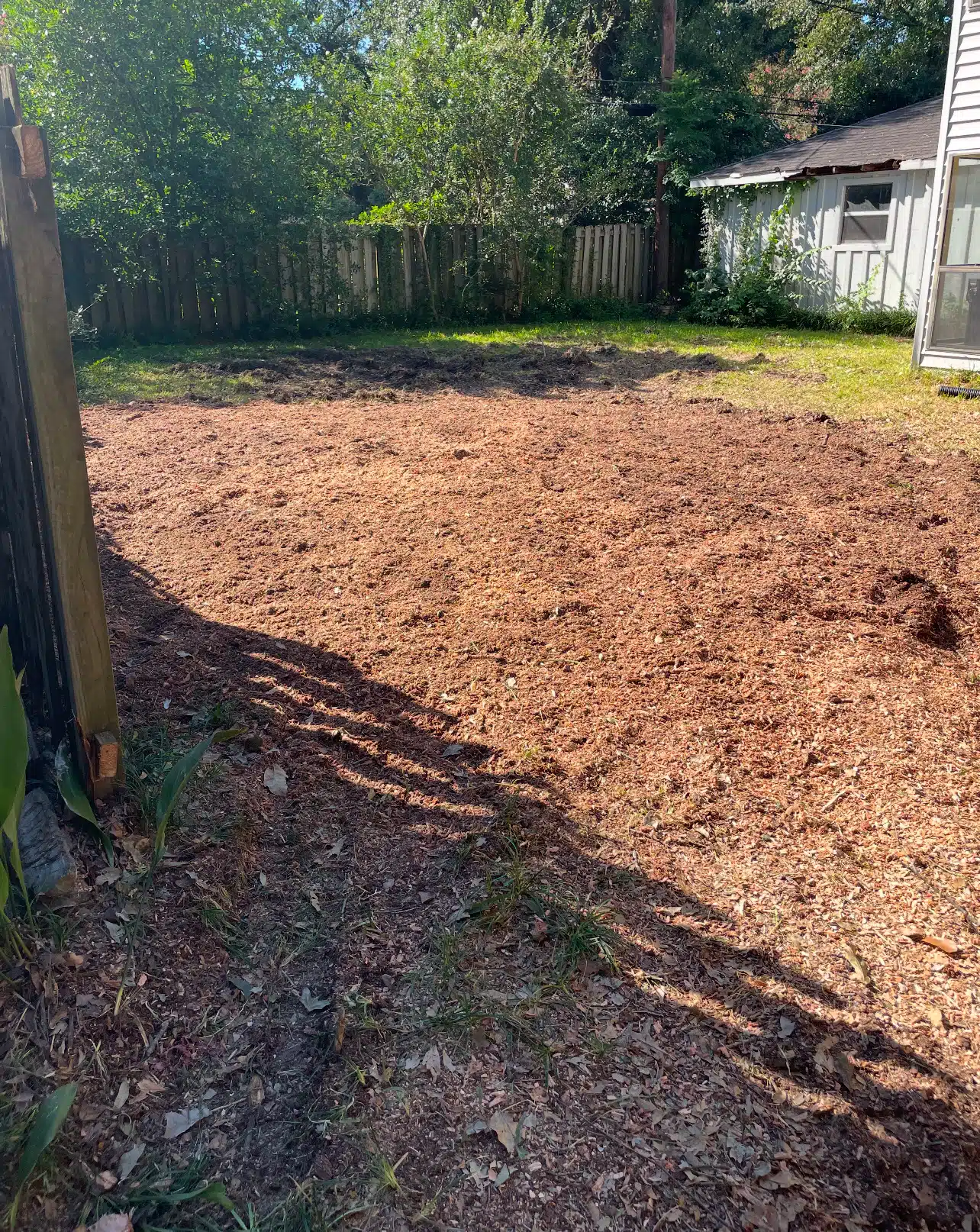 After: Ground flush and safe — no hidden edge, no ankle-roll risk, and no termite invitation.
Beyond the biological and botanical hazards, the built elements of a yard introduce their own category of risk — especially for kids who run first and look second.
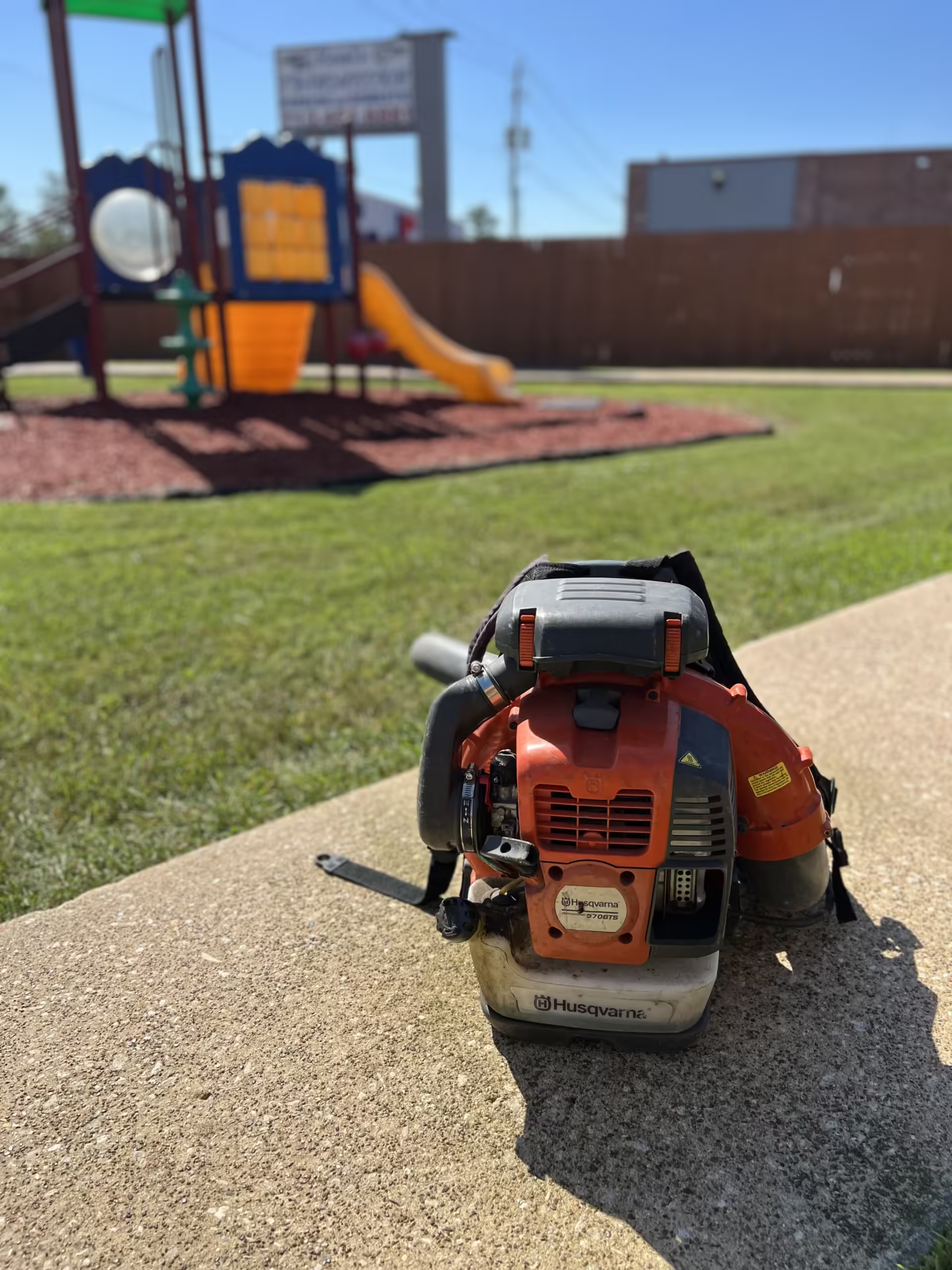 A yard that looks finished and clean can still contain hardscape edges, uneven pavers, and structural details that become hazards the moment a child runs through at full speed.
Concrete expansion joints that have settled, pavers with lifted edges, and tree roots heaving walkway sections are among the most common trip hazards in Houston yards. Adults step over them automatically after seeing them once. Children — especially running ones — hit them at full speed.
Pop-up irrigation heads that don't fully retract sit just above grade — enough to catch a running foot and cause an ankle roll or fall. Valve boxes with cracked or missing lids create ground-level holes that are invisible in taller grass. Both are low-severity individually, but in a yard full of running children they're consistent hazard points.
Untreated wood in Houston's humidity weathers rapidly. Splinters from weathered fence boards, raised bed edges, and playset rails are a near-constant hazard for young children who run hands along surfaces. Nail heads that pop from expanding/contracting wood are a puncture risk at kid height.
Most of the hazards in this guide didn't appear overnight — they developed gradually, which is exactly why they get missed. A 20-minute seasonal walkthrough is the only reliable way to catch them before your kids do. Do this once a season, and any time the yard has been through a significant storm or extended wet period.
Standard steel edging can be hazardous — exposed top edges are sharp enough to cut skin, and corners that shift out of the ground become trip and slice hazards. If you keep metal edging, ensure all corners are fully secured and buried, edges face inward, and there are no rust spots or lifted sections. For families with toddlers or young kids, rubber or composite edging is the safer alternative.
Any branch below 7 feet is a potential hazard for a running child. The target clearance for active play areas is 8 feet minimum — higher if you have taller kids or active sports play. Eye-level branches are the most dangerous because children don't see them when running. Low branches also create hidden zones that affect yard supervision visibility.
Soggy patches are usually caused by low spots in the yard grade, compacted clay soil that doesn't drain, or irrigation heads that are over-watering specific zones. The fix depends on the root cause: minor low spots can be corrected with topdressing and regrading; clay compaction responds to aeration; persistent pooling typically requires a French drain or surface drain solution.
The highest-risk plants for young children in Houston include Sago Palm (all parts extremely toxic), Oleander (fatal in small amounts), Lantana berries (toxic when ingested), Elephant Ear (causes intense oral burning), and Daffodil bulbs. Toddlers are at elevated risk because they explore with their hands and mouths and are at ground level where many toxic plants grow. Our detailed toxic plant guide covers identification and removal.
Yes — fire ants are one of the most underestimated hazards in Houston yards. Young children can accidentally step on or fall onto a mound and receive dozens of simultaneous stings before they can react. Children under 5 are at higher risk for severe allergic reactions. Active mound treatment and regular yard inspection are essential in Houston's climate, where fire ants are active year-round.
Shredded hardwood mulch or cedar mulch are the safest options for yards with young children. Avoid cocoa mulch entirely — it contains theobromine, which is toxic to both pets and children if ingested, and its chocolate smell makes it attractive to both. Keep mulch depth at 2 to 3 inches — deep enough to suppress weeds but not so thick that it creates trip hazards or hides debris.
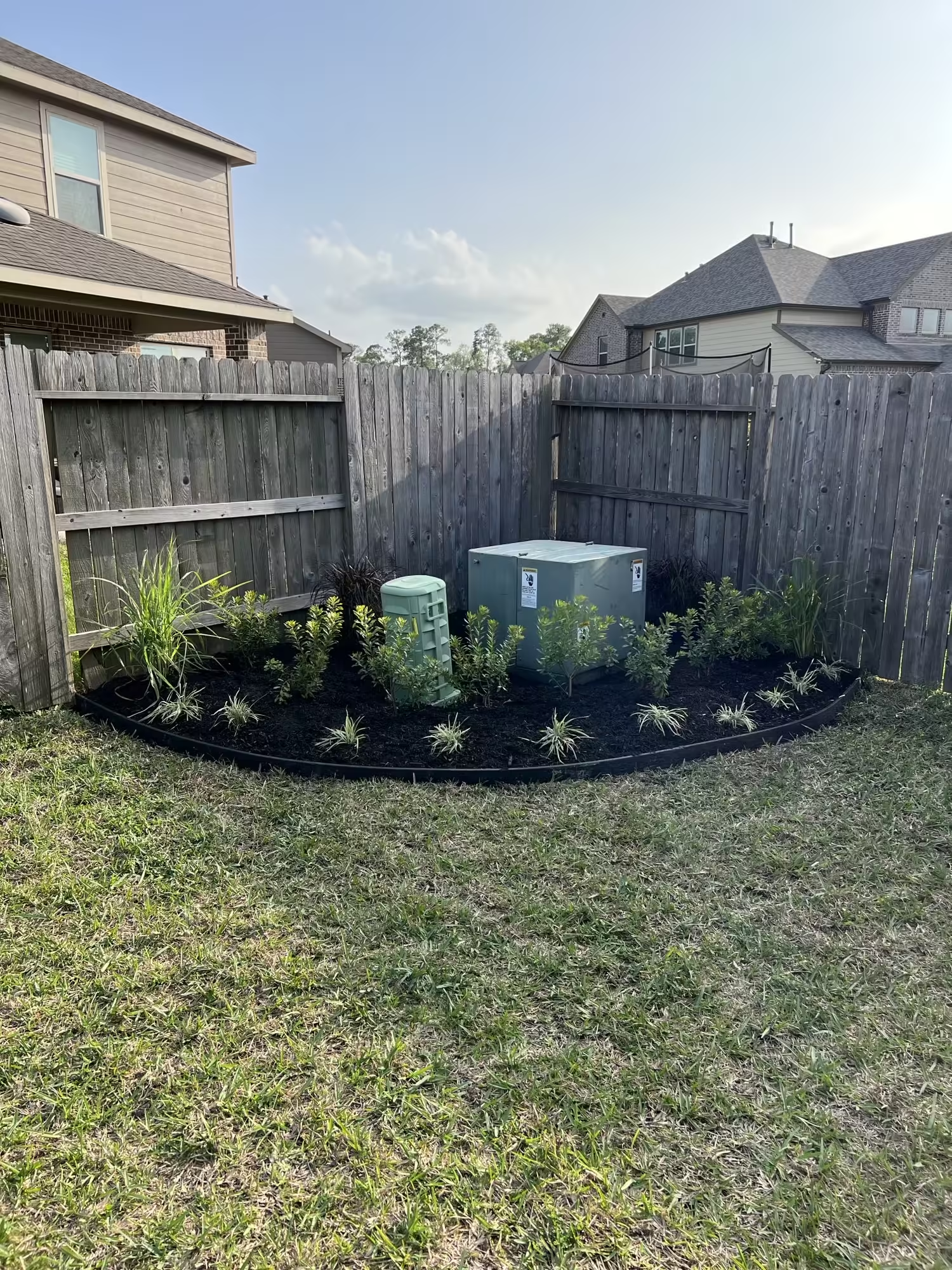 A properly assessed yard doesn't just look good — it performs safely for every member of the family, regardless of age or height.
We can walk your property with family safety in mind — identifying hazards, recommending fixes, and helping you build a yard that kids can actually use without the background worry. Request a complimentary estimate or a professional consultation.
Written by the Evergreen Outdoor Services Team
Evergreen has been maintaining Houston-area residential and commercial properties for over a decade. This guide draws on firsthand experience assessing hundreds of Houston yards — the hazards listed here are ones we encounter on real properties, in every neighborhood, every season. Last reviewed April 2026.