
We review soggy areas, runoff patterns, low spots, downspouts, grades, access, and nearby hard surfaces. If the issue needs deeper evaluation, we may recommend a paid drainage inspection before pricing the installation.
Drainage problems can leave parts of your yard muddy, soft, or unusable. At Evergreen Outdoor Services, we help Houston homeowners redirect water with practical drainage solutions based on how water actually moves through the property.
Some drainage projects are clear enough for a complimentary estimate. Others need a paid drainage inspection or consultation when the water source, exit route, grading, or repair plan is not obvious from photos or a basic walkthrough.
We review soggy areas, runoff patterns, low spots, downspouts, grades, access, and nearby hard surfaces. If the issue needs deeper evaluation, we may recommend a paid drainage inspection before pricing the installation.
For clear scopes, we prepare a drainage estimate. For more complex properties, the inspection helps determine whether the right approach is a French drain, surface drain, catch basin, downspout routing, grading support, or another solution.
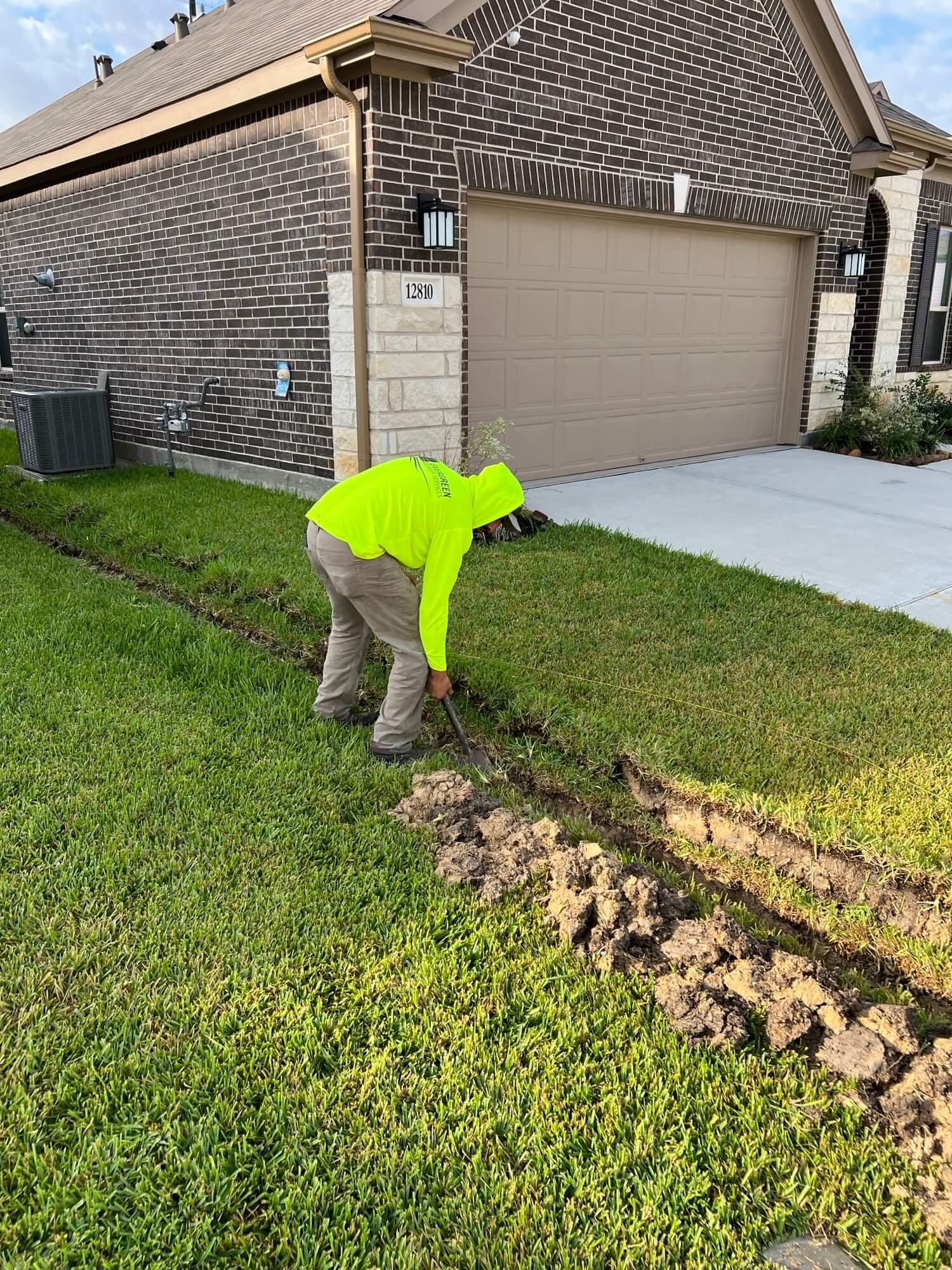
Once the scope is approved, our crew handles trenching, drainage installation, backfill, cleanup, and approved surface restoration so the area is left cleaner and more functional.
Drainage issues often affect more than one part of the property. Depending on the scope, the right solution may involve trenching, gravel, sod repair, or hardscape adjustments.
Some drainage projects require trenching, grading support, dirt work, or site preparation before water can be moved properly.
Gravel can help finish drainage-adjacent areas, side yards, dry creek-style sections, or low-maintenance zones where turf struggles.
After drainage work, damaged or muddy lawn sections may need sod repair or lawn reset support to restore the finished surface.
Drainage should be considered before patios, walkways, pads, or concrete repairs so water does not collect against hard surfaces.
Easy Estimate Process. Professional Results.
Drainage work needs more than digging a trench and hoping water moves. We focus on understanding the water problem, choosing the right path, and installing practical solutions for Houston yards.
We look at where water comes from, where it collects, and where it can be routed before recommending a French drain, surface drain, catch basin, or other solution.
Clear projects may qualify for a complimentary estimate. More complex water issues may need a paid drainage inspection or consultation before accurate pricing makes sense.
A good drainage plan considers slope, access, discharge location, low spots, downspouts, hard surfaces, and how the yard will be used after installation.
Drainage work can be disruptive. Our crew focuses on organized trenching, clean backfill, careful access, and approved surface restoration after the installation.
Standing water can affect lawns, beds, patios, side yards, and outdoor use. Drainage installation helps move water away from the areas causing problems.
Some yards need a drain. Others may need grading support, downspout routing, gravel, sod repair, or a larger site plan. We help match the recommendation to the actual issue.
Drainage issues usually start small: a soggy side yard, water sitting near a low spot, runoff washing through beds, or muddy areas that never seem to dry out. Left alone, those problems can affect lawns, landscapes, patios, walkways, and how usable the yard feels.
Our drainage installation services focus on practical water movement. We look at where water comes from, where it collects, and where it can be routed before recommending a French drain, surface drain, catch basin, or related drainage solution.
Some projects are clear enough for a complimentary estimate. More complex drainage issues may require a paid inspection or consultation before a responsible installation plan can be priced.
Explore our Satisfaction Guarantee.
Drainage work should be based on how water actually moves through the property. We help homeowners address standing water, runoff, soggy lawn areas, and low spots with practical drainage options.
Subsurface drainage systems designed to collect and redirect water from soggy areas, low spots, side yards, or problem zones where water needs a controlled path out.
Catch basins, drain boxes, and surface collection points can help manage visible runoff, pooling water, and low areas where water collects after rain.
Roof runoff can overload beds, side yards, and turf areas. Downspout drainage helps route water away from problem areas when the exit path is appropriate.
Some projects require more than a drain. Depending on the site, drainage work may pair with grading support, gravel, sod repair, or surface restoration after installation.
Drainage problems are not all the same. The right solution depends on where the water starts, where it collects, and where it can be moved safely.
Best for soggy lawn areas where water needs to be collected below the surface and redirected through a gravel and pipe system.
Useful for visible runoff, pooling water, low spots, patios, side yards, and areas where water needs a collection point.
Helps move roof runoff away from beds, turf, side yards, and hard surfaces when there is a proper exit path.
Some yards need more than a drain. Grading support, gravel, sod repair, or surface restoration may be part of the larger solution.
Drainage work is most effective when the water source, collection area, exit path, and repair expectations are clear. These answers help Houston homeowners understand when a drainage estimate is simple, when an inspection makes sense, and what to expect before installation.
It depends on how the water is showing up. A French drain is usually used when water needs to be collected below the surface and redirected through a gravel and pipe system. A surface drain is usually better when water is visibly pooling or running across the surface into a low spot.
Some properties need both. The right answer depends on the slope, soil, hard surfaces, downspouts, exit route, and how the yard behaves after heavy rain.
Some drainage projects are clear enough for a complimentary estimate. This usually applies when the problem area is obvious, photos are helpful, the water path is straightforward, and the homeowner is ready to move forward with a defined drainage project.
A paid drainage inspection or consultation may be needed when the water source is unclear, there are multiple problem areas, the exit route is not obvious, grading is involved, or the property needs a more detailed plan before pricing can be responsible.
Drainage installation pricing depends on the type of drain, trench length, pipe size, gravel needs, catch basins, downspout connections, depth, access, soil conditions, haul-off, surface restoration, and where the water can be discharged.
Small, straightforward drainage improvements may be simpler to price. Larger projects with multiple collection points, tight access, hardscape conflicts, grading concerns, or unclear water movement may require more planning before a reliable price can be given.
Yes, drainage can help many standing water issues when there is a practical way to collect and move the water. Common solutions include French drains, surface drains, catch basins, downspout routing, or drainage-aware grading support.
The key is having somewhere appropriate for the water to go. If the yard is flat, boxed in, or has no clear exit path, the project may need a more detailed inspection before recommending a solution.
Yes, when the layout is appropriate. Downspout drainage can help move roof runoff away from beds, turf, side yards, patios, and low areas that are being overloaded by gutter discharge.
Before routing downspouts, we need to understand where the water will exit, whether the grade supports the plan, and whether the discharge point is safe and appropriate for the property.
Drainage installation usually involves trenching, digging, backfill, and surface disturbance. We include cleanup and approved surface restoration based on the project scope, but the exact finish depends on what is included in the estimate.
Some projects may only include backfill and cleanup. Others may include sod repair, gravel finish, mulch restoration, or landscape repair where appropriate.
Usually, yes. If water is already collecting in an area, it is better to address drainage before installing new sod, plants, mulch, gravel, patios, walkways, or concrete pads.
Installing a nice surface over an unresolved water problem can lead to soggy turf, washed-out beds, messy gravel, plant stress, or water collecting against hard surfaces.
That is when a paid drainage inspection or consultation may be the right next step. A drain system needs a realistic exit route. If the property is flat, enclosed, or restricted by nearby structures, utilities, neighbors, hardscapes, or city drainage conditions, the solution may require more planning.
In some cases, the answer may involve surface drains, French drains, downspout routing, grading support, gravel areas, sump-style solutions, or a phased improvement plan.
Professional Care. Clear Communication. Consistent Results.