Houston yards work hard. Between clay soil, heavy rain, heat domes, and tight driveways, most properties end up with a few “problem zones” that never really feel finished. Bare dirt by the gate, a tiny builder patio, ruts where everyone parks—sound familiar?
Concrete isn’t just about big driveways and plain gray slabs. Done thoughtfully, a few well-placed concrete projects for Houston yards can make your outdoor space easier to use, easier to maintain, and a lot more enjoyable day to day.
In this post, we’ll walk through seven practical concrete ideas we see homeowners use all the time: from patio extensions and driveway add-ons to walkways, equipment pads, and cleanup work that sets the stage for better landscaping. You’ll see what each project actually does for your yard, when it makes sense, and a few field-tested tips for our local conditions.
1. Concrete Patio Extensions for Real-Life Hangout Space
Most newer homes in areas like Summerwood, 77044, and Crosby come with the same feature: a small builder-grade patio that looks fine on paper but barely fits a grill and two chairs in real life.
A patio extension simply adds enough hard surface to make the space usable for how you actually live—morning coffee, family cookouts, or a small lounge setup.
What It Fixes in Houston Yards
-
Furniture sitting halfway in the grass
-
Mud or uneven ground right off the back door
-
A “nice house, tiny patio” feeling that doesn’t match the rest of the property
Practical Tips for Patio Extensions
-
Size for lifestyle, not just looks. If you want a table plus a couple of chairs, sketch that footprint first, then design the extension around it.
-
Think about shade. In sunny backyards, orient seating where house shade or a future pergola will help during the afternoon heat.
-
Plan the edges with sod or beds. A sharp edge between patio and lawn or mulch looks cleaner and is easier to maintain than “patio fading into dirt.”
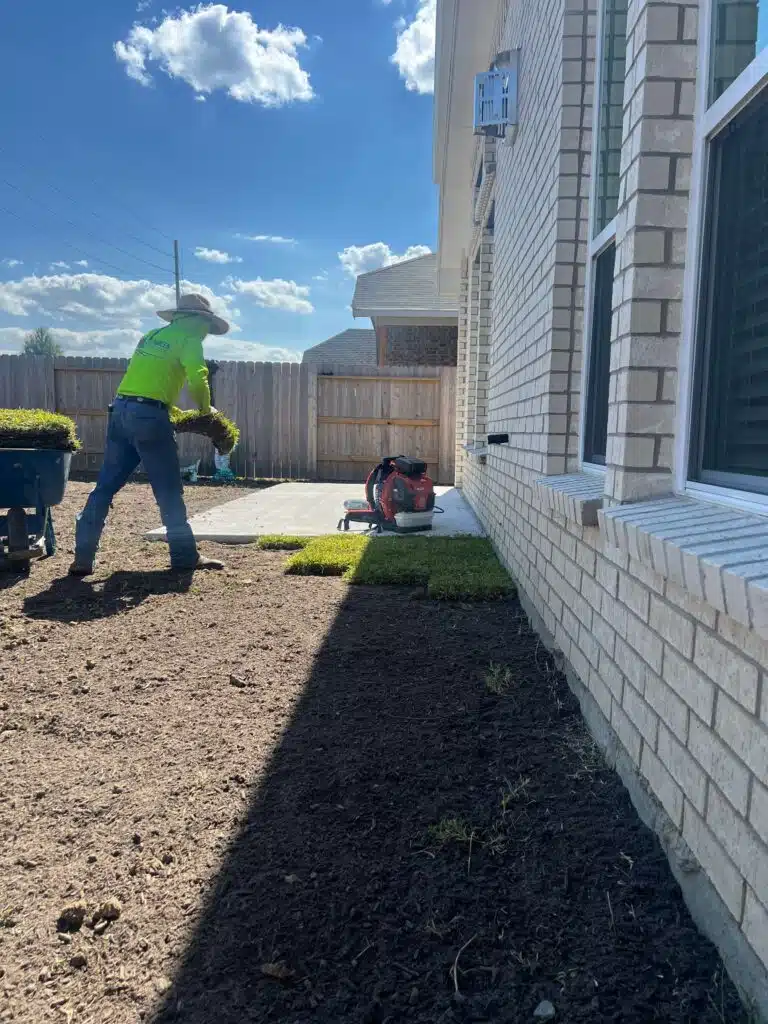
On a recent project in Crosby, we poured a simple patio extension and resodded the yard so the homeowner could set up a table and enjoy quiet mornings without stepping into mud. That type of small, targeted project is often all it takes to unlock a yard.
2. Driveway Installations and Extensions
Driveways quietly set the tone for daily life. When they’re too narrow, too short, or worn down, you feel it every time you come home—especially if cars end up half on the grass.
A new driveway or driveway extension focuses on function first: enough space for vehicles, safe footing, and a layout that doesn’t destroy the lawn.
Common Driveway Challenges We See
-
Families adding teen drivers without adding parking
-
Work trucks or trailers that chew up the side yard
-
Older driveways with broken panels and standing water
Ways to Use Driveway Extensions
-
Widen just one side so doors don’t open into the grass
-
Add a short “wing” toward the gate where you park trailers or extra vehicles
-
Create a small pad beside the house for guests instead of filling the street
Good base preparation and proper slope matter a lot in Houston’s clay soil. Done right, a driveway upgrade can last for years and immediately clean up the front of the property.
3. Walkways and Garden Paths You Can Use Year-Round
If you’ve ever tiptoed through wet grass to take the trash out or visit the side gate, you already know why walkways and garden paths are popular.
In neighborhoods like Atascocita and Humble, side yards and access paths often become muddy shortcuts instead of intentional routes.
Why Paths Help So Much
-
They give everyone a clear place to walk, so grass and beds aren’t constantly trampled.
-
They reduce mud tracking into the house, especially during our big rain events.
-
They visually connect the driveway, front door, and backyard in a simple, clean way.
Design Ideas for Houston Walkways
-
Use a straight, simple walk to the front door, then soften with curved beds and plants.
-
Add a narrow path from driveway to side gate so the “trash can trail” stays clean.
-
Tie paths into patios or small seating areas so everything feels like one connected space.
Concrete walkways paired with mulch and evergreen plants keep things tidy without adding a lot of maintenance.
4. Small Equipment Pads and AC Pads
AC units, generators, and pool equipment work a lot better when they’re not leaning, sinking, or surrounded by mud. A small concrete pad is a straightforward way to give that equipment a stable home.
What Equipment Pads Do for Your Yard
-
Protect heavy units from settling unevenly into soft soil
-
Make service visits easier and cleaner for technicians
-
Reduce weeds and standing water around high-value equipment
In many Houston backyards, we see units sitting directly on the ground or on thin plastic bases. Over time, clay soil movement and erosion make everything tilt. A properly sized, level pad with clean edges keeps the area neat and functional.
5. Concrete Sidewalks and “Builder-Plus” Front Walks
Some properties have no front walk at all. Others have a small builder sidewalk that doesn’t quite match the home’s style.
Adding or upgrading a concrete sidewalk gives you a clearer, more welcoming path from street or driveway to the front door.
Benefits of a Thoughtful Front Walk
-
Smoother, safer access for kids, guests, and deliveries
-
A more intentional entry that sets the tone before anyone steps inside
-
A clean line you can design beds and lawn around
We often see homeowners in Memorial-area neighborhoods update their front walks when they refresh the front beds. The combination of a solid path, crisp edging, and new plantings makes the whole front elevation feel new again.
6. Retaining Walls and Borders That Work With Drainage
On sloped or uneven ground, heavy rain can wash mulch and soil right out of the beds and onto the lawn or sidewalk. Small retaining walls and raised borders can help control both soil and water.
Where These Make Sense
-
Along driveways that sit lower than the front yard
-
Around raised beds near the house where you want cleaner lines
-
In backyards with slight slopes that lose mulch every storm
In Houston, it’s important that any wall or border works with overall drainage instead of trapping water where it shouldn’t sit. Even small concrete or block walls should be planned with downspouts, nearby drains, and the natural fall of the yard in mind.
7. Concrete Demo and Haul-Off to Clear the Slate
Not all concrete is worth keeping. Sometimes the best project starts by removing old slabs, broken sections, or odd add-ons that don’t fit your current layout.
When Demo Is the Right First Step
-
Old patios poured too high against the house
-
Random small slabs that chop up the yard or block good lawn space
-
Failing driveways or walks that fix easily with a fresh layout
Concrete demo and haul-off can feel like “just destruction,” but it often opens up better options for lawn, garden beds, and new hardscape. Clearing the slate thoughtfully lets you rebuild with a simpler, more functional plan.
 Project Spotlight | Concrete Patio Extension and New Lawn in Crosby, TX
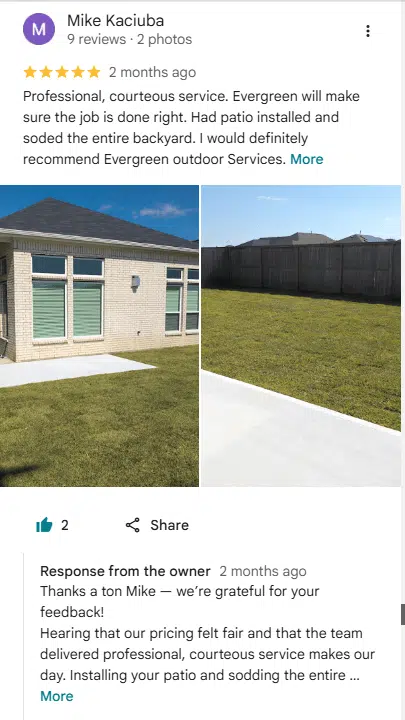 Project Spotlight | Concrete Patio Extension and New Lawn in
 To make this more real, here’s a recent project we completed in Crosby.
This homeowner wanted one simple thing: a backyard he could actually use. The original patio was small, and the grass was struggling after the build. We poured a clean concrete patio extension and then resodded the entire backyard, tying the new slab into a fresh, level lawn.
The goal was straightforward: more room for a table, a chair, and a quiet morning coffee while his dogs had a safe green space to run around in. Now the patio and lawn work together as one easy-to-maintain space instead of a tiny slab surrounded by patchy ground.
Because we handle both concrete and landscaping as one team, we could plan the grades, edges, and sod layout together so everything looks intentional—not like separate projects done at different times.
Frequently Asked Questions | Concrete projects for Houston yards
What are the most useful concrete projects for Houston yards?
For most homeowners, the biggest impact comes from simple upgrades: patio extensions, driveway improvements, and practical walkways. Those concrete projects for Houston yards make everyday movement easier and set a cleaner stage for grass and landscaping.
Is there a best time of year to pour concrete in Houston?
Concrete can be poured year-round here, but mild seasons—spring and fall—are more comfortable for crews and gentler on curing. In summer, extra care is needed for heat and rapid drying; in winter, we watch overnight lows and rain forecasts.
Will concrete make my yard hotter or harder to landscape?
Large, unplanned slabs can add heat and glare, but well-sized projects paired with trees, beds, and turf usually make the yard feel more usable, not less. The key is balancing hardscape and green space instead of letting concrete take over everything.
Can I DIY these projects or should I call a pro?
Small pads and stepping-stone style walks can be reasonable DIY projects if you’re comfortable with tools and some hard work. Anything involving driveways, heavy loads, complex slopes, or drainage is usually better handled by a pro due to the weight, safety, and long-term risk if something goes wrong.
A Quick Word from Evergreen
If your yard has one or two spots that never quite work—tiny patio, awkward parking, muddy path—you’re not alone. We see the same patterns in Houston, 77044, Crosby, and surrounding areas all the time.
Walk your property with this list in mind and see which projects would actually change how you use the space. Even one small, well-planned concrete upgrade can make the rest of your lawn and landscaping easier to enjoy.
If you ever want a second set of eyes, our crew is happy to look at the big picture—concrete, lawn, and beds together—and talk through simple options. No pressure, just honest feedback on what would help your yard the most.
Additional Resources: American Concrete Institute (ACI)