
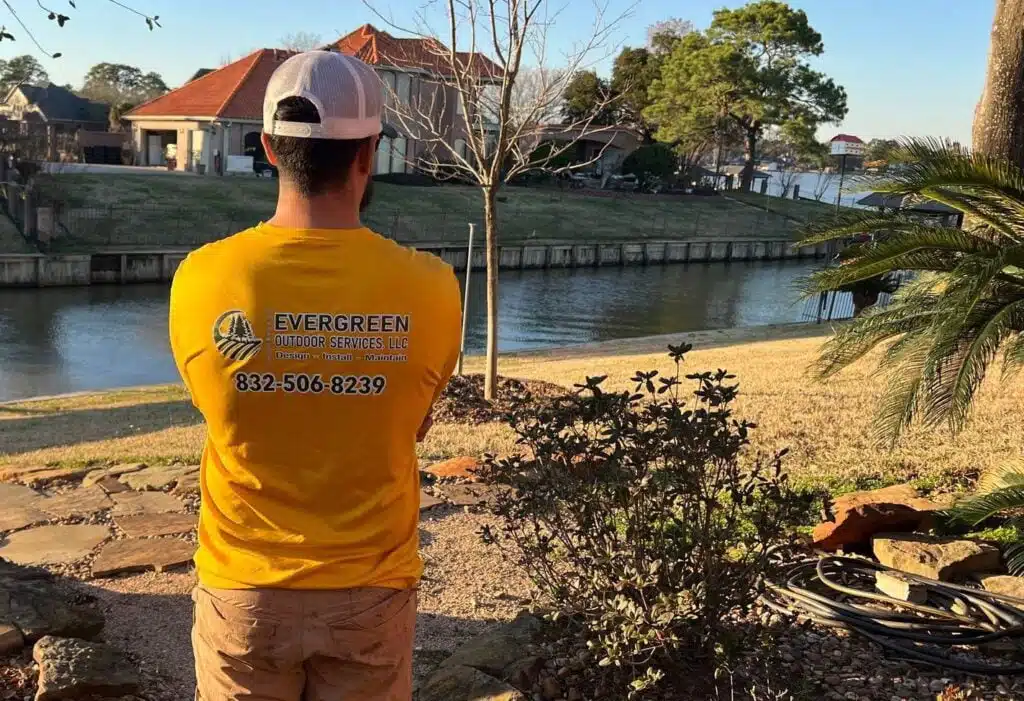
If you’ve lived in Houston a few winters, you’ve probably stood over a brown yard wondering:
“Is this thing dead, or is it just messing with me again?”
Most Houston lawns are warm-season grasses like St. Augustine, Bermuda, or Zoysia. They’re built for heat, humidity, and long growing seasons. But when temperatures cool and soil drops into the 50s, those grasses slow down and eventually go dormant. Growth stops. Color fades. The lawn turns tan or straw-colored even though the plant is still alive underground.
Every winter in Houston you see the same thing:
-
Whole streets of brown front yards
-
Random green patches in sunny corners
-
Neighbors talking about fungus, grubs, or “needing new sod”
This post breaks down lawn dormancy in Houston so you can tell what’s normal, what’s a real problem, and what to actually do in each season.
You’ll learn:
-
Why your grass really turns brown in winter
-
How your lawn’s yearly growth cycle works in our climate
-
What to change (and not change) when it’s dormant
-
When it makes sense to talk about drainage, repairs, or new sod.
Most of this lines up with what Texas A&M AgriLife and other turf researchers recommend for warm-season lawns in southeast Texas—just explained in normal human language.
When your Houston lawn turns brown every winter
Once a few real cold fronts roll through, people from Summerwood to Channelview start sending the same photo: a lawn that looked fine in October and looks like hay in January.
Why this happens in Houston
Short version:
-
Houston lawns are mostly warm-season grasses
-
Warm-season grasses are built for heat, not cold
-
When soil temps fall low enough, they go dormant and stop active growth
Dormant grass naturally:
-
Turns tan or light brown
-
Grows very slowly or not at all
-
Can stay that way for weeks or months
Houston’s roller-coaster weather makes this more confusing. We’ll have:
-
A freeze or two
-
A random 78-degree weekend
-
Then another round of cool, cloudy days
That means:
-
Sunny, south-facing spots may hint at green early
-
Shadier or low areas stay brown longer
-
The lawn looks patchy, like it’s “sick,” when it’s really in different stages of dormancy and wake-up
Add in our typical clay and compacted soils, and winter color can look even worse. Heavy soil holds water, compacts under foot traffic, and cools slowly. All of that works against a smooth spring green-up.
How to tell dormancy from real damage
Before you talk yourself into a full re-sod, do these three checks.
Tug test
Pick a rough-looking area.
-
Grab a handful of brown grass low to the ground
-
Gently tug straight up
If most of it stays anchored, the crowns and roots are likely still there. That usually means normal lawn dormancy in Houston or short-term stress, not a dead lawn.
If it slides out easily with roots attached, that patch is probably gone and may need repair or sod later
Scratch test on a runner
For St. Augustine and Zoysia, find a thicker above-ground runner (stolon).
-
Use your fingernail or a small knife
-
Scratch the outer layer
If the inside is white or green and moist, it’s alive.
If it’s dry, tan, and brittle all the way through, that stolon is dead.
Look at patterns, not just color
-
Even, uniform brown across the yard = classic winter dormancy
-
Random weird patches that stay brown long after the rest of the yard greens up can point to:
-
Disease
-
Insects
-
Deep shade issues
-
Chronic wet or compacted spots
-
If you’re not sure, take a couple of photos now and again a few weeks into spring. Dormant grass will give way to new growth once conditions are right; dead patches will stay bare.
How lawn dormancy in Houston fits into the yearly growth cycle
Once you understand your lawn’s annual rhythm, everything gets easier. You’re not reacting to every color change—you’re matching your decisions to the stage it’s in.
The warm-season cycle in our area
For Houston and the surrounding areas, warm-season lawns generally follow this pattern:
-
Late fall (about October–November)
Growth slows as days get shorter and soil cools. The lawn doesn’t need summer-level water or mowing. You’ll notice longer gaps between cuts and slower recovery from foot traffic. -
Winter (roughly December–February)
True dormancy for warm-season grasses. The lawn is mostly tan or brown, and top growth is minimal. Many homeowners can turn irrigation off during this window if rainfall is normal and the turf is not actively growing. -
Early to mid-spring (around March–April, depending on the year)
As soil temperatures climb into the 60s and stay there, grasses slowly wake up. You’ll see green starting in the warmest, sunniest spots first, then spreading across the yard. -
Late spring through summer (May–September)
Peak growth and color. Warm-season grasses love this stretch. This is when mowing height, watering practices, and fertilization matter the most.
So if your yard is still mostly brown in February, that doesn’t automatically mean it died. It often just means the soil hasn’t stayed warm long enough yet.
What to do in each stage
Late fall – easing into dormancy
As you head into late fall:
-
Back off watering
Grass is using less water as days shorten and growth slows. You can cut runtime and/or frequency instead of watering like it’s August. -
Keep mowing at a healthy height
Don’t scalp it going into winter. Stay in the recommended range for your grass type and simply mow less often as growth slows. -
Plan winter projects
If you’re thinking about drainage upgrades, a new bed layout, irrigation adjustments, or design changes, this is when you line them up so you’re ready to move in spring.
Winter – maintenance mode, not panic mode
In winter:
-
Mowing
Only mow as needed to knock down light growth, winter weeds or tidy leaves. Typically this is biweekly or monthly at the very least. You don’t want anything on top of the grass as it will suffocate it and thin it out. (Example: Piles of leaves on the lawn, thick matt of pine needle on the lawn, sticks and other debris, etc.) -
Watering
If we get regular winter rain, you can usually leave the sprinkler off.
If we go weeks with no rain and the soil starts cracking, give the lawn a deep soak now and then. Think “occasional drink,” not “summer schedule.” -
Traffic
Try not to park cars, store trailers, or pile heavy materials on dormant turf—especially over clay soils. Compaction damage will show up as weak, thin areas once the lawn wakes up again.
Use winter to walk the yard and note:
-
Where water always stands after storms
-
Which spots stay muddy
-
Where the ground feels extra hard or lumpy
Those are your priority areas for spring and summer work.
Spring – wake-up window
When days warm up and soil holds in the 60–65°F range, grass starts to move again:
-
Watch the lawn, not just the calendar
Wait to see consistent new growth and a general green cast across the yard before you change everything at once. -
Delay fertilizer until it’s truly growing
A good rule of thumb: don’t make your first fertilizer application until the lawn is actively growing and you’ve had to mow it at least twice at normal height. Fertilizing brown, dormant grass mostly feeds weeds. -
Resume regular mowing slowly
As growth picks up, go back to your normal mowing schedule and follow the one-third rule: never remove more than one-third of the leaf blade in a single cut.
Spring is when you’ll clearly see which areas bounced back and which stayed bare or weak. Those stubborn spots may need:
-
Soil improvement
-
Better drainage
-
Shade adjustments
-
Overseeding or sod repair
What to actually do when the lawn is brown | Lawn dormancy in Houston
Here’s how to turn the “dead lawn?” anxiety into a simple plan.
Set realistic expectations for winter color
If your lawn is St. Augustine, Bermuda, or Zoysia and you did not overseed with rye, a brown yard in winter is normal. That’s how warm-season turf survives.
Some people choose to overseed with ryegrass for winter color. It can look great, but it adds cost, extra mowing in winter, and more management during spring transition. If that sounds like a headache, it’s okay to accept the natural dormant look and focus on health instead of winter “golf course” color.
Dial irrigation down, not off your radar
In dormancy:
-
You can usually reduce watering heavily or turn the system off if rain is normal.
-
In a dry winter, a deep soak every so often is enough. We’re talking weeks apart, not three times a week.
-
Overwatering while the lawn is dormant does more for weeds, disease, and your water bill than for the grass.
If your timer is still running a full summer schedule in January, that’s worth fixing.
Use dormancy to fix underlying issues
Dormant season is the perfect time to tackle the stuff you complain about all year:
-
Standing water after every rain
Time to look at French drains, catch basins, grading tweaks, or downspout extensions. -
Chronic thin areas under trees
Grass and deep shade don’t get along. Consider converting those areas to shade-tolerant groundcovers, mulch, or planted beds instead of forcing turf that will always struggle. -
Compacted, bumpy sections
Plan core aeration and leveling once the lawn is actively growing. That way it can recover quickly and fill in (INSERT LINK HERE for lawn maintenance visits).
The heavy lifting is best done during the growing season, but winter is when you map it all out and decide where your dollars should go.
Take simple notes for next year
You don’t need a fancy system. Just:
-
Take a few photos of problem areas in winter and again in spring
-
Notice where water always sits
-
Notice which strips green up fastest
-
Notice which corners stay weak every single year
After one season of paying attention, you’ll understand your yard far better than any generic “Texas lawn” blog can explain.
 FAQ – Houston lawn dormancy
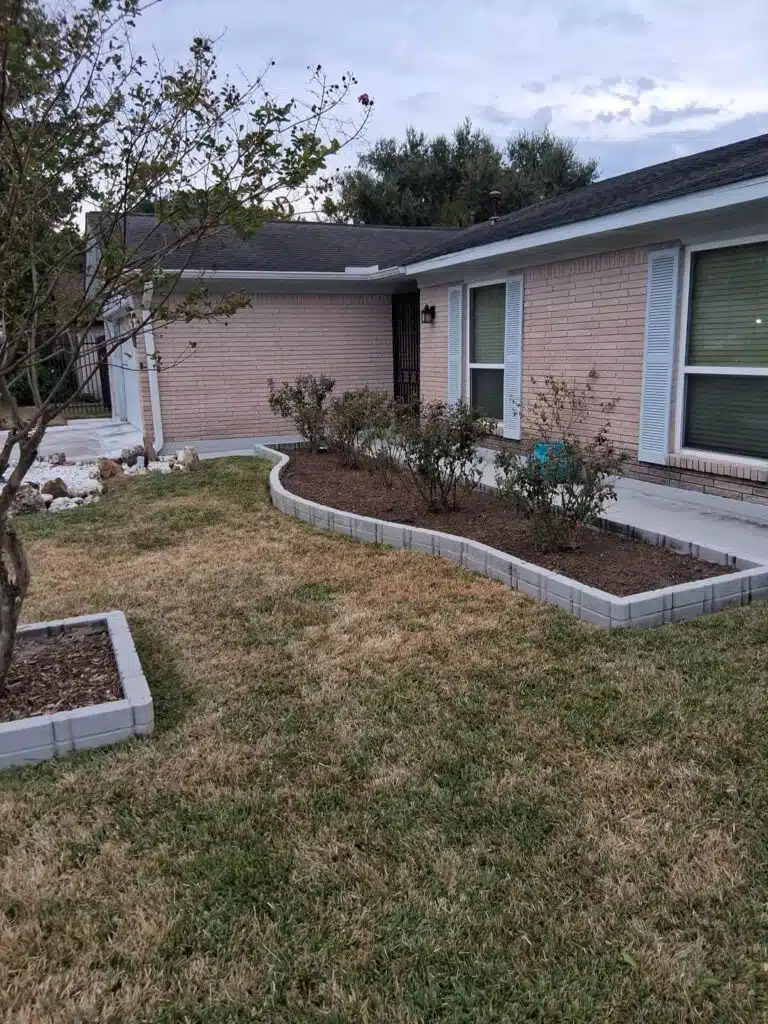 FAQ – Houston lawn dormancy
Does my Houston lawn need water while it’s dormant?
Sometimes. If we’re getting normal winter rain, you can usually leave the system off. If we go multiple weeks with no rain and the soil starts to crack, a deep soak now and then helps keep the crowns from drying out, even though the grass isn’t growing much.
How long does lawn dormancy in Houston usually last?
Most warm-season lawns here start slowing down in late fall and can stay mostly tan from roughly December into early spring. They generally begin to green up once soil temperatures stay in the 60s or above for a while, which for us is often sometime between March and May, depending on the year and the weather.
Should I fertilize when the grass is still brown?
No. Wait until the lawn is actively growing and you’ve had to mow a couple of times at normal height. Fertilizing dormant, brown grass wastes product and mostly feeds weeds. Save your fertilizer for when the grass can actually use it. Our best advice is to winterize your lawn mid to late fall with a good slow release fertilizer to prep before winter. Once spring active growth starts again, that’s when you can begin feeding once more.
How do I know if I need new sod after a hard freeze?
Give it time to warm up. Once neighbors’ lawns are clearly greening up, do the tug test and scratch test on your worst areas. If stolons and roots are dry, brittle, and pull up easily while the rest of the yard is waking up, that’s a sign it’s truly dead, not just dormant, and it may be time for spot repair or sod replacement.
If you’re staring at a brown yard right now and still not sure whether it’s normal dormancy or something deeper, you don’t have to guess.
Curious how your lawn is really doing before the next season hits? Our Houston team can walk you through a simple check of soil, drainage, and growth stage so you know whether to wait it out, tweak your routine, or start planning repairs.