What Makes a Houston Lawn Actually Healthy? Q&A With Ryan Laird of MicroLife
A green lawn is not always a healthy lawn. Ryan Laird of MicroLife Organic Biological Fertilizer shares what Houston property owners should know about soil, water, fertilizer, roots, and long-term lawn health.
A lawn can be green and still have problems underneath.
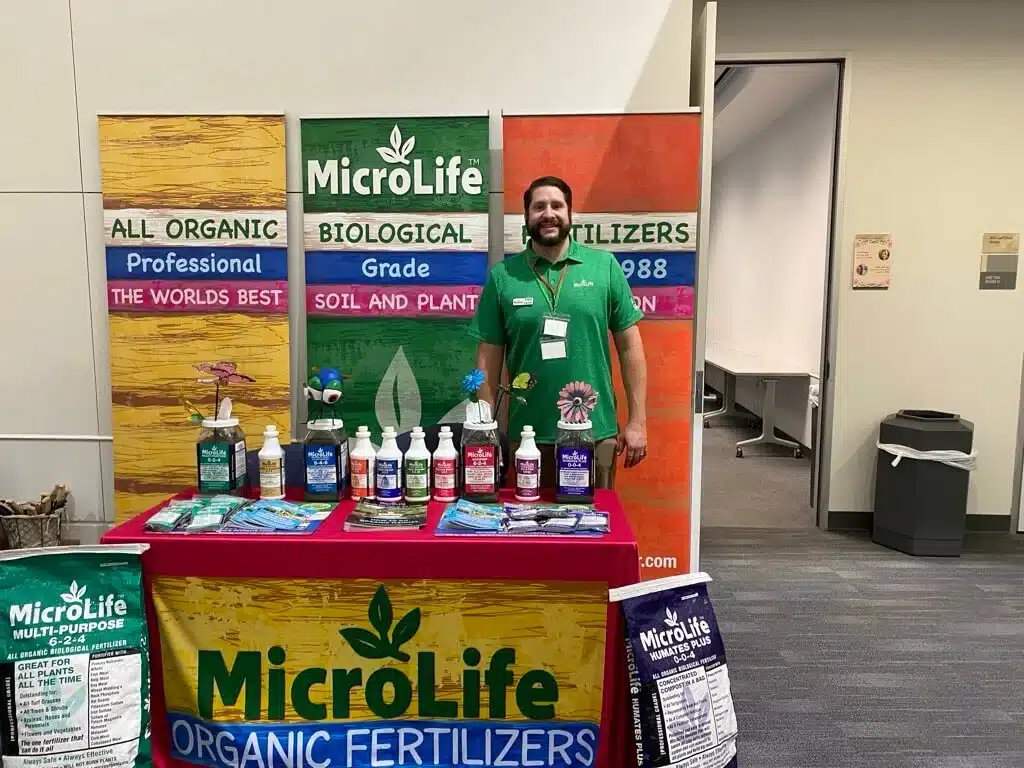
We recently spoke with Ryan Laird, Sales Manager for MicroLife Organic Biological Fertilizer, about what he looks for when evaluating lawns and soil in Houston.
Our conversation started after spending time with the MicroLife team and learning more about what happens below the surface of a lawn.
We wanted to take that conversation further. What should Houston homeowners and property managers understand before assuming a struggling lawn needs more fertilizer, another treatment, or new sod?
Ryan has spent more than 15 years in horticulture and the green industry. We asked him six questions about soil, irrigation, fertilizer, and what matters when trying to improve a lawn over time.
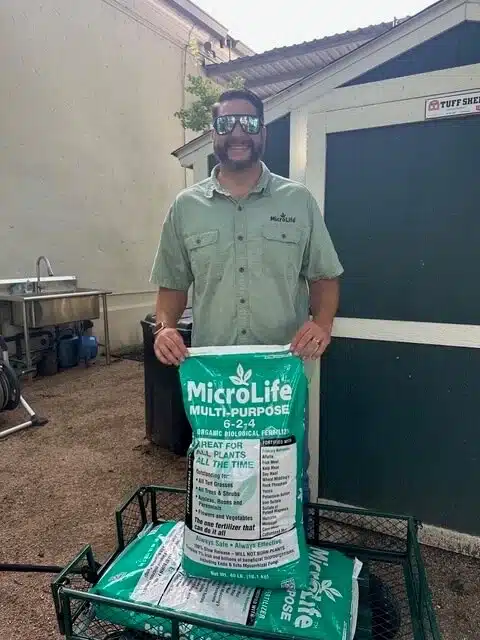
About Ryan Laird
Ryan Laird is the Sales Manager for MicroLife Organic Biological Fertilizer and has more than 15 years of experience in the horticulture and green industry.
His work focuses on soil health, biological fertility, turf and landscape management, and helping landscape professionals and property owners better understand the relationship between soil, water, biology, and plant nutrition.
Ryan is a Texas Certified Landscape Professional, Texas Certified Water Smart Professional, and BeCrop Certified Advisor. He is also actively involved in the Texas Nursery & Landscape Association and Houston Livestock Show & Rodeo Horticulture Committee.
His approach is simple. Understand what is happening in the soil first, then use the right tools to help the plant succeed.
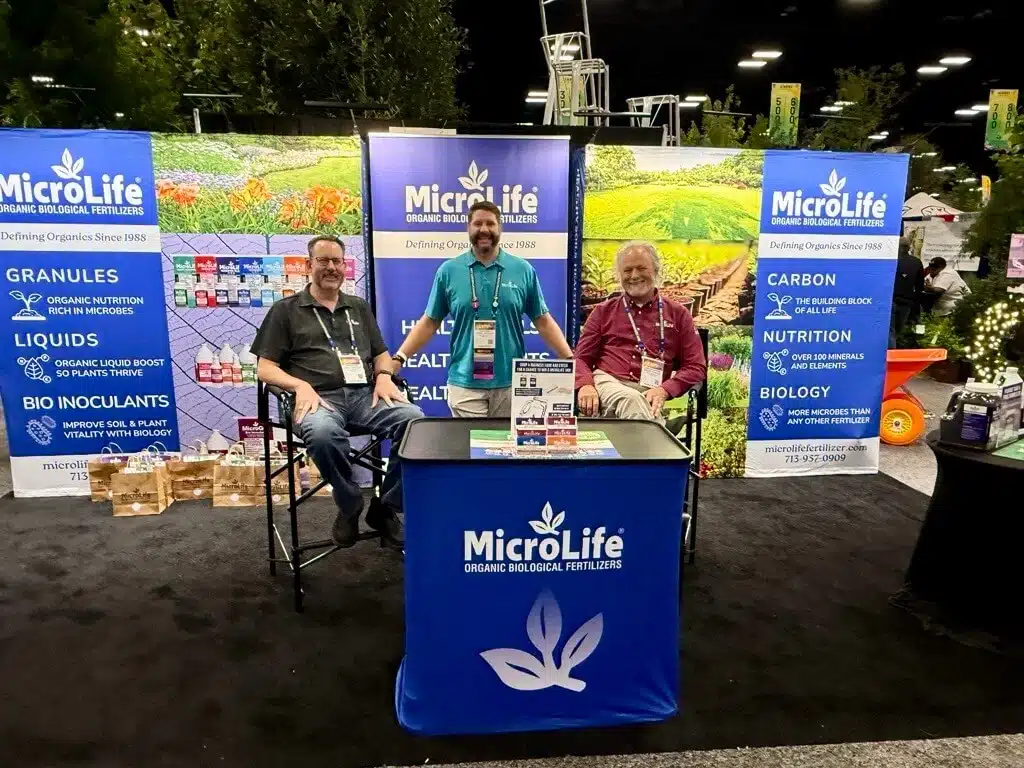
You’ve spent more than 15 years in horticulture. What is one thing about lawns or soil that you look at differently today than you did earlier in your career?
Earlier in my career, I probably looked at the plant first. Today, I look at the soil first.
It is easy to see a green lawn and assume everything is working, but I have learned that the plant is often just showing us what is happening or in some cases not happening, below the surface.
Now I am much more interested in soil structure, compaction, drainage, organic matter, biology, root development, and how water is moving through the soil. You can keep pushing a lawn with fertilizer and make it green for a while, but if the soil underneath it is struggling, eventually the lawn is going to show it.
My perspective has really shifted from asking, “What can we put on the grass?” to asking, “What is keeping this soil and plant from functioning the way they should?”
A lawn can look green and still have problems underneath. When you evaluate a Houston lawn, what tells you it is genuinely healthy, not simply green?
I want to see how the lawn performs when conditions are not perfect.
A genuinely healthy lawn should have good root development, reasonable soil infiltration, consistent density, and the ability to recover from heat, traffic, mowing, or a missed irrigation cycle without immediately falling apart.
I also look at how much input it takes to maintain that appearance. If a lawn only looks good because someone is constantly watering it, fertilizing it, spraying it, and correcting problems, that is different from a lawn that is naturally resilient.
Color is part of the picture, but grass is a plant, not paint. Dark green does not automatically mean healthy.
In Houston especially, I want to know what the roots look like, whether the soil stays waterlogged or dries excessively, whether there is compaction, and whether the turf is consistently growing and recovering rather than constantly cycling between looking great and looking terrible.
When a homeowner says, “My lawn needs fertilizer,” what do you want to understand or look at before recommending anything?
My first question is usually, “Why do you think it needs fertilizer?”
That answer tells you a lot.
If the lawn is yellow, thin, declining, or just does not look right, fertilizer may be part of the solution. But it may also be irrigation, mowing height, shade, compaction, drainage, disease, insects, soil chemistry, or even the wrong turfgrass for that particular area.
I want to understand how often they are watering, how long they are watering, how the lawn is being mowed, what has been applied previously, how much sunlight the area receives, and what the soil looks and feels like.
On larger properties or when there is an ongoing problem, I am a big believer in testing rather than guessing. A soil test gives us a much better starting point.
I would rather spend a little time figuring out why the lawn is struggling than sell someone another product that temporarily masks the problem. And a landscape audit can go a long way in accomplishing this for someone.
What is one well-intentioned lawn-care habit you see homeowners or landscape professionals get wrong in Houston, and what would you rather see them do?
Watering.
A lot of people water because the controller says Tuesday and Friday, not because the lawn actually needs water.
Houston makes that especially difficult because we can go from extremely wet conditions to hot, dry weather pretty quickly. If the irrigation system never adjusts, the soil can stay too wet during one period and then not receive enough water when conditions change.
Constant shallow watering can also encourage shallow rooting. Then when summer really arrives, the turf has less ability to handle stress.
I would rather see people water based on actual conditions and water deeply enough to encourage roots to move farther into the soil. Check the soil. Look at the grass. Pay attention to rainfall. Make sure the irrigation system is actually putting water where you think it is. And if it is not, then have your system checked.
Sometimes the best thing you can apply to a lawn is nothing, you just need to fix the water.
The lawn-care industry spends a lot of time talking about products. What do people tend to focus on too much, and what do they not focus on enough when deciding whether a lawn-care program is actually working?
I think we focus too much on individual applications and not enough on the direction the property is moving over time. I.e. Neglecting maintenance and chasing problems.
People naturally ask, “What fertilizer should I use?” or “What should I spray?” Those are fair questions, but the bigger question should be, “Is this lawn becoming easier or harder to maintain?”
Is the rooting improving? Is water infiltrating better? Is the lawn recovering faster? Are we seeing fewer disease issues? Are we reducing the amount of corrective treatments we need? Is the soil improving?
Those are better measurements of success than how green the lawn became seven days after an application.
Products are tools. I sell fertilizer for a living, and I will be the first person to say fertilizer cannot fix every problem.
A good program should improve the entire system. That is the soil, biology, roots, water management, and plant nutrition, so that over time the lawn becomes more resilient instead of more dependent on intervention.
If a Houston homeowner or property manager had a fixed annual budget and wanted a healthier lawn two years from now, where would you put the first dollars? What would you hold off on until the fundamentals were right?
I would spend the first dollars understanding the property.
Start with irrigation. Make sure the system is functioning correctly, coverage is even, and the area is not being chronically overwatered or underwatered.
Then I would look at the soil. On a property where we are serious about making long-term improvements, I would rather invest in testing and identify nutrient levels, pH, organic matter, and other limitations before building the program.
From there, address physical problems like compaction, poor drainage, mowing practices, and soil conditions. Then start building a fertility program that supports the plant and the soil rather than simply chasing color.
That is also where I believe organic matter and biological activity become important. Healthy soil should be a living system, and the goal should be to create an environment where roots, microbes, nutrients, air, and water can all work together.
What would I hold off on? Expensive cosmetic fixes and repeated corrective treatments that do not address the underlying cause.
If the foundation is wrong, spending more money on top of it usually just gives you a more expensive version of the same problem.
What We Can Take From Ryan’s Answers
Good lawn care starts with understanding what the property is telling us.
Yellow or thinning turf does not automatically mean the lawn needs more fertilizer. Irrigation coverage, excess water, compaction, drainage, shade, mowing practices, soil conditions, disease, insects, and the turf itself can all affect what we see above the surface.
That is especially important in Houston, where lawns can move from saturated conditions to intense heat and dry weather in a relatively short period of time.
One of the ideas we appreciate most from this conversation is that better property care is not always about doing more. It is about understanding what the lawn, soil, and landscape actually need and addressing the right problem.
Sometimes the right step is improving nutrition. Sometimes it is better water management, aeration, drainage, different maintenance practices, or simply taking more time to understand what is happening before acting.
Keep Learning
Thank you to Ryan Laird for taking the time to share his experience and perspective with us.
If you want to learn more about soil health, biological fertility, and the work Ryan and the MicroLife team are doing, visit MicroLife Organic Biological Fertilizer or follow Ryan at @mrmicrolife .
We plan to keep sharing practical conversations like this with people working across Houston’s lawn, landscape, horticulture, and green industries.
You can also explore more Houston lawn and landscape guides from Evergreen .