
Every fall, Houston lawns start to tell a story. The summer blooms fade, the sun softens, and homeowners begin wondering how to bring that spark of color back without wasting time or money on plants that won’t last.
It’s the perfect time for what we call the “annual flip”—when beds get refreshed, tired flowers are replaced, and the yard gets a new rhythm for the cooler months ahead.
Before you grab a flat of flowers, though, it helps to understand the types of plants that shape your landscape. You’ve likely heard the terms “annuals” and “perennials,” but knowing what each truly does—and how they behave in Houston’s late-arriving fall and mild winter—can save you from frustration later.
Houston sits in USDA Hardiness Zones 9a–9b, meaning winters are mild but cold snaps can still happen. The good news: with the right planning, you can enjoy color from October through February without replanting every few weeks.
 Best Fall Flowers for Houston Shade (Annual vs. Perennial color)
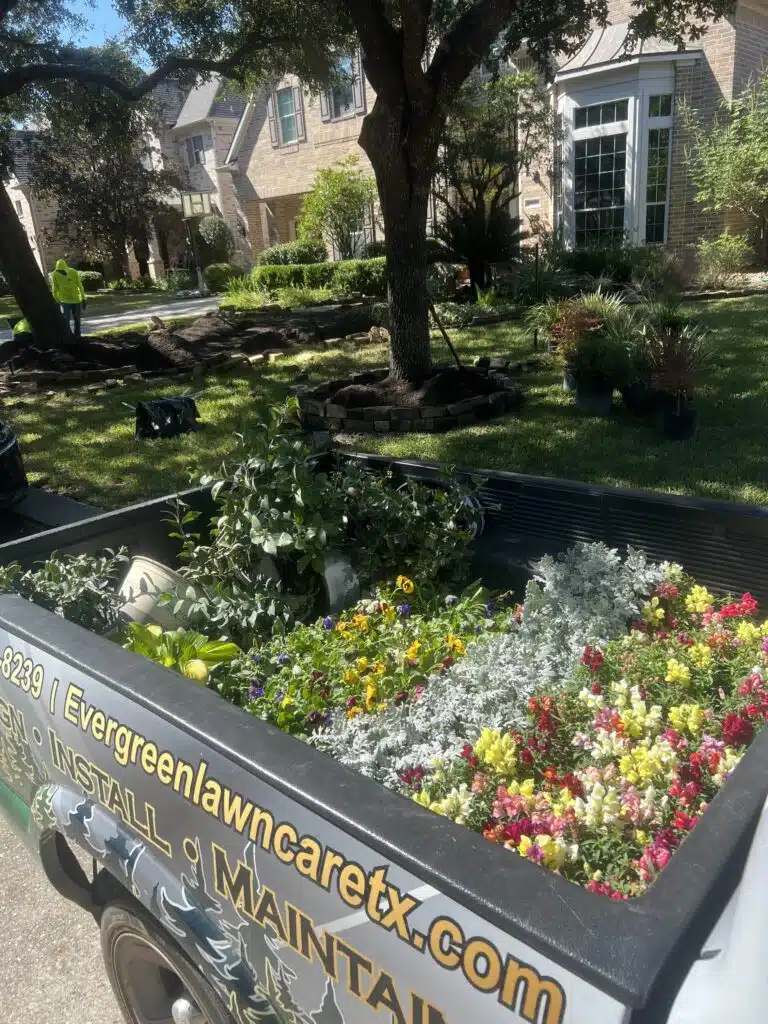 Best Fall Flowers for Houston Shade (Annual vs. Perennial color)
The problem: Shady entries and north-facing beds often look flat after summer. Most popular fall annuals need more light, while many perennials get leggy in heavy shade.
Quick insight: Plants in shade capture less sunlight, which means fewer blooms. Choose shade-tolerant foliage for structure and low-light annuals for pockets of color. Warm Houston soil helps new plants root quickly in fall.
1. Start with structure, then tuck in color
Use shade-hardy evergreens like camellias, aspidistra, holly fern, or foxtail fern to build bones that last all year.
Then pocket-plant color—cyclamen or viola—in visible spots like the entry or mailbox for maximum impact.
2. Choose shade all-stars
Annuals: Violas, pansies, cyclamen, alyssum
Perennials: Autumn fern, heuchera, aspidistra
Avoid heat-lovers like pentas or vincas in deep shade—they’ll struggle.
3. Prep the soil, not just the surface
Shade beds compact easily. Loosen 4–6 inches of soil and mix in leaf-mold compost to improve drainage and root growth. Make sure to constantly tend to your soil as well. Feeding with slow release fertilizer application is best for the long term health of your soil as well as pairing it with soil conditioners containing trace minerals and micronutrients.
4. Work with microclimates
Morning sun and afternoon shade? Try snapdragons or dusty miller along the brighter edges and violas deeper in. Shade isn’t “no light”—it’s a spectrum.
Local Example (Kingwood)
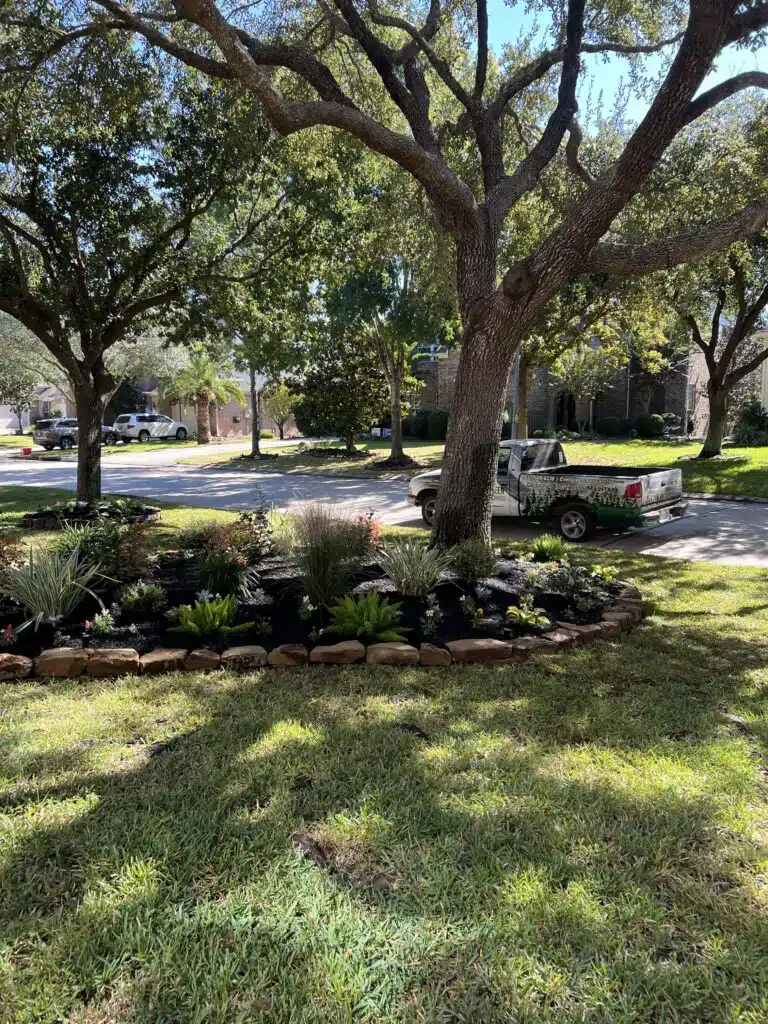 Local Example (Kingwood)
Under large live oaks (Zone 9a/9b), we installed camellias for evergreen depth and winter bloom.
We layered foxtail ferns and ornamental grasses for texture.
For accent color, we added shade-tolerant snapdragons and dusty miller for brightness and texture.
The result: a low-effort, high-impact landscape that stays vibrant through Houston’s cool season.
Color Beds That Last Through Houston Winter
The problem: That perfect fall refresh often looks great for a month—until a surprise freeze or downpour wipes it out.
Quick insight: Cool-season annuals (pansies, violas) bloom beautifully in the 40s–60s°F range, while strong-rooted perennials (salvia, society garlic) bounce back after cold snaps.
Real-world truth: Even the best plan isn’t foolproof.
-
Perennials come back about 70–80% of the time—some thrive for years, others fade after stress or poor rooting.
-
Annuals usually finish their cycle (80–90%), but occasionally you’ll find one so well-established it surprises you by lasting into spring.
Plants are living things, not décor—expect variability.
1. Mix “instant impact” with “insurance”
Combine fast-blooming annuals (pansies, violas, snapdragons) with perennials for structure (lantana, hardy salvia, society garlic).
That way, your bed still looks alive even when a freeze hits.
2. Plant early for strong roots
Install plants 4–6 weeks before Houston’s first real cold front—typically late October or early November.
More root maturity means higher survival rates.
3. Mulch smart, not smothered
Apply 1.5–2 inches of mulch to protect roots. Keep a gap around crowns to prevent rot.
Before freezes, water lightly—moist soil retains heat—and cover tender plants with frost cloth (never plastic).
4. Quality beats quantity
Nursery-grown, locally hardened plants always outperform bargain flats.
Cheap plants often lack root maturity, which costs you more in replacements.
Local Example (C.E. King Area)
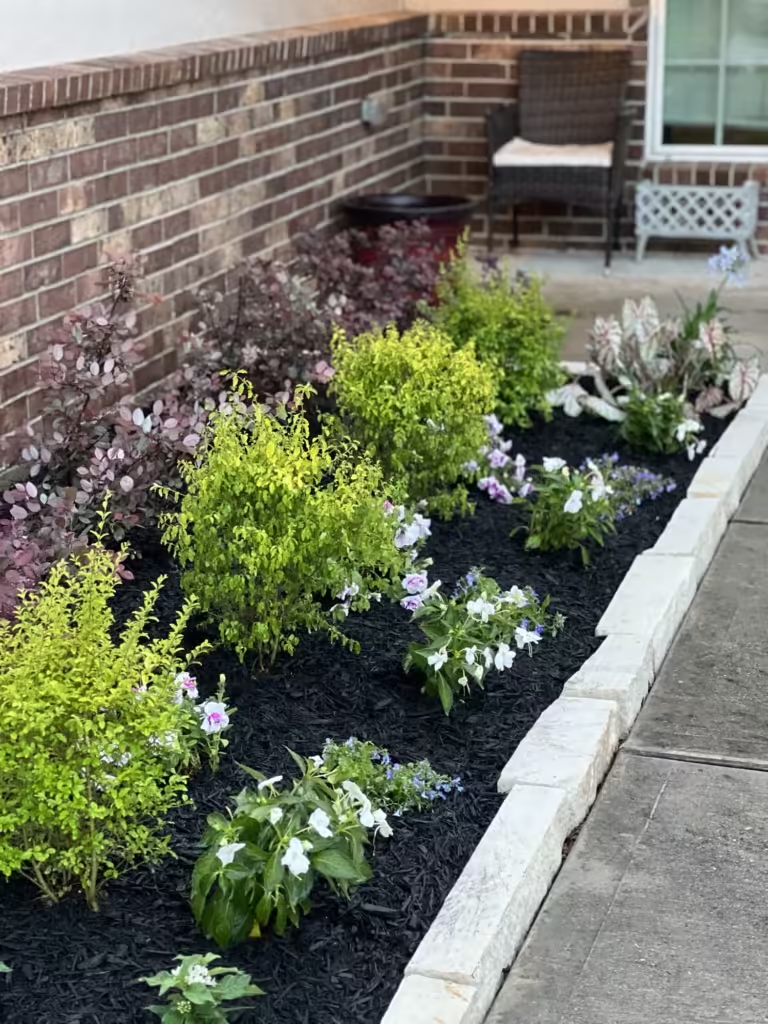 Local Example (C.E. King Area)
We installed a evergreen base structure with small plants for color.
After the freeze, the perennials held strong, and the annuals rebounded fast—no replant needed.
Annual vs. Perennial color for Low-Maintenance Yards
The problem: You want color and curb appeal—without spending every weekend replanting.
Quick insight:
-
Annuals = Instant impact, short life cycle
-
Perennials = Long-term structure, lower upkeep
Neither is “better.” The smartest landscapes blend both so one shines while the other rests.
1. The 70/30 rule
Use around 70% perennials for reliable structure and 30% annuals for seasonal swaps. Keeps your beds full but manageable.
2. Proven perennials for Houston
Sunny spots: Salvia, lantana, bulbine, coreopsis, daylilies
Bright shade: Heuchera, foxtail fern, liriope, aspidistra
These thrive in our humidity and clay soil.
3. Right plant, right place
Match sunlight and drainage to each plant’s needs.
In heavy soils, add compost and raise the bed slightly for drainage.
4. Water wisely
Deep soak new installs 2–3 times a week for the first few weeks.
In winter, water before a freeze if the soil is dry—moist soil buffers cold.
Check out our garden bed maintenance blog!
Local Example (Crosby)
A homeowner wanted a “set-it-and-forget-it” look.
We installed salvia, society garlic, and dwarf yaupon holly for structure, then added seasonal violas for easy color swaps.
Now they refresh small areas twice a year while the rest stays sharp year-round.
FAQ: Houston Homeowners Ask
Do annuals or perennials handle freezes better?
Cool-season annuals like pansies and violas often recover fast; hardy perennials survive via their roots. Timing and soil drainage matter most.
When should I plant for the best fall-to-winter color?
Late October through early November—warm enough for root growth, early enough before serious cold.
Can I keep color in shade?
Absolutely. Combine evergreen foliage with shade-color annuals like cyclamen or violas near entries or walkways.
How do I avoid constant replanting?
Follow the 70/30 rule, invest in soil prep, and use locally proven varieties.
If You’d Like to Take it up a Notch
If you’d like a professional eye on your beds, we offer a seasonal color assessment—a quick, no-pressure walkthrough that helps you match plants to your space and schedule.
Explore our Landscape Design & Installation services to see how we create lasting curb appeal, or our Stump Grinding & Pressure Washing options to boost presentation before the holidays.
You might also enjoy: Houston Fall Annuals: Simple Pairings That Always Work
Quick Comparison – Annual vs. Perennial color (Houston Edition)
| Type | Pros | Cons | Longevity |
|---|---|---|---|
| Annuals | Immediate impact, bright variety | Need replanting | 1 season |
| Perennials | Return yearly, lower upkeep | May decline under stress | 2–5 years typical |
| Best Combo | Perennial foundation + annual accents | Balanced look, smart maintenance | Ongoing |

Advanced Tips (Annual vs perennial color)
For those who like to experiment:
-
Try alternate soil-mix ratios (compost + pine bark + sand) for better drainage in clay areas.
-
Rotate color families seasonally to balance nutrients and avoid soil fatigue.
-
Mix combos like Sweet Alyssum + Dusty Miller + Camellia for a soft winter texture blend.
These tweaks aren’t required but can fine-tune your beds for stronger performance. Check out “The Scoop on Soil Health” for more tips!
Final Thought
Beautiful color isn’t about perfection—it’s about rhythm.
Plants are living things, not plastic décor. Some will thrive, some will fade—but with smart timing, local knowledge, and balance, your yard will always tell the story of a well-cared-for home.
Plan your bones once, refresh with intention, and your landscape will carry its charm through every Houston season.